 Lynden Siding
 Bellingham Siding Has to Work Harder Than People Expect
Bellingham sits close enough to the water that salt-laden air is a real factor on siding, and far enough into the Pacific Northwest rain belt that "driving rain" isn't a figure of speech — it's a design condition. Add in tree cover, shaded north walls, and a moss season that can run most of the year on the wrong exposure, and you have a climate that punishes siding products that aren't built for sustained moisture exposure. Homes in and around Bellingham don't just need siding that looks good on install day. They need a wall system that still sheds water, resists mold and moss growth, and holds its finish five, ten, and twenty years down the road.
This page is specifically about fiber cement siding installed on Bellingham homes — what the local climate demands, what a correct installation actually involves, and why our crew's experience working this specific area matters as much as the material itself.
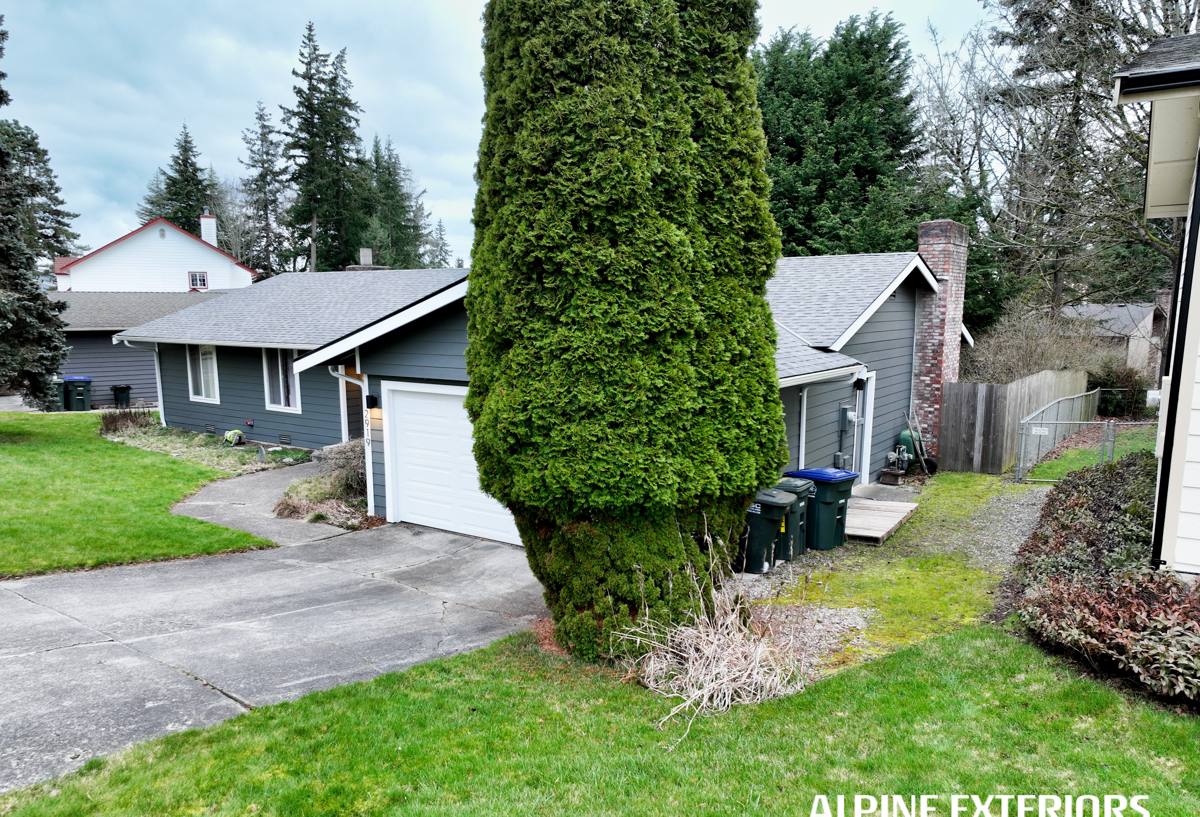
What Salt Air, Driving Rain, and Moss Season Actually Do to Siding
Each of these conditions attacks siding differently, and Bellingham homeowners usually deal with all three at once.
Salt Air
Proximity to Puget Sound and Bellingham Bay means airborne salt settles on exterior surfaces, accelerating corrosion of exposed metal fasteners and trim, and slowly breaking down finishes that aren't formulated to resist it. Siding with a weak factory finish will chalk, fade, or fail at the surface years before it should.
Driving Rain
Whatcom County storms frequently come in sideways off the water, driven by wind. That means rain doesn't just fall on a wall — it's pushed into every seam, lap, and penetration. A siding system depends on correct laps, flashing, and clearances to stay ahead of that kind of pressure. Get those details wrong and water finds its way behind the cladding, where it can sit against sheathing for months.
Moss and Mold Season
Shaded lots, tree cover, and long stretches of damp weather give moss, algae, and mold plenty of time to establish themselves on north- and west-facing walls. Porous or absorbent siding materials hold onto that moisture, feeding the growth cycle. Siding that can't dry out between rain events stays wet longer, and wet siding is siding that's failing faster than it should.
Why We Install Only James Hardie Fiber Cement
We made a deliberate decision to install James Hardie fiber cement siding exclusively, and not vinyl, LP SmartSide, Cemplank, Allura, or unprimed wood species like cedar or spruce. That's not a marketing position — it's a standard we hold because of what we've seen these products do, and not do, in exactly this climate.
Vinyl siding is affordable and low-maintenance in mild conditions, but it can warp under heat and impact, and its seams and panel joints aren't sealed the way fiber cement laps are — driving rain finds a way in more easily. Engineered wood products like LP SmartSide use wood strand cores that are vulnerable if moisture penetrates the outer coating, and once that happens, swelling and delamination can follow. Cedar and unprimed wood siding look great initially but require an ongoing maintenance commitment — staining, sealing, and refinishing — that most homeowners underestimate, and in a wet climate that maintenance window shrinks fast. Other fiber cement brands like Cemplank or Allura are legitimate cement-based products, but we've standardized on one manufacturer, one factory finish system, and one warranty structure so we can guarantee consistent results and stand behind every job the same way.
James Hardie's fiber cement is non-combustible, dimensionally stable in wet-dry cycling, and available in HZ5 formulations engineered for regions with sustained moisture and freeze-thaw exposure — which describes Whatcom County's coastal climate well. Its ColorPlus factory-applied finish is baked on under controlled conditions, giving it far better fade and chip resistance than field-applied paint, and it carries a strong transferable warranty when installed to the manufacturer's specifications.
What a Correct Fiber Cement Installation Actually Involves
Fiber cement siding is only as good as its installation. Most of the failures we get called out to inspect on other contractors' work trace back to a handful of shortcuts, not a defective product.
Water Management Behind the Siding
Correct installation starts with a drainage plane — house wrap or building paper, properly lapped, with flashing integrated at every window, door, and penetration. Fiber cement is not a waterproofing membrane by itself; it's the outer layer of a system that has to move water down and out.
Clearances and Gaps
Hardie's specifications call for minimum clearances from grade, roof lines, decks, and other siding terminations, along with gaps at butt joints to allow for expansion. Installers who tighten these up to make a job look cleaner on day one are setting up moisture traps that show up as damage two or three winters later.
Fastening
Corrosion-resistant fasteners, driven correctly (not overdriven, which cracks the material, and not underdriven, which leaves the board loose), matter more in a salt-air environment than almost anywhere else. Fastener failure is one of the more common causes of premature siding problems near the water.
Caulking and Touch-Up Painting
Cut edges and field-touched areas need to be sealed and painted with compatible products so the factory finish isn't compromised at the one place it's most vulnerable — the cut end of a board.
Our Process for a Bellingham Job
- Assessment: We walk the exterior, check current siding and sheathing condition, and identify problem areas — usually the shaded, moss-prone sides and any spots with a history of water intrusion.
- Plan and product selection: We confirm the right Hardie plank profile, exposure, and color for the home, along with the correct HZ formulation for coastal Whatcom County exposure.
- Prep and moisture barrier: Removal of old siding, inspection of sheathing for hidden damage, and installation of a correctly lapped and flashed water-resistive barrier.
- Installation to spec: Proper clearances, fastening, and joint treatment, following Hardie's published installation guidelines rather than shortcuts.
- Finish and walkthrough: Caulking, touch-up, and a final walkthrough so you understand what was done and why.
Comparing Siding Options for a Bellingham Home
| Material | Moisture Resistance in This Climate | Maintenance Burden | Typical Lifespan |
|---|---|---|---|
| James Hardie Fiber Cement | Strong when installed to spec; non-combustible, dimensionally stable | Low — factory finish, occasional wash | Multi-decade with correct install and warranty |
| Vinyl | Adequate but seams and panels are more vulnerable to wind-driven rain | Low, but can warp or crack over time | Moderate, shorter in high-exposure sites |
| LP SmartSide / Engineered Wood | Vulnerable if moisture reaches the wood-strand core | Moderate — coating needs monitoring | Shorter if moisture intrusion occurs |
| Cedar / Unprimed Wood | Poor without diligent upkeep in a wet climate | High — regular staining and sealing required | Depends heavily on maintenance follow-through |
Signs Your Current Siding May Already Be Struggling
- Persistent moss or algae streaking that returns shortly after cleaning
- Soft or spongy spots when pressed, especially near the bottom courses
- Paint or finish that's peeling, bubbling, or chalking heavily
- Visible gaps, warping, or buckling panels
- Rising energy bills that suggest the wall assembly is no longer performing
- Water stains or discoloration on interior walls near exterior corners
Maintenance and Longevity Once It's Installed
One advantage of a correctly installed Hardie system in this climate is how little ongoing work it asks for. An occasional rinse to keep moss and pollen from building up, a periodic visual check of caulked joints and trim, and prompt attention to any impact damage is generally enough. Because the factory finish is baked on rather than field-applied, you're not on a repainting cycle the way you would be with raw wood siding — which matters in a region where a maintenance window can close quickly once fall rains set in.
Why a Crew That Already Works Bellingham Matters
Installation quality depends on judgment calls that a spec sheet can't fully cover — how much clearance to leave on a wall that gets direct wind-driven rain versus one that's more sheltered, which sides of a house need extra attention for moss and mold exposure, and how local wind and moisture patterns should shape flashing details around windows and roof lines. A crew that's already worked homes throughout Bellingham and the surrounding Whatcom County area has seen how these details play out over years, not just on installation day. That local track record is part of what you're hiring when you choose who touches your home's exterior.
If you're weighing a siding replacement or repair in Bellingham, we're glad to walk your home, point out what we see, and give you a straightforward, no-pressure estimate — no hard sell, just an honest look at what your house needs.