 Lynden Siding
 Fiber Cement Siding for Aldergrove, BC Homes
Aldergrove sits just across the line from Lynden, close enough that the Aldergrove-Lynden border crossing is the everyday route between the two communities. That proximity means an Aldergrove home faces almost the same weather load as a house a few miles south in Whatcom County: salt-tinged marine air working in off the Strait of Georgia and Puget Sound region, driving rain that comes in sideways more often than straight down, and a moss season that can run most of the year on shaded roofs and walls. Siding on this side of the border deals with the same punishment, which is why we treat an Aldergrove project with the same standards we hold ourselves to on every Whatcom County job.
We install James Hardie fiber cement siding exclusively — no LP SmartSide, no vinyl, no Cemplank, no Allura, no primed spruce, no cedar. That's not a marketing line, it's a professional standard built around what actually holds up in this specific climate over ten, twenty, and thirty years.
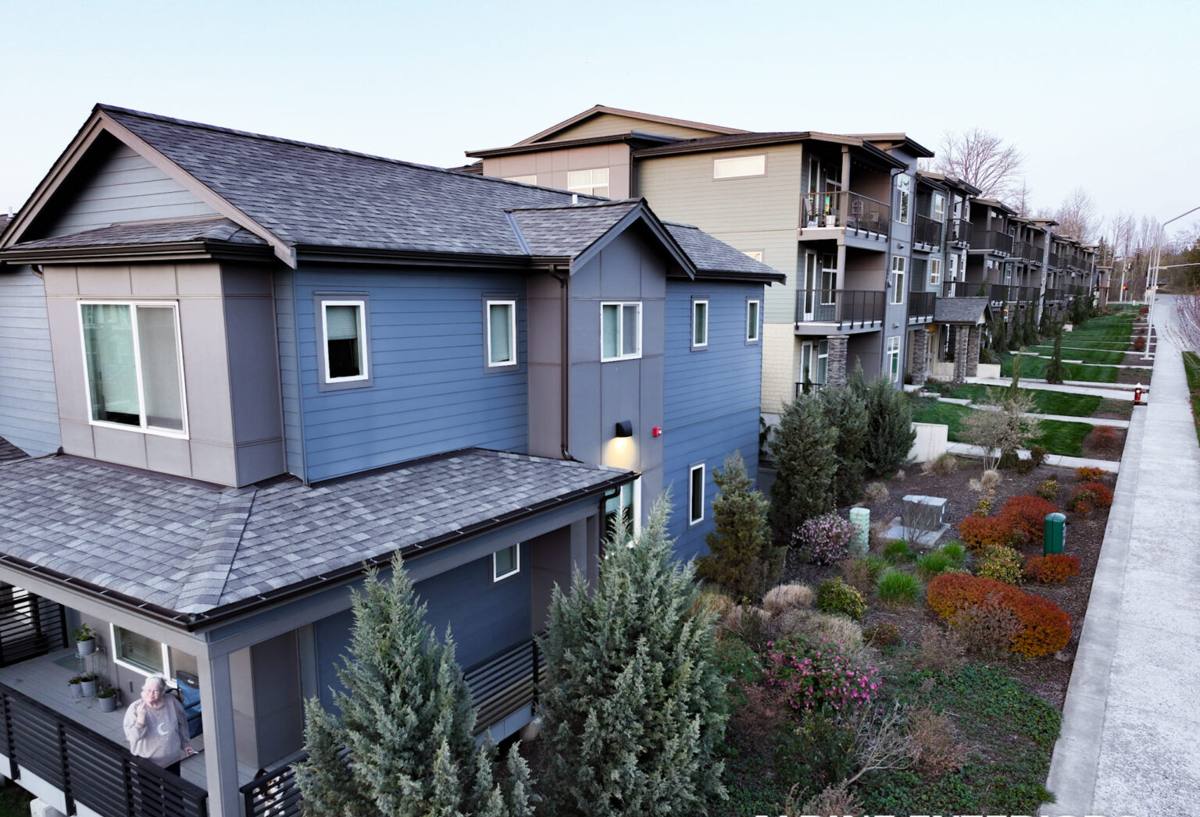
What Aldergrove's Climate Actually Does to Siding
Salt Air and Fastener Corrosion
Even well inland from open water, this part of the Fraser Valley and lower Whatcom County corridor gets enough marine-influenced air that exposed metal pays for it over time. Fastener heads, flashing, and trim details that aren't rated for sustained salt exposure corrode faster here than they would in a drier inland climate, and once a fastener starts to go, the siding around it loses its grip long before the panel itself would have failed on its own.
Driving Rain, Not Just Rainfall
The rain in this area rarely falls straight down. Wind pushes it sideways into wall assemblies, window trim, and every horizontal seam on a siding job, which is a tougher test than a simple annual rainfall total suggests. A lap siding installation that looks fine on a calm, dry install day can still fail in year three if the overlap, flashing, and fastener spacing weren't built for wind-driven rain specifically.
A Long Moss Season
Mild temperatures and consistent moisture mean moss and mildew have a long runway in Aldergrove, especially on north-facing walls and anything shaded by mature trees. Any siding surface that's even slightly porous, or that holds moisture against the substrate instead of shedding it, becomes a growth surface rather than a weather barrier. Once moss gets established on a wall, it holds even more moisture against the surface underneath it, which speeds up whatever damage was already starting.
Why Product Choice Matters More Here Than People Expect
A lot of homeowners assume siding is siding — that the real differences are cosmetic. In a climate that combines salt exposure, wind-driven rain, and a long moss season, the material underneath the color and profile is what actually determines whether a wall holds up or starts showing problems within a handful of years. That's the reasoning behind standardizing on one system instead of offering a menu of options at different price points.
| Material | Moisture Behavior | Maintenance in This Climate | Realistic Lifespan |
|---|---|---|---|
| James Hardie fiber cement | Dimensionally stable; won't swell, cup, or rot from sustained damp exposure | Low; factory finish resists moss staining and fading | 30+ years with proper install |
| LP SmartSide (engineered wood) | Sensitive to moisture at cut edges and fastener penetrations | Moderate; edge sealing and caulk lines need regular upkeep | 15-25 years, climate-dependent |
| Vinyl | Can warp, gap, or crack in temperature swings and wind loading | Low visible upkeep, but hidden moisture behind panels is hard to spot | 20-30 years, variable |
| Cedar | Absorbs moisture readily without a consistent sealing schedule | High; recurring staining or painting on a fixed cycle | 15-25 years with diligent upkeep |
Hardie's fiber cement core doesn't expand and contract with moisture the way wood-based products do, which matters directly in a climate where the siding rarely gets a long stretch to fully dry out. The factory-applied ColorPlus finish is baked on under controlled conditions, so the only field-applied paint on a correctly installed job is on cut edges — not the whole wall, the way it would be with a site-finished product.
The James Hardie System Built for This Climate
The product line matters as much as the decision to install fiber cement in the first place. We spec Hardie's HZ5 formulation on jobs in and around Aldergrove and Lynden, which is engineered specifically for regions with heavy moisture exposure and real freeze-thaw cycling rather than a warmer, drier climate zone. A few things about the system are worth understanding before you compare quotes:
- Non-combustible core: fiber cement doesn't feed a fire the way wood-based siding can, which matters for both safety and, in many cases, insurance considerations.
- Factory-applied ColorPlus finish: color is baked on under controlled conditions rather than brushed on in the field, holding up longer against fading, chalking, and moss staining than site-applied paint.
- Climate-engineered HZ5 formulation: built specifically for regions with sustained moisture and freeze-thaw swings, which describes this corridor's winters well.
- A strong transferable warranty: Hardie backs the product with one of the more robust warranty structures in the siding industry, provided the installation follows their published spec — which is exactly why installation quality and warranty coverage aren't separate conversations.
None of that matters much if the install doesn't follow spec, which is the other half of why we control both the product and the installation standard rather than just supplying material.
What a Correct Fiber Cement Install Actually Involves
Fiber cement is only as good as the installation behind it. A correct job on an Aldergrove home includes:
- House wrap or a weather-resistive barrier installed and properly lapped before any siding panel goes up
- A drainage gap or rainscreen behind the siding so moisture that does get past the surface can dry out instead of sitting against the sheathing
- Corrosion-resistant fasteners, sized and spaced to Hardie's published installation spec for this climate zone, not a generic national default
- Properly lapped and flashed transitions at windows, doors, corners, and the base of the wall — the spots where most real-world leaks originate
- Cut edges primed before installation so the factory-cured ColorPlus finish stays the rule rather than the exception
- Correct nailing height and clearance from grade, decks, and roof lines so the bottom course of siding isn't sitting in standing moisture
Skip any one of these and the wall can look fine for a year or two. The problems that follow — staining at seams, soft spots low on the wall, paint failure at cut edges — take a few wet seasons to show up, which is exactly why a rushed install is easy to get away with until the homeowner is the one dealing with the callback.
Our Process for an Aldergrove Project
Walkthrough and Assessment
We start by looking at the specific walls involved: which ones take direct weather, which are shaded and slow to dry, and whether there's already moisture damage behind the existing siding that needs to be addressed before new material goes up. New siding over an unaddressed moisture problem just buries it.
Planning Before Install Day
Flashing details, fastener spacing, and how the siding meets trim, windows, and rooflines get worked out before crews start cutting material. Deciding these details on paper first, rather than improvising in the field, is what keeps corners from getting cut when a job is running behind schedule.
Installation to Manufacturer Spec
Every gap, lap, and fastener follows James Hardie's published requirements for this climate zone. That's what keeps the manufacturer's warranty intact, and it's also simply what makes the wall perform the way it's supposed to for decades rather than years.
Final Walkthrough
We walk the finished job with you, explain what little maintenance fiber cement actually needs, and make sure you know what a healthy wall looks like if you ever want to check it yourself down the road.
Cost Factors for Fiber Cement Siding in This Area
| Factor | Why It Matters |
|---|---|
| Home size and wall complexity | More corners, dormers, and transitions mean more cuts and flashing details |
| Existing wall condition | Rot or moisture damage found during tear-off needs repair before new siding goes up |
| Siding profile | Lap, shingle-style, and board and batten differ in material and labor per square foot |
| Trim and window count | More openings mean more flashing and finish work around each one |
| Access and site conditions | Steep lots, tight setbacks, or limited equipment access can add labor time |
Exact numbers depend on the specific home, which is why we walk the property and give a real, itemized estimate rather than a rough number based on square footage alone.
Signs an Aldergrove Home Needs Siding Attention
- Moss or dark staining that returns quickly after cleaning, especially on shaded or north-facing walls
- Soft or spongy siding, particularly low on the wall or around window and door trim
- Peeling or bubbling paint on a painted wood or engineered wood surface
- Visible warping, cupping, or gapping at panel seams
- Rust streaking below fastener heads, a sign the fasteners themselves are corroding
- A musty smell or visible staining on interior walls that back up to exterior siding
Why Hire a Crew That Already Works Aldergrove, BC
A crew that installs siding across this border corridor regularly has already seen how salt-influenced air, wind-driven rain, and a long moss season behave on real houses, not just how a product performs on a spec sheet. That experience shapes practical decisions on install day — which wall orientations need extra flashing attention, how much clearance a rainscreen gap actually needs in a climate this consistently damp, and where a shortcut that might pass in a drier region will cause real problems here within a few wet seasons. It also means straightforward scheduling and site logistics around the border crossing itself, instead of treating an Aldergrove address as an afterthought tacked onto a Washington-focused service area.
Get a Free, No-Pressure Estimate
If your Aldergrove home needs new siding, or you're weighing whether an existing wall is worth repairing versus replacing, we're glad to take a look and give you a straightforward, honest assessment. There's a form below — reach out and we'll set up a time to walk the property and talk through what your specific home actually needs.