 Lynden Siding
 Why Ferndale Homes Are Hard on Windows
Ferndale sits close enough to Bellingham Bay and the Salish Sea that salt-laden air is a regular part of the weather, not an occasional nuisance. Add in the driving rain that comes off Pacific storm systems through the fall and winter, and a long gray stretch each year where surfaces rarely get a chance to fully dry out, and you have a climate that finds every weak point in a window system. Hardware corrodes faster near the coast than it does further inland. Wind-driven rain tests seals and flashing details that would never be an issue in a drier climate. And the extended damp season gives moss, algae, and mildew months to take hold on sills, trim, and anything shaded or north-facing.
None of this means windows in Ferndale need to fail early — it means they need to be selected, installed, and detailed with this specific climate in mind. A window that works fine in a dry inland town can struggle here if it wasn't built or installed for coastal Whatcom County conditions.
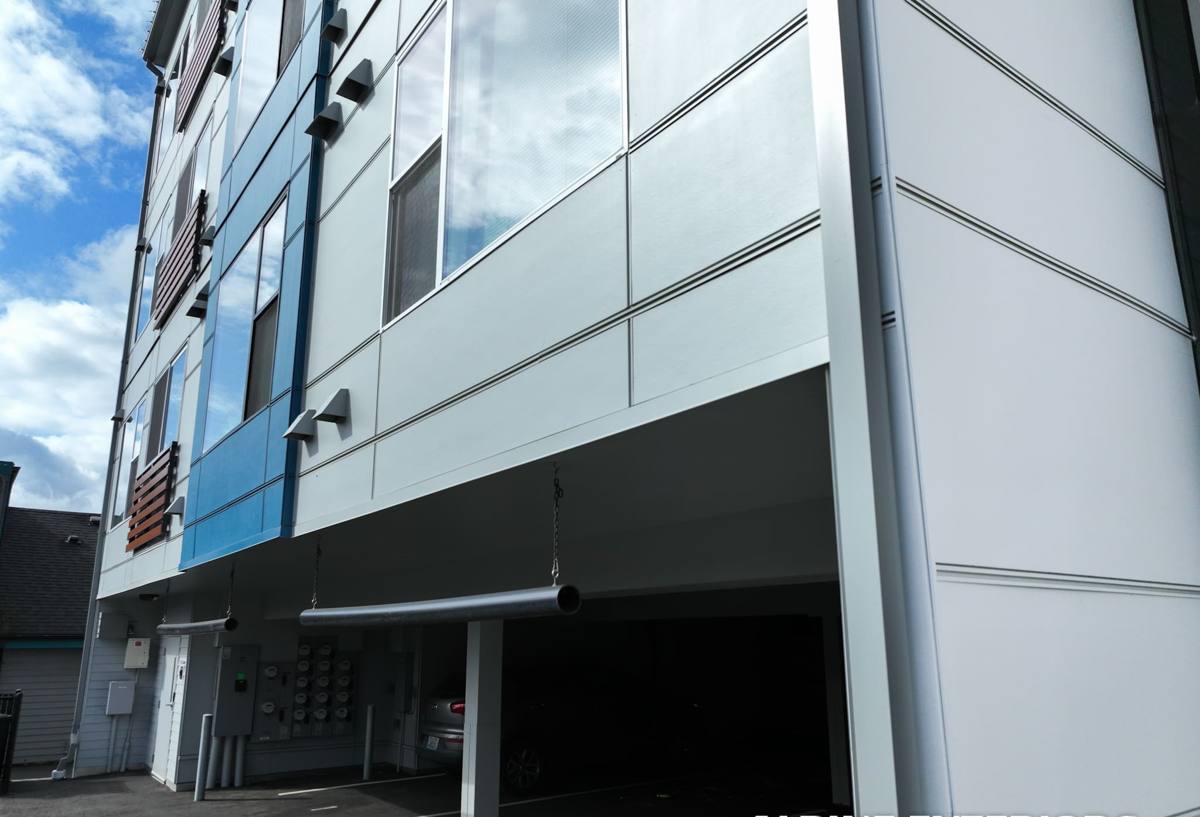
What a Correct Custom Window Job Actually Involves
"Custom windows" covers more than picking a size and style off a shelf. In Ferndale, a correct job means the window is matched to the specific wall assembly, orientation, and exposure of that particular house. A window facing the prevailing weather on an unshaded wall needs different flashing and sealant detailing than one tucked under an eave on a protected side of the home.
The parts of the job that actually determine whether a window performs for the next 20+ years are mostly invisible once it's done:
- Correct rough opening sizing and squaring, not just a window that "fits"
- Proper flashing sequence — house wrap, flashing tape, and window flange layered so water sheds outward and down, never inward
- Sill pan flashing to catch and direct any water that gets past the primary seal
- Backer rod and sealant at the exterior joint, sized and installed so it can flex with temperature and moisture cycles instead of cracking
- Shimming that supports the frame evenly so the sash doesn't bind or rack over time
- Interior air sealing, separate from the exterior weatherproofing, so conditioned air isn't leaking into the wall cavity
Skip any one of these and the window can still look fine for a year or two before a problem shows up — usually as a soft spot in the sill, a musty smell, or paint failure on the interior trim.
Choosing Frame Material for Salt Air and Rain
Frame material matters more here than in a lot of markets, because the combination of salt air and near-constant moisture exposure will expose a poor material choice faster than it would somewhere drier and further from the water. There's no single "best" material for every home — it depends on budget, the home's style, and how much upkeep an owner wants to take on.
| Material | Salt air / moisture performance | Maintenance | Typical cost position |
|---|---|---|---|
| Vinyl | Won't corrode or rot; performs well near the coast | Low — occasional cleaning | Most affordable |
| Fiberglass | Excellent — very stable in wet, salty conditions, minimal expansion/contraction | Low | Mid to upper range |
| Wood (clad exterior) | Good if the cladding and seals are intact; exposed wood is vulnerable | Higher — watch joints and any exposed wood | Upper range |
| Aluminum (uncoated or poorly finished) | Prone to corrosion and pitting in salt air over time | Moderate to high | Varies |
As a professional standard, we lean toward vinyl and fiberglass for most Ferndale homes precisely because they don't give salt air and moisture anything to work on. That's not a knock on wood-clad or aluminum windows — they can look great and have their place — but they demand more attention to keep performing in this climate, and we want homeowners going in with clear eyes about that trade-off rather than finding out the hard way.
Signs Your Ferndale Home Needs Window Attention
Because problems here tend to start hidden and work their way outward, it helps to know what to check for before things get expensive. A quick self-check twice a year is enough for most homes.
- Sash that's harder to open, close, or lock than it used to be
- Visible gaps, cracked, or shrunken sealant around the exterior frame
- Soft or discolored wood on the sill or interior trim
- Condensation forming between panes (a sign the seal has failed on a double-pane unit)
- Persistent green or black staining on the sill or lower frame that comes back quickly after cleaning
- A draft you can feel near the frame on a windy day
- Fogging or a musty smell in the room during the wetter months
Any one of these on its own isn't necessarily an emergency, but they're worth having looked at before the next wet season sets in.
Moss, Algae, and Trim: A Whatcom County Problem
The same conditions that grow moss on roofs and north-facing siding across Whatcom County do the same thing to window sills, trim, and frames — especially on shaded elevations that don't get direct sun to dry out between rain events. Left alone, moss and algae hold moisture against the surface far longer than rain alone would, which accelerates wood rot on painted trim and can degrade sealants faster than expected.
This is one of the reasons frame and trim material choice matters as much as the glass itself. A properly detailed window with the right trim material and a paint or finish suited to a long moss season will shed that growth far more easily than one where water is allowed to pool or sit against exposed wood.
Our Custom Window Process
We keep the process straightforward because homeowners deserve to know what's happening at each step, not just when the crew shows up and when they leave.
- On-site assessment — we look at existing window condition, wall assembly, exposure, and any signs of past moisture issues before recommending anything.
- Measurement and product selection — exact rough opening measurements, and a frame material and glass package matched to that wall's exposure and the homeowner's budget.
- Removal and prep — old windows come out carefully, and we inspect the rough opening for hidden rot or damage before anything new goes in.
- Flashing and installation — house wrap, flashing tape, sill pan, and the window itself installed in the correct sequence, shimmed and squared.
- Sealing and finishing — exterior sealant, interior air sealing, and trim work finished to match the home.
- Final walkthrough — every window operated and checked with the homeowner before we consider the job done.
Energy Efficiency and Moisture Control Together
In this climate, energy efficiency and moisture control aren't separate goals — they're the same job done right. A window that's properly sealed against wind-driven rain is also the window that isn't leaking conditioned air in winter. Glass package matters too: double or triple-pane units with a good low-E coating cut down on both heat loss and the interior condensation that shows up on cold, damp mornings when warm indoor air meets a cold pane. For homes in Ferndale, we generally recommend glass packages rated for the moisture load of a marine climate rather than a generic inland spec.
Why a Crew That Already Works Ferndale Matters
Window installation isn't just a product — it's a set of judgment calls about flashing sequence, sealant choice, and material selection that change based on the specific house and its exposure. A crew that regularly works Ferndale and the surrounding Whatcom County area has already seen how salt air, driving rain, and moss season play out on homes just like this one, season after season. That means fewer surprises, fewer callbacks, and a job detailed correctly the first time rather than adjusted after a problem shows up. It also means we're not learning the region's quirks on your project — we already know what this climate does to a poorly detailed install, and we build around it from the start.
Keeping New Windows Performing Long-Term
A well-installed window still benefits from basic upkeep in this climate. A simple annual routine goes a long way:
- Rinse sills and frames to clear salt residue and prevent moss or algae buildup, especially on shaded elevations
- Check exterior sealant each fall before the wet season for cracking or gaps
- Operate every window at least once each season to keep hardware and weatherstripping working properly
- Keep gutters and downspouts clear so roof runoff isn't cascading directly over window heads
None of this is complicated, but it's the difference between a window system that lasts and one that starts showing problems well before it should.
If you're noticing any of the warning signs above, planning a remodel, or just want a straight answer on what your Ferndale home's windows actually need, we're happy to take a look. Reach out using the form below for a free, no-pressure estimate — no obligation, just an honest read on your home.