 Lynden Siding
 Board & Batten in Everson: A Style That Has to Earn Its Keep
Board and batten siding shows up a lot on the properties around Everson — on farmhouses, outbuildings, shops, and the newer homes built to match that same rural Whatcom County look. Wide vertical panels with a narrow batten covering each seam give a home a clean, tall, straightforward look that fits barns, pole buildings, and traditional farmhouses alike. It is a good-looking style. It is also a style that lives or dies on how well the seams, fasteners, and panel material hold up to weather, because every one of those vertical joints is a place water can find its way in if the job isn't done right.
We install board and batten siding on homes in and around Everson regularly enough to know exactly where the style tends to fail when it's built with the wrong material or the wrong technique, and exactly what it takes to get it right. This page is about that one job, in this one area — not a general siding overview.
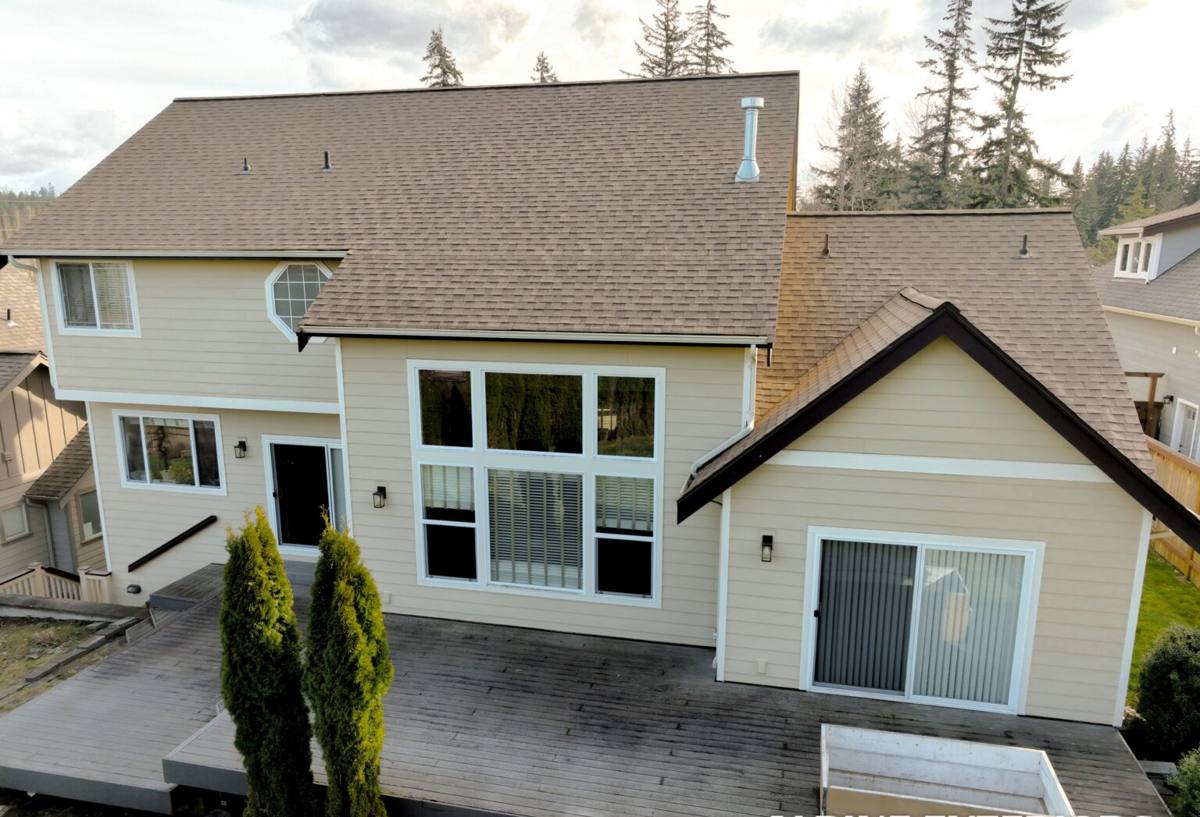
What This Corner of Whatcom County Does to Vertical Siding
Everson sits inland from Bellingham Bay, but it still gets the same marine-influenced weather pattern that shapes exterior work across Whatcom County: long stretches of damp, gray months, wind-driven rain events, and salt-tinged air that moves inland off the Salish Sea more often than most homeowners realize. None of that is unique to any one street or neighborhood — it's the regional climate this whole area is built for, and board and batten siding has some specific vulnerabilities to it.
Moss Season Is Long, and Seams Are Where It Starts
Whatcom County's moss season isn't a few weeks in spring — it's most of the year. Moss and algae need shade, moisture, and a surface to grip, and the vertical seams under battens are exactly that: shaded, slower to dry, and full of tiny ledges where organic growth gets a foothold. On a poorly primed or poorly finished panel, that growth doesn't stay cosmetic. It holds moisture against the substrate long-term, and that's when problems start underneath the paint.
Driving Rain Tests Every Batten and Fastener
Wind-driven rain doesn't fall straight down — it gets pushed sideways into vertical seams, battens, and any gap where flashing or caulking is thin. Board and batten has more linear feet of seam per square foot of wall than lap siding does, simply because of the geometry, so there's more opportunity for water to test a weak point. A batten that's face-nailed without a gap behind it, or a panel that wasn't primed on the cut edges, is where that testing turns into a real problem.
Salt Air and Fastener Corrosion
Salt-laden air accelerates corrosion in exposed metal — fasteners, flashing, and trim connectors all age faster here than they would further inland. Board and batten depends on a lot of fasteners doing their job for decades, since both the panel and every batten are mechanically attached. Corroding fasteners eventually lose their grip or streak the finish with rust, which is why fastener spec and corrosion resistance matter more here than in a drier climate.
Why We Install James Hardie for This Style — and Not the Alternatives
Board and batten is available in several materials, and it's a style where the material choice matters more than usual, because every seam and every batten is a potential weak point. We install James Hardie fiber cement exclusively, including for board and batten profiles, and we don't install LP SmartSide, vinyl board and batten, Cemplank, Allura, or cedar board and batten. That's a deliberate standard, not a lack of options.
| Material | How It Behaves in This Climate | Why It's Not What We Install |
|---|---|---|
| James Hardie fiber cement | Non-combustible, factory-finished, engineered for Pacific Northwest moisture exposure | This is what we install |
| Cedar board and batten | Handsome, but wood absorbs and releases moisture with every wet season, and needs refinishing on a real schedule | Ongoing maintenance burden and moisture sensitivity in a wet climate |
| LP SmartSide (engineered wood) | Wood-based composite; edges and cut ends are the most moisture-sensitive points on the panel | Field-cut edges need diligent sealing every time, and that's a recurring liability over decades |
| Vinyl board and batten | Low maintenance but lightweight; can warp or fade, and doesn't hold the crisp, flat panel look board and batten depends on | Appearance and rigidity don't hold up to the style's demands long-term |
James Hardie's fiber cement panels are non-combustible, hold a factory-applied ColorPlus finish that doesn't depend on field painting to perform, and are engineered in climate-specific HZ product lines built around exactly the kind of moisture exposure Whatcom County sees. That combination — a stable, factory-finished panel with a real transferable warranty — is why it's the only siding we put on a home, board and batten included.
What a Correct Board & Batten Job Actually Involves
The board and batten look is simple. Getting the assembly right underneath it is not automatic — it depends on details that don't show up in a finished photo but decide whether the wall stays dry for the next 30 years.
- A drainage gap (rain screen) behind the panel so incidental moisture can drain and the wall can dry, rather than trapping water flat against the sheathing
- Correctly flashed and sealed panel joints, window and door openings, and any penetrations before a single batten goes on
- Fastening at the spacing and edge distance James Hardie specifies for the panel, not a generalized "siding" pattern
- Corrosion-resistant fasteners suited to this climate's salt-air exposure, sized correctly for the batten and panel combined thickness
- Factory-primed or factory-finished cut edges sealed in the field, since a bare cut edge is the fastest way moisture gets into a fiber cement panel
- Proper clearance at the base of the wall — siding held up off grade, decks, and roof lines so it isn't sitting in standing water or snow load
- Battens set with consistent reveal and fastened to hit framing, not just the panel
Skip any one of those and the siding can still look right on install day. The failures that show up from skipping them tend to take a few wet seasons to surface — which is exactly why the installation details matter more than the material choice alone.
How We Work an Everson Job
We start with a walk-around of the exterior and, where the existing siding allows it, a look at what's happening underneath — trapped moisture, soft sheathing, or corroded fasteners tell us more about what a house needs than the surface alone. From there we put together a written estimate that spells out the panel profile, batten layout, trim details, and color, so there's no ambiguity about what's being installed. Once a project is scheduled, removal of the old siding (when applicable), moisture-barrier and flashing work, and the Hardie panel and batten installation itself follow in sequence, with cleanup at the end of each work day, not just at the finish. Because we already work this area regularly, we're not learning Whatcom County's permitting and inspection expectations on your project — that groundwork is already done.
What Drives the Cost of a Board & Batten Project
| Factor | Why It Moves the Price |
|---|---|
| Home size and wall height | More square footage and taller walls mean more panel, more battens, and more labor and staging time |
| Existing siding removal | Tearing off old cedar, vinyl, or engineered wood adds disposal and prep time before the new system goes on |
| Trim and corner complexity | Gables, dormers, and multiple roof lines multiply the flashing and trim detail work compared to a simple rectangular wall |
| Color and finish selection | ColorPlus factory finishes vary in cost by line; special-order colors can affect lead time as well as price |
| Site access | Tight lots, long driveways, or limited staging space affect how efficiently material and equipment can move |
Living With Board & Batten Siding Here
Even a correctly installed system benefits from a bit of seasonal attention in this climate. A soft wash to knock back moss and algae buildup before it gets a real foothold, an annual look at caulking around windows, doors, and trim, and keeping gutters and downspouts clear so water isn't sheeting down the wall are the main things that keep a board and batten exterior looking and performing the way it should. None of this is intensive maintenance — ColorPlus finishes are built to go a long time without repainting — but a wet climate rewards homeowners who don't ignore the exterior entirely between inspections.
Why Hiring a Crew That Already Works This Area Matters
Board and batten siding fails in specific, predictable ways when it's installed by a crew unfamiliar with the moisture patterns, wind exposure, and seasonal moss growth typical of Whatcom County. A crew that already works jobs in and around Lynden and Everson isn't guessing at fastener spacing for this climate, isn't unfamiliar with local permitting expectations, and has already seen what happens when a rain screen gap is skipped or a cut edge goes unsealed on a nearby project. That kind of familiarity doesn't show up as a line item on an estimate, but it shows up in how the siding performs ten and twenty years down the road.
If you're weighing a board and batten look for a home in the Everson area, we're glad to walk the property, talk through what the James Hardie system involves for your specific home, and put together a straightforward, no-pressure estimate — no obligation, just a clear look at what the job would take.