 Lynden Siding
 Siding Installation Built for Deming's Climate
Deming sits in the Nooksack River valley, close enough to the foothills that homes here deal with a different mix of weather than you'd find right in town. You get heavier tree cover, more shade on north- and east-facing walls, and long stretches of damp air that doesn't burn off as quickly as it does out in the open. Add in the driving rain that rolls through Whatcom County for much of the year, the marine-influenced air that carries salt and moisture inland from the coast, and a moss season that can run from fall through spring, and you've got a climate that is genuinely hard on exterior siding. Installation quality matters more here than in a lot of places, because the margin for error is smaller.
This page is about one thing: installing siding correctly on a home in Deming. Not a general overview of siding, not a sales pitch — just what your walls actually need, what a correct job looks like, and why the details matter as much as the material.
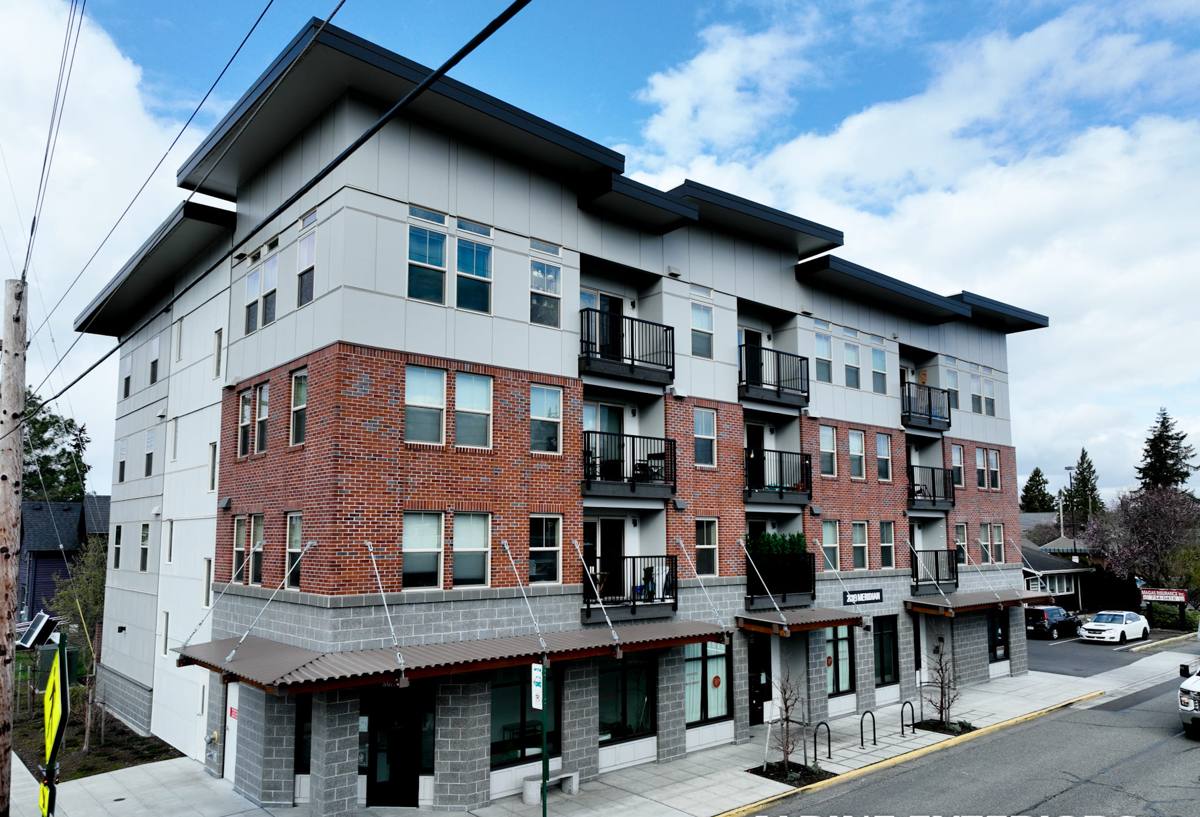
What Deming Homes Are Up Against
Every siding failure we get called out to inspect traces back to moisture getting somewhere it shouldn't, sitting there longer than it should, or an installation detail that ignored the way water actually moves on a wall. Deming's setting makes all three more likely if the work isn't done right.
| Climate Factor | Effect on Siding | Why It Matters in Deming |
|---|---|---|
| Driving, wind-driven rain | Forces water behind laps and around penetrations if flashing is missing or wrong | Valley winds push rain sideways into walls, not just straight down |
| Shade and tree cover | Slows drying time after every rain event | Wooded lots and taller foothill vegetation keep walls damp longer than open sites |
| Moss and algae growth | Holds moisture against the surface, stains paint, degrades unprotected substrates | Long wet season gives moss months to establish on north-facing and shaded walls |
| Marine, salt-tinged air | Accelerates corrosion on fasteners and trim if the wrong materials are used | Whatcom County's coastal influence reaches well inland on prevailing weather patterns |
| Freeze-thaw swings | Expands trapped moisture, stressing joints and caulk lines | Cold snaps followed by rain are routine in a valley climate like this one |
Why Some Products Struggle Here
Products that rely on a painted or primed wood substrate — cedar, primed spruce, engineered wood panels like LP SmartSide — depend entirely on an unbroken paint film to keep water out. In a climate where walls stay damp for extended stretches and moss holds moisture against the surface, any nick, seam gap, or cut edge becomes an entry point. Once wood-based substrates take on moisture, they swell, and swelling is what causes the paint to crack, which lets in more water. It's a cycle that's hard to stop once it starts, and Deming's shaded, damp lots give it more time to get going than most sites do. Vinyl siding avoids that rot cycle but has its own weakness here: it isn't fastened rigidly, so it moves with temperature swings, and gaps at laps and corners give wind-driven rain a path behind the panel with little drainage plane to manage it.
What Correct Installation Actually Involves
Siding is a system, not a single product. The board is the visible part, but most of what keeps a wall dry happens behind it. On a Deming home, we pay particular attention to a few things that generic installation crews often rush:
- Weather-resistant barrier — a continuous, correctly lapped house wrap or building paper behind the siding, with no gaps at penetrations
- Flashing at every opening — windows, doors, and any wall penetration get proper head, jamb, and sill flashing that directs water outward, not into the wall cavity
- Rainscreen or drainage gap — a small air space behind the siding lets bulk water drain and lets the wall breathe, which matters most on shaded, slow-drying walls
- Correct fastening pattern — nailed to the manufacturer's spec for exposure, fastener type, and spacing, not "close enough"
- Clearance from grade, roofs, and decks — siding kept off hard surfaces and roof lines by the specified minimum so splashback and roof runoff don't sit against the bottom course
- Caulking only where it belongs — sealed at true butt joints and penetrations, left open where the system is designed to drain, since over-caulking traps water in more often than it keeps it out
- Corrosion-resistant fasteners and trim — hardware rated for coastal-influenced, marine air, not standard interior-grade fasteners
Skip any one of these and the siding can look fine for a year or two while the real problem builds behind it. This is why we treat installation quality as equal in importance to the product choice — a great board installed with a shortcut flashing detail will still fail.
Our Process From Estimate to Finished Wall
- On-site walkthrough — we look at your home's exposure, shade pattern, existing moisture or moss issues, and current siding condition before quoting anything
- Written estimate — a clear scope covering tear-off (if needed), water-resistant barrier, flashing, siding, trim, and cleanup, with no vague allowances
- Prep and tear-off — removal of failing siding, inspection of sheathing for rot or damage, and repair of any compromised framing before anything new goes up
- Weather barrier and flashing — the part of the job you won't see once it's finished, done to manufacturer spec around every window, door, and penetration
- Siding installation — installed per James Hardie's published fastening and clearance requirements for this climate zone
- Trim, caulking, and touch-up — finish details completed and job site cleaned before we walk it with you
- Final walkthrough — we go over the finished work together and address anything before calling the job done
James Hardie: The Product We Install
We install James Hardie fiber cement siding exclusively. It's not the only product on the market, but it's the one we're willing to stand behind on homes in this climate, and here's why.
Hardie's fiber cement is non-combustible, doesn't rot, and doesn't feed moss or fungal growth the way wood-based products can — moss can still land on it, but it won't degrade the substrate underneath the way it will on primed wood. The ColorPlus finish is baked on at the factory under controlled conditions, which gives a more consistent, longer-lasting finish than field-applied paint and holds up better against the fade and wear that shaded, damp-cycle walls put on a coating. Hardie also engineers specific product lines by climate zone — the HZ5 line used in this region is formulated for areas that see the freeze-thaw and moisture cycling that a valley climate like Deming's produces. The warranty is transferable and backed by a manufacturer with decades in this exact product category, which matters if you ever sell the home.
None of that replaces correct installation — even Hardie siding will underperform if the flashing and drainage details behind it are wrong. But starting with a substrate that doesn't rot, doesn't need repainting every few years, and is engineered for this specific climate zone removes a whole category of long-term risk.
Comparing the Options
| Product | Rot Risk in Damp/Shaded Conditions | Finish Longevity | Fire Rating |
|---|---|---|---|
| James Hardie fiber cement | Not wood-based; no rot | Factory ColorPlus finish, long-lasting | Non-combustible |
| Primed wood / cedar | High if paint film breaks down | Field-applied, needs repainting on a cycle | Combustible |
| LP SmartSide (engineered wood) | Moderate; depends on sealed edges and coating | Field or factory-applied, moderate lifespan | Combustible |
| Vinyl | Low rot risk, but poor drainage at laps | Can fade and become brittle over time | Combustible, can deform under heat |
Cost Factors for a Deming Siding Project
Every home is different, and we don't quote pricing without seeing the site, but the main variables that move the cost of a siding installation in this area are consistent:
| Factor | Why It Affects Cost |
|---|---|
| Tear-off vs. new construction | Removing failing siding and repairing damaged sheathing adds labor before new siding can go up |
| Home size and wall complexity | More corners, dormers, and trim detail mean more cutting and flashing work |
| Access and site conditions | Wooded or sloped lots, common around Deming, can affect staging and scaffolding needs |
| Existing moisture damage | Rot found during tear-off has to be repaired before siding goes back on, which isn't always visible until walls are opened up |
| Siding profile and trim selection | Lap width, shingle-style panels, and trim detail level all affect material and labor |
Why Hire a Crew That Already Works in Deming
A crew that's worked this part of Whatcom County knows which walls are going to hold moss, which exposures need extra attention to flashing, and how the valley's rain and shade patterns differ from a job in downtown Lynden or out on more open ground. That's not a marketing point — it changes real decisions on the job, like where to prioritize drainage detailing or how much clearance to leave at grade on a shaded, slow-drying elevation. It also means someone who understands local permitting expectations and can plan around the weather windows that actually work for exterior work in this area, rather than learning the region on your project.
If you're looking at a siding project on your Deming home, we're happy to come take a look, walk the property with you, and put together a clear, honest estimate — no pressure, no obligation. Use the form below to get started.