 Lynden Siding
 Roofing in Deming's Shaded Corner of Whatcom County
Deming sits in a different microclimate than the open farmland around Lynden proper. Tucked along the Nooksack River corridor with more tree cover and closer proximity to the foothills leading up toward Mount Baker, homes here tend to get less direct sun, more standing shade, and slower-drying roof surfaces than properties out on the flats. That combination — shade, moisture, and organic debris from surrounding trees — is exactly what shortens a roof's working life if the wrong materials or the wrong installation shortcuts were used the first time around.
We're a Lynden-based crew that already works properties in and around Deming, so we're not learning the area's quirks on your job. We know which roofs in this part of Whatcom County are carrying more moss and moisture than they should, and what it actually takes to fix that for good rather than patching around it.
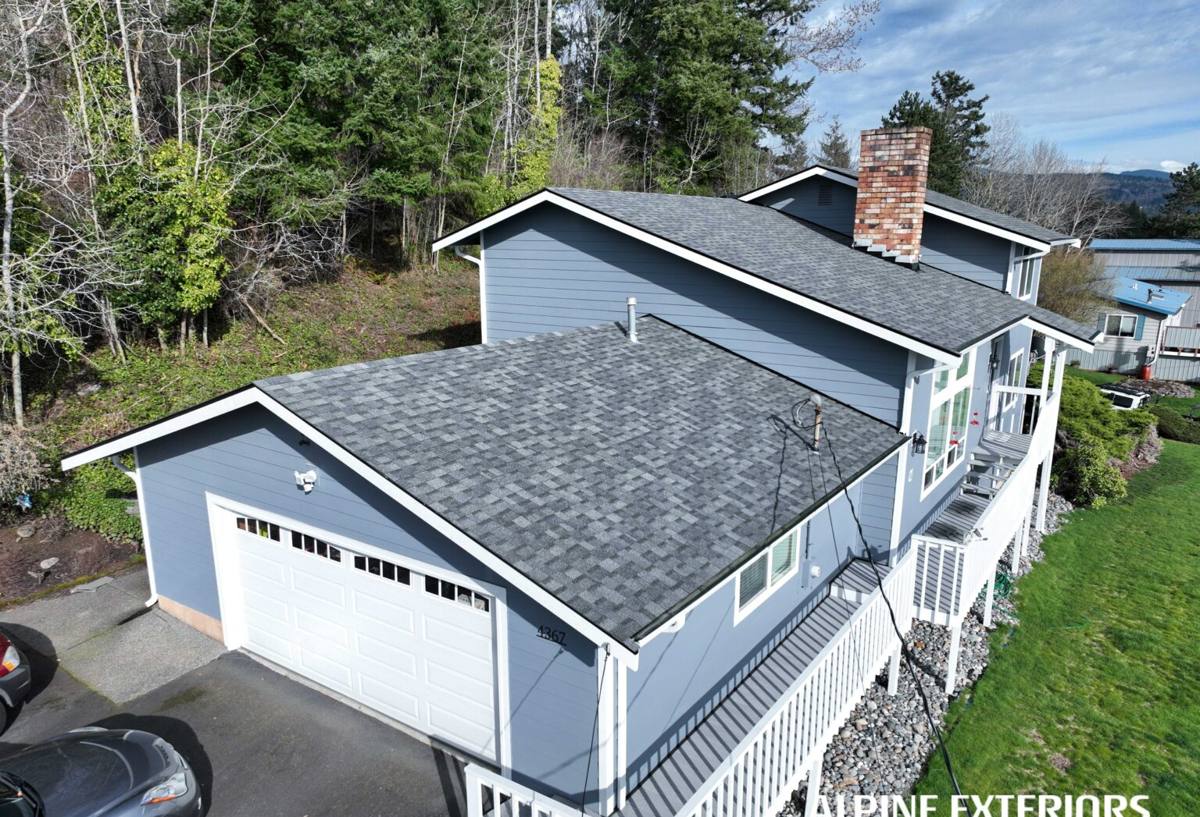
Why Shade, Moisture, and Tree Cover Wear Deming Roofs Faster
Moss and Shade
Moss needs shade and moisture to establish, and wooded lots give it both. Once moss gets a foothold on a roof, it holds water against the surface long after the rest of the neighborhood has dried out. On asphalt shingles, that trapped moisture accelerates granule loss. On any roof, moss root structures work into seams and laps and can lift shingle edges over time, giving wind-driven rain a place to get underneath.
Driving Rain and Wind-Driven Moisture
Whatcom County's weather doesn't just rain straight down — a good share of it comes in sideways during fall and winter storm systems. That matters more than people think, because a roof that sheds vertical rain fine can still leak if the wind is pushing water uphill under a shingle tab or sideways into a poorly lapped valley. Flashing details and shingle nailing patterns that would be marginal in a drier climate simply don't hold up here over a full roof lifespan.
Marine-Influenced Air
Even away from the immediate coastline, Whatcom County's climate carries a marine influence — damp, salt-tinged air moving inland off Puget Sound and the Strait of Georgia. That moisture load is part of why the region's moss season runs long and why metal fasteners, flashing, and vent components need to be rated for the environment rather than whatever is cheapest at the yard.
Signs Your Deming Roof Has Reached Replacement Stage
Not every roof problem means a full replacement — plenty of issues are legitimately repairable. But there's a point where patching becomes false economy, especially on a shaded, moss-prone lot where the underlying deck has likely been absorbing moisture longer than the visible symptoms suggest. Watch for:
- Granules collecting in gutters or at downspout outlets in noticeably increasing amounts
- Shingles that look cupped, curled at the edges, or brittle when walked
- Moss or dark algae staining that comes back within a season of cleaning
- Soft or spongy spots underfoot, or visible sagging along the roof plane
- Daylight visible through the attic decking, or damp insulation below the roof line
- Interior staining on ceilings, especially near valleys, chimneys, or skylights
- A roof approaching or past 20–25 years old with original materials still in place
- Multiple past repairs to the same section that keep reopening
If you're seeing two or more of these, it's worth a real inspection rather than another round of caulk and patch.
What a Correct Roof Replacement Actually Involves
Full Tear-Off, Not a Layover
We remove the existing roofing down to the deck rather than installing new shingles over old. A layover hides the condition of the decking, traps moisture between layers, and voids most manufacturer warranties outright. On a shaded property, hidden rot under an old layer is common enough that skipping the tear-off is simply not an option we'll offer.
Deck Inspection and Repair
Once the old material is off, we check the sheathing for soft spots, delamination, and rot — particularly around valleys, eaves, and any area that's been shaded and damp for years. Any compromised decking gets replaced before anything new goes down. This is the step that gets skipped by crews trying to hit a lowball price, and it's the step that determines whether the new roof actually lasts.
Underlayment Built for Wet Climates
We use synthetic or ice-and-water underlayment appropriate to the roof's exposure, with extra protection at eaves, valleys, and any low-slope transitions where wind-driven rain is most likely to find a way in. This layer is cheap insurance compared to what a leak costs once it reaches the deck and framing.
Flashing Details
Chimneys, skylights, vent pipes, and wall intersections are where the majority of roof leaks actually start — not the open field of shingles. We install new flashing at every penetration and re-work step flashing along walls rather than reusing old pieces, since flashing that's been through one wet season already has often lost its seal.
Choosing Roofing Materials for a Shaded, Moss-Prone Property
There's no single "best" roofing material for every Deming property — the right choice depends on how much shade the lot gets, the roof's slope, and how much ongoing maintenance you want to sign up for. Here's how the common options stack up for this kind of setting:
| Material | Moss/Moisture Resistance | Maintenance | Typical Lifespan |
|---|---|---|---|
| Standard 3-tab asphalt | Lower — granule loss accelerates in shade | Regular moss treatment recommended | 15–20 years |
| Architectural (laminate) asphalt | Moderate — thicker mat, better sealing | Periodic moss/debris cleaning | 25–30 years |
| Algae-resistant (AR) asphalt shingles | Better — copper-infused granules resist algae growth | Lower, but not maintenance-free | 25–30 years |
| Standing seam metal | High — moss struggles to root on smooth metal panels | Low; occasional debris clearing | 40–60 years |
| Cedar shake | Lower in shade unless well-ventilated | High — treatment and inspection needed | 20–30 years, shade-dependent |
For heavily shaded Deming lots, we most often steer homeowners toward algae-resistant architectural shingles as the practical middle ground, or standing seam metal when a homeowner wants to largely take moss out of the equation for the long term. We'll walk through the honest trade-offs for your specific roof rather than pushing whatever's easiest to install.
Ventilation and Moisture Control Matter as Much as the Shingle
A shaded roof deals with moisture from both directions — rain and moss from above, and trapped heat and humidity from below if the attic isn't ventilated correctly. Poor ventilation shortens shingle life from underneath, well before the surface shows obvious wear, by keeping the deck warm and damp longer than it should be. As part of a replacement, we check that intake at the eaves and exhaust at the ridge are balanced, and we correct blocked or undersized venting rather than just reinstalling whatever was there. On a property with heavy tree cover, this step is often what determines whether the next roof actually reaches its rated lifespan or falls short.
Our Roof Replacement Process
- On-site inspection. We walk the roof and attic, note the deck condition, ventilation, and any shade or moss patterns specific to your lot.
- Written estimate. A clear scope and price — material options explained honestly, no pressure to upgrade beyond what your roof actually needs.
- Material delivery and site protection. Landscaping, gutters, and siding get protected before tear-off begins.
- Full tear-off and deck inspection. Old roofing removed, sheathing checked and repaired where needed.
- Underlayment, flashing, and ventilation correction. The parts that don't show but determine how the roof performs in a wet winter.
- New roofing installed to manufacturer spec. Correct nailing patterns and exposure for full warranty coverage.
- Cleanup and magnetic sweep. Debris and stray fasteners cleared from the yard and driveway.
- Final walkthrough. We go over the finished roof and warranty paperwork with you directly.
Cost Factors for a Deming Roof Replacement
Every roof is different, but the price differences between jobs generally come down to a handful of factors. Getting a firm number requires an on-site look, but this is what typically moves the estimate:
| Factor | Why It Affects Cost |
|---|---|
| Roof size and number of planes | More material and more seams, valleys, and hips to detail |
| Deck condition | Rotted sheathing found during tear-off has to be replaced before re-roofing |
| Material choice | Standard asphalt, AR asphalt, and metal carry different material and labor costs |
| Roof pitch and access | Steep or hard-to-access roofs take longer and need more safety setup |
| Number of penetrations | Every chimney, skylight, and vent pipe needs its own flashing work |
| Ventilation corrections | Adding or upsizing intake/exhaust venting adds labor but protects the new roof |
| Layers to remove | Tear-off of multiple existing layers takes more time than a single layer |
We give straightforward written estimates that break these factors out, so you can see exactly what you're paying for rather than a single lump number.
Why a Crew That Already Works Deming and Lynden Matters
Roofing crews who mostly work in drier, more open parts of the region sometimes underbuild for what a shaded, wetter lot like a Deming property actually needs — lighter underlayment, standard shingles where algae-resistant would hold up better, or ventilation left as-is because it wasn't obviously broken. We work this part of Whatcom County regularly enough to know that "good enough for a sunny roof" isn't the same standard as "built to last on a shaded one."
There's also a practical side to hiring local: we're not driving a crew in from out of the region, scheduling around a long commute, or unfamiliar with local permitting and inspection expectations. When weather windows are tight — which they often are here between fall rains and moss season — being able to move quickly and reliably matters as much as workmanship.
If your Deming roof is showing its age, or you just want a straight answer on whether repair or replacement makes sense, we're glad to take a look. The estimate is free, there's no pressure attached, and you'll get a clear breakdown of what your roof actually needs — use the form below to get started.