 Lynden Siding
 Building Decks That Actually Hold Up in Deming
Deming sits in a part of Whatcom County where the weather doesn't do anything halfway. Rain comes in sideways off the water for weeks at a time, moss season stretches longer here than it does on the dry side of the state, and the moist, marine-influenced air works into wood, metal, and concrete year-round. A deck built to a generic national spec will show its age here fast — cupped boards, rusted fasteners, black streaks on the railings, soft spots where water has been sitting instead of running off. A deck built for this specific climate looks and performs differently five and ten years down the road.
We build custom decks for homes around Deming and the greater Lynden area, and the design choices we make are shaped directly by what this stretch of Whatcom County throws at outdoor structures every winter.
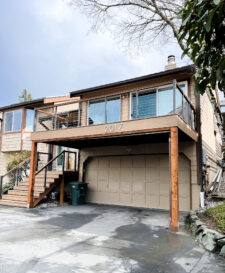
What the Local Climate Actually Does to a Deck
It helps to be specific about what's working against a deck out here, because it changes almost every decision in the build:
- Driving rain gets pushed into ledger connections, railing posts, and any horizontal surface that isn't sloped to shed water.
- Persistent moisture and shade from tree cover common on Deming properties keep deck surfaces damp longer than in open, sun-exposed yards.
- Moss and algae take hold on any surface that stays wet, turning boards slick and, over time, breaking down the surface fibers of untreated wood.
- Salt-tinged, humid air moving in from the coast accelerates corrosion on fasteners, brackets, and any hardware that isn't rated for it.
- Freeze-thaw cycles, while less severe than inland climates, still stress footings and connections that weren't set to proper frost depth.
None of this is exotic — it's just consistent, and consistency is what wears a structure down. Building for it isn't about over-engineering; it's about not skipping the details that matter here.
Choosing a Decking Material That Fits This Climate
There's no single "right" material for every deck — it depends on budget, how much upkeep you want to do, and how much sun or shade the site gets. Here's how the common options actually compare under Deming's rain-and-moss conditions:
| Material | How it handles moisture/moss | Maintenance | Typical lifespan |
|---|---|---|---|
| Pressure-treated wood | Resists rot when properly sealed; moss will grow on shaded, damp boards without upkeep | Annual cleaning and re-staining recommended | 15–20 years with upkeep |
| Cedar | Naturally rot- and insect-resistant; still needs sealing to prevent graying and moss | Sealing every 1–2 years | 20–25 years with upkeep |
| Composite decking | Doesn't absorb water or rot; some early composite products stayed damp and grew surface mildew, so board selection matters | Periodic washing, no staining/sealing | 25–30+ years |
| PVC decking | Fully non-absorbent, best resistance to moss and mildew of the common options | Occasional washing | 25–30+ years |
We don't push one product line over another as a rule. What we do insist on is checking how a given composite or PVC product actually performs in wet, shaded conditions before we put our name on it — some budget composite lines were designed for drier climates and don't shed water or resist mildew as well as their marketing suggests. That's a maintenance and appearance trade-off we'll walk you through honestly, not a brand we'll disparage without cause.
Wood vs. Composite: The Real Trade-Off
Wood costs less up front and can look better to homeowners who want a natural material, but it demands real annual maintenance in this climate — skip a year of sealing and moss gets a foothold fast. Composite and PVC cost more initially but largely take moss and rot out of the equation, which matters most on shaded lots or decks that don't get much direct sun.
The Structural Work That Actually Determines How Long a Deck Lasts
The decking surface is what you see, but the framing underneath is what determines whether the deck is still solid in fifteen years. A few things we treat as non-negotiable on every deck we build:
Ledger Board Flashing
Where a deck attaches to the house is the single most common point of water intrusion and structural failure on decks in this climate. Proper flashing — installed so water is directed out and away from the house sheathing, not trapped behind the ledger — is standard on every deck we frame, not an upgrade.
Footings Set to Proper Depth
Footings need to go below frost depth and bear on undisturbed, well-drained soil. On wooded or sloped Deming lots, that sometimes means adjusting footing placement or depth to account for drainage patterns that aren't obvious until we're actually digging.
Joist Protection and Airflow
Joists that sit in standing moisture or trapped humidity rot from the inside long before the surface boards show any wear. We use joist tape or equivalent protection on cut ends and top surfaces, and we design in enough airflow underneath the deck that moisture doesn't just sit there.
Fasteners and Hardware: The Detail Most Decks Get Wrong
Corrosion is one of the most common causes of premature deck failure in marine-influenced climates, and it's almost always a hardware problem, not a lumber problem. Standard zinc-coated screws and brackets can start rusting within a few seasons out here, leaving rust streaks on the decking and, eventually, a weaker connection than the day it was installed.
- Stainless steel or high-grade coated fasteners rated for coastal/marine exposure
- Structural connectors (joist hangers, post bases) matched to the fastener grade, not mismatched
- Hardware rated compatible with the specific decking material — this matters more with some treated lumber chemistries, which can accelerate corrosion in incompatible metals
It's a small line item on an estimate and an easy thing to cut corners on. It's also one of the clearest signs of whether a deck was built for this climate or just built to a generic spec.
Drainage, Moss, and Keeping the Surface Usable
A deck that drains well fights moss for you. Boards should be spaced and sloped so water sheds off the surface instead of pooling, and any area under or around the deck should have somewhere for runoff to go rather than sitting against footings or siding. On shaded Deming properties with heavy tree cover, we'll also talk through realistic expectations — no deck surface stays moss-free indefinitely under a full canopy without some seasonal cleaning, and it's better to plan for that than be surprised by it.
Simple Moss Control That Actually Works
- Rinse and soft-wash the surface at the start of moss season, before it gets established
- Keep gutters and downspouts clear so runoff isn't dumping extra water onto the deck
- Trim back overhanging branches where practical to let more light and air reach the surface
- Reseal wood decking on schedule — a sealed surface sheds moss far more easily than a bare one
Designing for Deming's Rural, Wooded Lots
A lot of the properties we work on around Deming sit on larger, more wooded parcels than you'd find in town, which changes the design conversation. Shade patterns shift through the day and the seasons, sightlines matter more when there's room to build out rather than just up, and grading around the house often isn't flat. We walk the actual site before finalizing a design rather than working off a standard template, because the right footing layout, railing placement, and even board orientation depend on how water and light move across that specific lot.
Permits and Code in Whatcom County
Most custom decks — especially anything attached to the house or built above a certain height — require a permit through Whatcom County. Permitting covers footing depth, structural connections, railing height and spacing, and stair geometry, and it exists precisely because ledger attachment and footing failures are common problems when decks are built without inspection. We handle the permit process as part of the job rather than leaving it to the homeowner, and we build to pass inspection the first time.
Our Process for a Deming Deck Project
- Site visit: We walk the property, assess sun/shade, drainage, and how the deck will connect to the house.
- Design and material selection: We go over decking material options, layout, and railing choices against your budget and maintenance preferences.
- Permitting: We handle the Whatcom County permit submission and structural details.
- Build: Footings, framing, flashing, and decking installed to the standards above — not the minimum code allows.
- Final walkthrough: We go over the finished deck with you, including basic maintenance so it holds up the way it's supposed to.
Why It Matters That We Already Work in Deming
A crew that already works this part of Whatcom County isn't guessing at how the weather behaves here — we've seen which ledger connections fail, which fasteners rust first, and which decking products actually hold up under a wet, shaded canopy versus which ones just look good on a spec sheet in a showroom. That local track record shows up in the small decisions that don't make it onto a bid sheet: where we route drainage, how we flash a tricky roofline above a deck, which hardware we won't use regardless of what it saves on cost.
What a Correctly Built Deck Should Have
- Ledger flashing installed to direct water away from the house structure
- Footings set below frost depth on solid, well-drained soil
- Corrosion-resistant fasteners and hardware throughout, not just at visible connections
- Decking material matched to the site's actual sun and shade conditions
- Positive drainage so water sheds off the surface instead of pooling
- A permit and inspection record on file with Whatcom County
If you're planning a custom deck in Deming or elsewhere around Lynden, we're glad to come take a look at the site and talk through options — no pressure, no obligation. Fill out the form below and we'll get in touch to set up a free estimate.