 Lynden Siding
 Why Decks in Deming Wear Out Faster Than Homeowners Expect
Deming sits in a part of Whatcom County where the forest canopy, the Nooksack River valley, and the general Pacific Northwest weather pattern all combine to work against an outdoor deck. Rain here isn't just frequent — it's driving rain that gets pushed sideways under railings and against ledger boards by wind coming off the valley. Add tree cover that keeps decking surfaces shaded and slow to dry, and you get a long moss season that can run from early fall through late spring. A deck that might last two decades in a dry, sunny climate can show serious rot and structural fatigue in half that time out here if it wasn't built with this specific environment in mind.
Most of the decks we get called out to replace in this area didn't fail because the homeowner neglected them. They failed because they were built to a generic spec — standard fasteners, minimal flashing, decking laid tight with no airflow underneath — that simply doesn't hold up to Whatcom County's combination of moisture, shade, and seasonal freeze-thaw. Replacing a deck here is a chance to fix those built-in weaknesses, not just swap old boards for new ones.
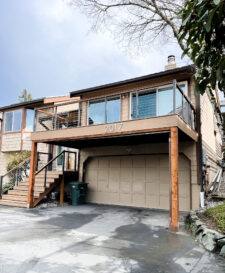
Signs a Deck Needs Replacement, Not Just Repair
Not every tired-looking deck needs to come out entirely. But there are signs that point to replacement being the honest recommendation rather than another round of patchwork:
- Soft, spongy decking boards, especially near the house or in shaded corners that never fully dry out
- Rot or soft wood at the ledger board where the deck attaches to the house — often the first place driving rain finds a way in
- Rust streaking or corroded fastener heads, a sign the hardware is failing faster than the wood around it
- Support posts or footings that have shifted, cracked, or show rot at the base
- Persistent moss or algae that comes back within weeks of cleaning, indicating the wood itself is holding moisture
- Railings that feel loose or flex under light pressure — a safety issue, not a cosmetic one
If the problems are limited to a few boards and the framing underneath is sound, repair can make sense. If the framing itself has been compromised, replacement is the only option that actually holds up.
What a Correct Deck Replacement Actually Involves
Framing and Ledger Attachment
The ledger board — where the deck ties into the house — is the single most important connection on the whole structure, and it's the part most likely to fail quietly in a wet climate. A correct replacement means proper flashing behind the ledger, structural screws or bolts rated for the load (not just nails), and a gap or drainage path so water isn't trapped between the ledger and the siding.
Footings and Posts
Footings need to be sized and set below frost depth, and posts need a base connection that keeps end grain off standing water. We see a lot of older decks in this area with undersized footings or posts set directly in soil, which is exactly how you end up with rot at ground level within a handful of years.
Joists and Airflow
Joists get treated or protected framing lumber, joist tape or flashing on top edges to stop water from wicking into cut ends, and spacing that allows air to actually move underneath the deck. In a shaded, damp environment, airflow underneath is what determines whether the frame dries out between rain events or stays wet all season.
Decking Surface
Proper board spacing, correct fastening method, and a slight slope away from the house so water sheds instead of pooling. These details don't show up in a photo, but they're the difference between a deck that sheds moss with an occasional cleaning and one that stays green and slick no matter what you do to it.
Choosing a Decking Material for Deming's Climate
There's no single "best" decking material — there's a best material for your budget, your maintenance appetite, and how much direct sun versus shade your specific deck gets. In a heavily shaded, moisture-heavy setting like much of Deming, that last factor matters more than usual.
| Material | Moss/Algae Resistance | Maintenance Needed | Typical Lifespan |
|---|---|---|---|
| Pressure-treated wood | Low in shade — needs regular cleaning and sealing | Annual cleaning, sealing every 1-2 years | 10-15 years |
| Cedar | Moderate — natural oils help, but shade still promotes growth | Cleaning and re-staining every 1-2 years | 15-20 years |
| Capped composite | High — solid cap resists moisture absorption | Periodic washing, no sealing or staining | 25-30 years |
| PVC decking | Highest — no wood fiber for moss to grip | Occasional washing | 25-30+ years |
We don't push one material on every homeowner. Wood costs less up front and has a warm, natural look many people want, but it asks for real upkeep in a shaded, wet yard — skip a year of sealing and you're often playing catch-up. Capped composite and PVC cost more initially but hold up to shade and moisture with far less ongoing work, which is why we recommend them for decks that sit under heavy tree cover or stay damp most of the year. The right call depends on how much maintenance you actually want to keep up with, not just the sticker price.
Railings, Stairs, and Code Requirements
Any deck replacement in Whatcom County needs to meet current building code, and railings are where older decks most often fall short. Guardrails on any deck surface more than 30 inches above grade, baluster spacing that won't allow a 4-inch sphere to pass through, and graspable handrails on stairs with four or more risers are all standard requirements we build to, not upgrades we tack on. Permitting requirements apply based on the scope of the project and the deck's height and size — we handle that process as part of the job rather than leaving it for the homeowner to sort out.
Our Deck Replacement Process
- On-site assessment — we walk the existing deck, check the framing, ledger, and footings, and identify what's driving the failure
- Honest scope and estimate — repair versus full replacement, material options, and a clear written price range
- Permitting — handled on our end where required, based on the project scope
- Demolition and disposal — old decking, framing, and debris removed and hauled off
- Framing rebuild — ledger flashing, footings, posts, and joists built to hold up to local moisture and shade conditions
- Decking, railings, and stairs installed — to the material spec and code requirements agreed on up front
- Final walkthrough — we go over the finished deck with you before calling the job done
What Affects the Cost of a Deck Replacement
Every deck is different, but the same handful of factors drive most of the price variation we see on jobs in this area:
| Factor | Why It Matters |
|---|---|
| Deck size and shape | Square footage and complexity of the layout (multiple levels, angles, wraparounds) directly affect labor and material |
| Condition of existing framing | Rot at the ledger or footings often means more rebuild work than a simple resurfacing job |
| Decking material chosen | Wood costs less upfront; composite and PVC cost more but need far less long-term upkeep |
| Railings and stairs | Custom railing designs, glass panels, or multiple stair runs add cost beyond a basic guardrail |
| Site access | Decks on sloped lots or tucked behind trees can require more hand-labor and careful equipment access |
| Permitting and inspection | Larger or taller decks typically require permits, which adds time and a modest fee to the project |
We give homeowners a real number after seeing the site, not a phone-quote guess. Broad ranges vary widely based on the factors above, which is why we walk every deck before pricing it.
Keeping a New Deck in Good Shape
A properly built deck still needs some seasonal attention in this climate, especially with the amount of shade and rain Deming sees:
- Sweep off needles, leaves, and debris regularly so moisture doesn't sit trapped against the surface
- Clean moss and algae buildup at the start and end of the wet season rather than letting it establish
- Check gutters and downspouts near the deck so runoff isn't draining directly onto or under it
- Inspect fasteners and railings once a year for looseness or corrosion
- For wood decks, reseal on the schedule the material calls for — don't wait until it looks dry and gray
- Keep planters and rugs from sitting in one spot too long, since they trap moisture against the decking
Why Hire a Crew That Already Works in Deming
Deck framing that holds up in a dry inland climate isn't automatically right for a shaded, river-valley property in Whatcom County. A crew that already works decks in this area knows to flash the ledger for driving rain, size footings for how wet the ground stays through the season, and steer homeowners toward decking that won't turn green again a month after cleaning. That's the difference between a deck replacement that's solved for the last job and one that's built for this one.
If you're weighing repair versus replacement, or just want an honest read on what your current deck actually needs, we're happy to take a look. Reach out for a free, no-pressure estimate using the form below.