 Lynden Siding
 Deck Replacement in Blaine: Built for This Coastline
Blaine sits close enough to the water that homes here deal with a different set of conditions than decks built further inland in Whatcom County. Salt-laden air off the Strait, wind-driven rain that finds its way under flashing and between boards, and a long stretch of gray, damp months all work against a deck year-round. A deck that looks fine from the yard can be quietly failing underneath — soft joists, corroded fasteners, or a ledger connection that's been slowly wicking moisture into the house framing for years. Replacing a deck the right way in this area means building for those specific conditions, not just swapping old boards for new ones on the same bones.
We're a Lynden-based crew, and Blaine is part of our regular service area. That matters more than it might sound like — a contractor who only passes through once knows less about how decks actually hold up here than one who's replaced and repaired them season after season in the same stretch of coastline.
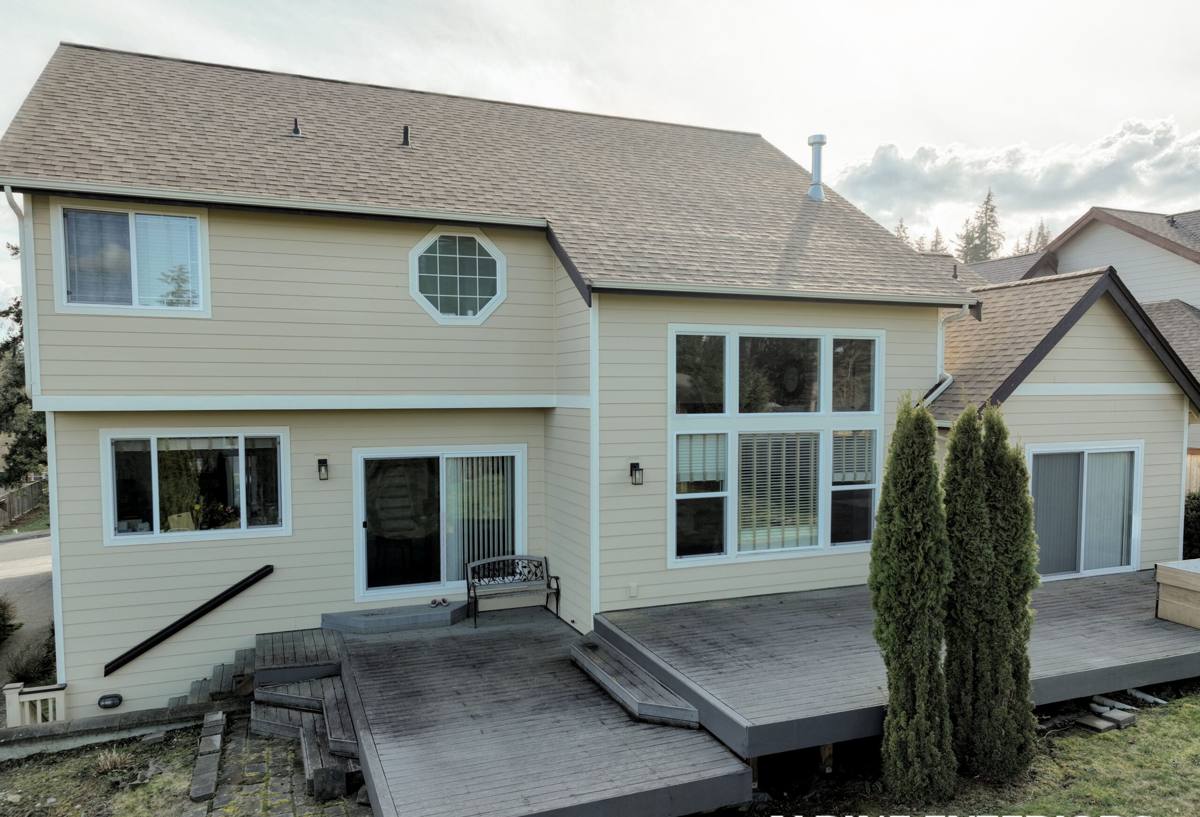
Why Blaine's Climate Is Hard on Decks
Salt Air and Metal Fatigue
Proximity to salt water accelerates corrosion on anything metal — fasteners, joist hangers, post bases, and railing hardware. Standard coated screws and connectors that hold up fine in a drier inland climate can start rusting within a few years this close to the coast. Once a fastener corrodes, it loses holding strength long before it looks obviously bad, which is part of why deck failures near the water often happen without much warning.
Driving Rain and Water Intrusion
Wind-driven rain doesn't just fall straight down — it gets pushed sideways into gaps, under top rails, and behind ledger boards where the deck attaches to the house. That's the single most common failure point we find on older decks: a ledger board and rim joist that have been absorbing moisture for years because the original flashing was missing, undersized, or installed before proper flashing details were standard practice.
Moss, Algae, and a Long Damp Season
Whatcom County's wet season stretches long, and a deck that doesn't get much direct sun holds moisture for extended periods. That's ideal for moss and algae growth, which makes surfaces slick and, more importantly, holds water against the wood or composite surface far longer than it would otherwise sit. Over time that constant damp cycle accelerates rot in wood decking and can shorten the life of lower-grade composite products too.
Signs Your Deck Needs Replacing, Not Just Repairing
- Soft or spongy spots when you walk across the decking, especially near the house or along the perimeter
- Visible gaps, cupping, or splitting in individual boards across large sections rather than just one or two
- Rust staining running down from screws, joist hangers, or railing posts
- A ledger board that feels damp, discolored, or separated slightly from the house siding
- Wobble or give in the railing posts when pushed — a safety issue, not a cosmetic one
- Persistent moss or dark staining that keeps coming back within weeks of cleaning
- Structural framing (joists, beams, posts) that shows rot when probed with a screwdriver
If the problems are limited to surface decking on an otherwise sound structure, repair or a board-by-board resurface can make sense. Once the framing, ledger connection, or footings are compromised, replacement is the honest recommendation — patching over structural rot just delays a bigger problem and can create liability if someone gets hurt on a deck that looks fine but isn't.
What a Correct Deck Replacement Involves
Full Demolition and Framing Inspection
We remove the old decking, railing, and framing down to what's still sound, and inspect the ledger connection, posts, and footings before building anything new. This is the step that gets skipped by crews trying to move fast — and it's the step that determines whether the new deck actually lasts.
Proper Ledger Flashing
Because wind-driven rain is such a persistent issue here, the ledger-to-house connection gets correctly flashed with materials designed to shed water away from the house framing, not just caulked and covered. This single detail prevents the most common cause of hidden rot we see on older Blaine-area decks.
Corrosion-Resistant Hardware
Given the salt air exposure, we use fasteners and structural connectors rated for coastal or treated-lumber exposure rather than standard-grade hardware. It costs a little more upfront and it's the difference between hardware that's still solid in fifteen years and hardware that's rusting through in five.
Footings and Structural Support
Footings are checked against current code depth and bearing requirements, especially on older decks that may have been built to a lower standard decades ago. Undersized or frost-heaved footings are a common reason a deck develops a lean or bounce over time.
Decking Material Installed With Drainage in Mind
Board spacing, ventilation beneath the deck, and slope away from the house all get accounted for so water has somewhere to go instead of sitting and soaking in — whether the finished surface is wood or composite.
Choosing Decking Material for This Climate
There's no single "best" decking material — the right choice depends on budget, maintenance appetite, and how much direct sun and moisture exposure the deck actually gets. We'll walk through the honest trade-offs for your specific site rather than pushing one product across every job.
| Material | Upfront Cost | Maintenance in This Climate | Typical Lifespan |
|---|---|---|---|
| Pressure-treated wood | Lowest | Needs regular sealing/staining; more prone to moss and splintering in damp shade | 10–15 years with upkeep |
| Cedar | Moderate | Naturally rot-resistant but still needs periodic finish; graying without maintenance | 15–20 years with upkeep |
| Composite (mid-to-high grade) | Higher | Low — occasional washing to keep moss/algae from building on the surface | 25–30 years, manufacturer-warrantied |
| PVC decking | Highest | Very low — fully synthetic, resists moisture absorption entirely | 25–30+ years, manufacturer-warrantied |
In a coastal, high-moisture spot like Blaine, we generally steer homeowners away from bargain-grade composite — the cheaper composite lines have a track record of moisture absorption and swelling at cut edges over time that mid-grade and premium composite lines address with better core materials and edge sealing. That's a maintenance and warranty consideration, not a claim that any specific brand is defective; we're simply matching material grade to the exposure your deck will actually see.
Railing and Fastener Choices That Matter Here
Railings take a lot of abuse near the coast — they're the part of the deck most exposed to blowing rain and salt spray, and the part people lean on. Metal railing components and connector hardware should carry a corrosion rating appropriate for coastal exposure. Cable rail systems look great but are worth a conversation about maintenance, since the cables themselves need occasional tensioning and inspection for corrosion over time. Wood or composite railing systems avoid that specific maintenance item but bring their own upkeep depending on the material chosen.
Our Process, Start to Finish
- Free on-site estimate — we look at the existing deck, framing condition, and site drainage, and talk through material options and realistic pricing.
- Written scope and price — a clear breakdown of what's being removed, what's being built, and the materials specified, so there's no ambiguity later.
- Permitting — deck replacements typically require a permit; we handle that process rather than leaving it on the homeowner.
- Demolition and disposal — old decking and framing removed and hauled off.
- Framing, flashing, and inspection — the structural work that determines the deck's actual lifespan.
- Decking, railing, and finish work — installed to manufacturer specifications for whatever material was chosen.
- Final walkthrough — we go over the finished deck with you before calling the job done.
Why a Lynden-Based Crew Matters for a Blaine Job
We're not a national franchise dispatching whoever's available that week — we're based in Lynden and work this part of Whatcom County regularly, including Blaine. That means we've seen how decks built to lower standards a decade or two ago tend to fail in this specific climate, and we build accordingly rather than guessing. It also means straightforward accountability: if something needs a follow-up look after the job is done, we're not driving in from out of the area to handle it.
What to Expect From Us
- An honest assessment of repair versus full replacement — we won't sell a full rebuild if a repair genuinely solves the problem
- A written estimate with real material specifications, not vague line items
- Coastal-appropriate hardware and flashing as standard practice, not an upsell
- Permit handling so the job is done to code, not just done to look right
- Direct communication from people who'll still be here after the job wraps
Planning and Budgeting for Your Project
Deck replacement costs vary widely based on size, framing condition, material choice, and site access — a small ground-level deck rebuild and a large elevated deck with new footings and railing are very different jobs. Rather than quoting a number that doesn't reflect your actual situation, we'd rather walk the site, understand what's really going on underneath the old decking, and give you a specific, written price based on what your deck actually needs.
If your Blaine-area deck is showing its age, or you just want an honest opinion on whether it's a repair job or a replacement, we're glad to take a look. Reach out for a free, no-pressure estimate using the form below — there's no obligation, and you'll get a straight answer either way.