 Lynden Siding
 Building a Deck That Can Actually Handle Wiser Lake
Wiser Lake properties get a version of Whatcom County weather that's harder on outdoor structures than most people expect. Between the tree cover around the lake, the humidity sitting low over the water, and the long stretch of wet, grey months western Washington is known for, a deck here is under near-constant moisture load for a big chunk of the year. Add in the salt-laden air that blows inland off the Salish Sea and settles into this whole corner of the county, and you've got a combination that ages an poorly-built deck fast — fastener corrosion, soft spots, moss carpeting the boards by February. A deck built for a dry inland lot in a different climate is not the same job as a deck built to hold up at Wiser Lake, and that difference shows up within the first two or three winters, not right away.
This page covers what we actually do differently for deck building around Wiser Lake — the parts of the job that matter here specifically, not a generic rundown of what a deck is.
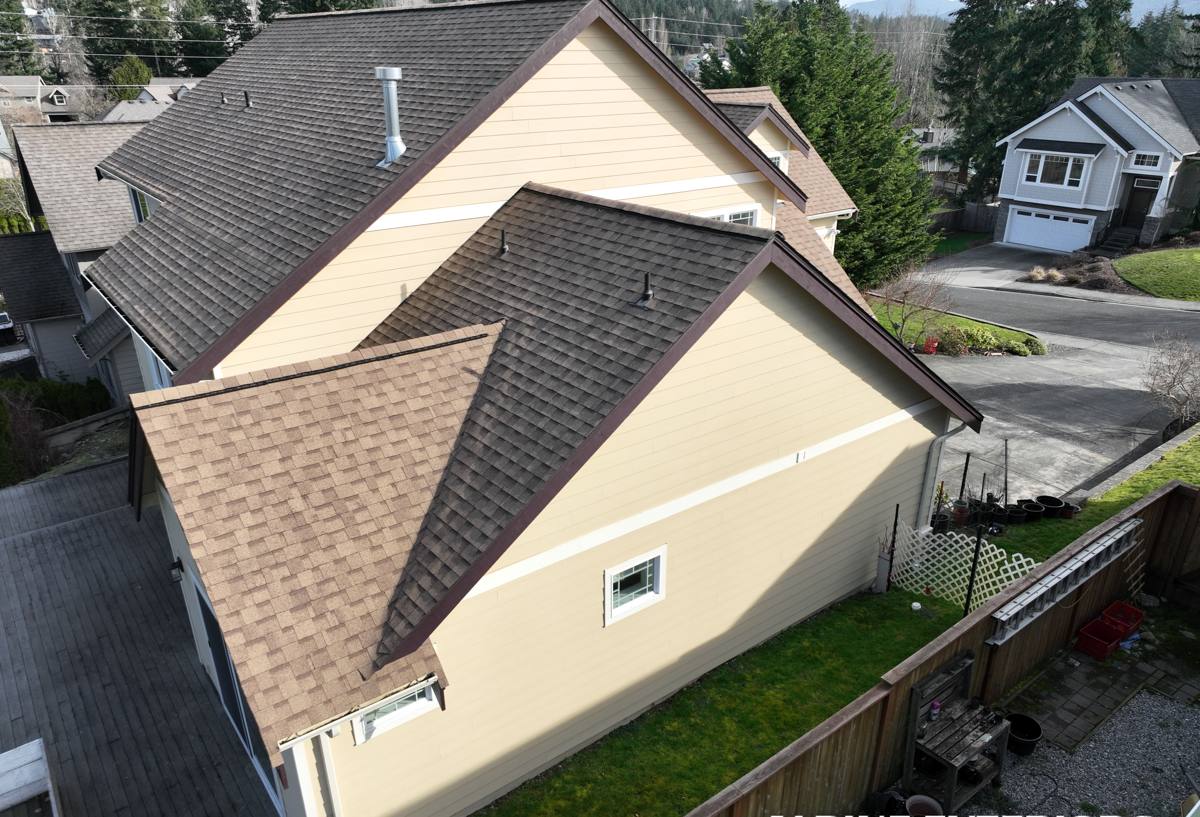
What the Lake Environment Actually Demands
Shade and Slow-Drying Surfaces
Mature trees around Wiser Lake are part of what makes the setting nice to live in, but they also mean a lot of decks sit in partial or heavy shade most of the day. Shaded wood and composite surfaces don't get the sun exposure that dries them out between rain events, so moisture lingers on the boards, in the gaps between them, and underneath the frame longer than it would on an open, sun-exposed lot.
Moss, Algae, and Surface Buildup
Combine that shade with Whatcom County's long wet season and you get ideal conditions for moss and algae to take hold on decking, especially on the north-facing or lake-facing side of a house where sun rarely reaches. Moss isn't just cosmetic — it holds moisture against the board surface and turns a deck slick and genuinely dangerous underfoot when it's wet.
Humid, Damp Ground-Level Air
Lake-adjacent lots tend to run more humid at ground level than properties further from the water. That matters most for anything low to the ground — framing, posts, and the underside of the deck — where airflow is already limited and dampness has nowhere to go.
Getting the Structure Right Before a Single Board Goes Down
Footings Built for the Site, Not a Formula
Footing depth and sizing need to match the actual soil and drainage conditions on a given lot, not just a generic span table. Lake-area lots can have wetter, softer soil than a lot on higher, drier ground a few miles away, and that affects how footings are set and how much bearing capacity they actually have.
Ledger Attachment and Flashing
The ledger board — where the deck attaches to the house — is the single most common failure point on decks in wet climates. If it isn't flashed correctly to shed water away from the house's wall assembly, moisture works its way behind the ledger and rots both the deck framing and the wall sheathing behind it, often silently for years before it's visible. We flash every ledger connection as if the deck were going to sit in shade and drizzle for six months of the year — because around Wiser Lake, it usually is.
Framing Layout That Lets Water Leave
Joist spacing, beam placement, and deck board direction all affect how quickly water actually drains off and out from under a deck. On a shaded, humid lot, we lean toward layouts and spacing that favor airflow and drainage over the bare minimum the code allows.
Choosing a Decking Material for This Setting
There's no single "best" decking material for every project — it depends on how much maintenance a homeowner wants to take on, how much shade the deck sits in, and budget. Here's how the common options actually compare for a lake-adjacent, shaded lot:
| Material | Moisture & Moss Behavior | Maintenance | Typical Lifespan |
|---|---|---|---|
| Pressure-treated wood | Absorbs moisture readily; needs a clear path for it to dry or it stays damp longer in shade | Annual cleaning and re-sealing/staining recommended | 10-15 years with upkeep |
| Cedar or other natural wood | Naturally more rot-resistant than treated pine, but still moisture-sensitive over time | Regular sealing; moss removal in shaded areas | 15-20 years with consistent care |
| Composite decking | Doesn't absorb water into the board itself, but surface algae and moss can still grow on uncapped or lower-grade boards in constant shade | Occasional washing; no staining or sealing | 25-30 years, manufacturer-dependent |
| Capped/PVC composite | Best moisture and algae resistance of the group; sheds surface growth more easily | Lowest maintenance; periodic cleaning | 25+ years, manufacturer-dependent |
For most Wiser Lake homes with real shade exposure, we steer conversations toward capped composite or well-sealed cedar, but the right call always depends on the specific lot and what the homeowner wants to be doing — or not doing — every spring.
Fasteners and Hardware: Small Parts, Big Consequences
Salt-influenced, humid air corrodes standard fasteners faster than it does in a dry inland climate, and a corroding fastener is one of the fastest ways a structurally sound deck starts to fail. We use hot-dip galvanized or stainless structural hardware and coated or stainless deck screws rather than standard-grade fasteners, and we make sure joist hangers, post bases, and structural connectors are all rated for exterior, moisture-exposed use — not just whatever came in the cheapest box. It's a small cost difference at build time and a large one if it's skipped.
Railings, Stairs, and Code Requirements
Any deck built above a certain height off grade needs a code-compliant guardrail, and most jurisdictions — Whatcom County included — require a permit for new deck construction, especially once it's attached to the house or built above a modest height. Requirements typically cover guardrail height, baluster spacing, stair rise and run, and structural connection details. We handle the permit and inspection process as part of the build rather than leaving it to the homeowner to sort out, and we build to the code that applies to the property, not to a shortcut version of it.
Our Process for a Wiser Lake Deck Project
- Site visit — we look at sun exposure, tree cover, drainage, and how the deck ties into the house before we talk materials.
- Design and material conversation — honest trade-offs on wood versus composite for that specific lot, not a one-size pitch.
- Permit and engineering as needed — handled before construction starts, not worked around.
- Structural build — footings, framing, ledger flashing, and hardware sized for the site's actual moisture exposure.
- Decking, railing, and finish work — installed with attention to drainage and airflow, not just appearance.
- Final walkthrough — so the homeowner understands what maintenance, if any, the specific material they chose actually needs.
Keeping a Lake-Country Deck Looking Good After It's Built
Whatever material a deck is built from, a little seasonal attention goes a long way in this climate. A simple homeowner checklist for a shaded, lake-adjacent deck:
- Sweep debris and standing leaves off the deck surface regularly, especially in fall
- Rinse or lightly brush moss and algae off boards before it builds up and gets slick
- Check that gaps between boards are clear so water can actually drain through
- Inspect the ledger board area yearly for staining, softness, or gaps in flashing
- Look underneath the deck occasionally for standing water or poor airflow
- Re-seal or re-stain wood decking on the schedule the product actually calls for, not "when it looks bad"
Why Local Experience Around Wiser Lake Matters
A crew that mostly builds decks in drier, sunnier parts of the state will default to standard details that work fine there and fall short here. Building around Wiser Lake and the rest of Whatcom County means already knowing which lots run damp underfoot, which sides of a house stay shaded most of the day, and how fast moss actually takes hold on a north-facing deck near the water. That local knowledge shows up in the footing depths we choose, the fasteners we default to, and the material conversations we have with homeowners before the first board is ever cut — not just in a faster quote.
If you're planning a new deck at Wiser Lake or need an honest read on whether an existing one is holding up the way it should, we're glad to come take a look. The estimate is free, there's no pressure attached to it, and you can get started using the form below.