 Lynden Siding
 Windows Built for This Corner of the Pacific Northwest
Abbotsford sits in the Fraser Valley just north of the border, and the weather here doesn't care which side of the line your house is on. The same wet air that soaks Whatcom County rolls straight through Abbotsford — long stretches of driving rain from fall through spring, a marine influence that keeps humidity high even on dry days, and a moss season that seems to start earlier every year. Windows in this climate aren't just a look-and-feel decision. They're a moisture-management decision, and getting that wrong shows up as fogged glass, soft trim, and higher heating bills within a few winters.
Our crew is based in Lynden, Whatcom County, and we work both sides of the border regularly. That means we're not guessing at what Abbotsford homes need — we're dealing with the same rain patterns, the same freeze-thaw swings, and a lot of the same housing stock, whether it's a older Fraser Valley farmhouse or a newer subdivision build.
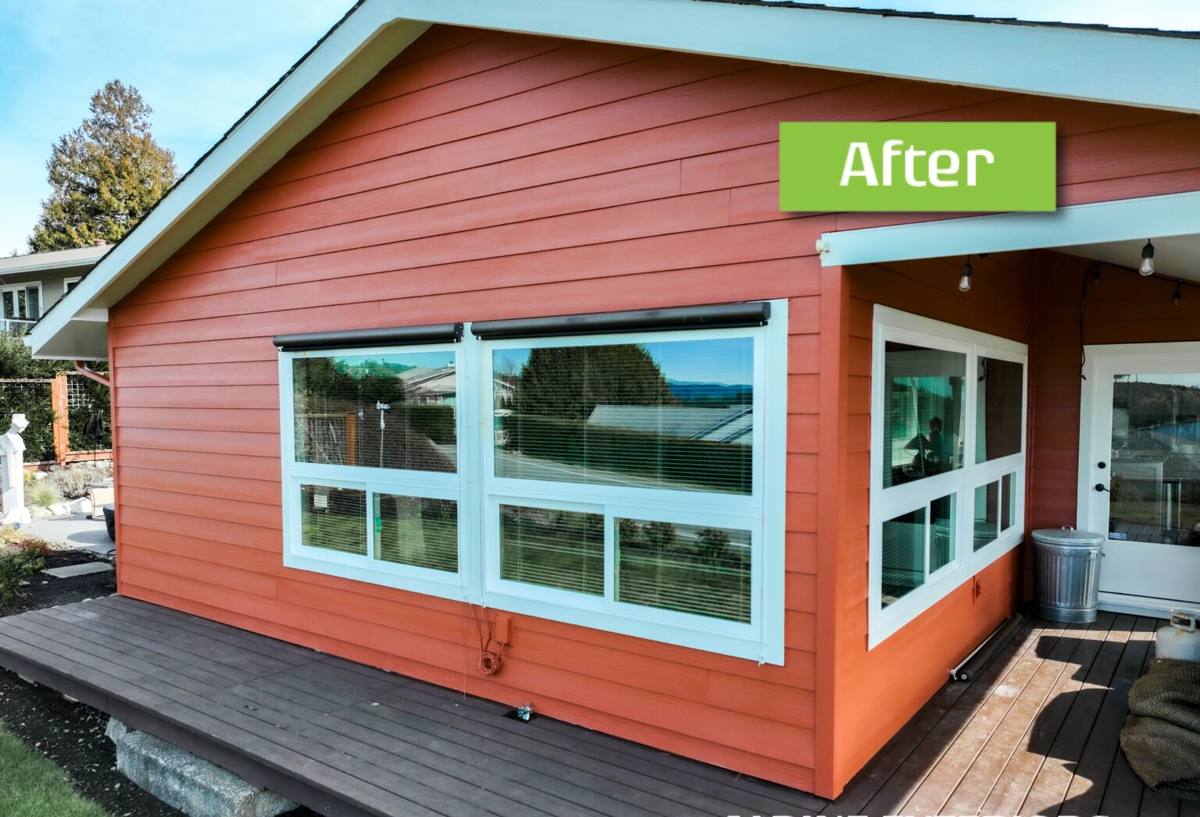
What Abbotsford Homes Actually Need From Their Windows
Custom windows means the unit is built or sized to fit your actual opening rather than forcing your house to fit a stock size — common on older homes, additions, or anywhere the rough opening has settled or shifted over the years. In this region, "custom" usually needs to solve for a few recurring issues:
Common Problems We See in This Area
- Condensation between panes or on interior glass, usually a sign the seal has failed or the original unit was single-pane or early double-pane
- Soft or rotting wood trim and sills where driving rain has been getting behind old flashing for years
- Drafts around the frame that show up as a cold spot near the window, not just at the glass itself
- Moss and algae staining on sills and exterior trim, which holds moisture against wood longer than most homeowners realize
- Older aluminum-frame windows that conduct cold straight through the frame, even when the glass itself is fine
None of these are unusual or embarrassing — they're what this climate does to windows over 20-30 years. The fix isn't just swapping glass; it's addressing the frame, the flashing, and the seal against the wall assembly at the same time.
What a Correct Custom Window Installation Actually Involves
A lot of window problems trace back to installation, not the product itself. A window can carry a strong warranty and still fail early if it's not flashed and sealed correctly for a wet climate. Here's what we treat as non-negotiable on every job:
Accurate Measuring and Ordering
We measure the actual rough opening, not the old window's stated size — older openings are rarely square after decades of settling, and a custom order needs the real dimensions to fit tight without gaps that need to be packed with extra sealant later.
Careful Removal
Removing the old unit means checking what's behind it — sheathing, framing, and insulation condition — before anything new goes in. If there's hidden rot or moisture damage, that gets addressed before the new window is set, not covered up.
Flashing and Water Management
This is the step that matters most in a climate like ours. Proper flashing directs water that gets behind the siding back out and away from the framing, using a shingle-lap sequence so every layer sheds water onto the one below it. Skipping or shortcutting this is the single biggest cause of hidden rot behind "new" windows.
Sealing and Insulation
The gap between the window frame and the rough opening gets insulated (typically low-expansion foam, not just fiberglass batting) and sealed with the right exterior sealant — one rated for the temperature and moisture swings we actually get, not just whatever's cheapest.
Trim and Finish
Exterior trim gets primed on all cut edges before install — end grain is where wood soaks up water fastest — and caulked at every joint where water could otherwise find a path in.
Choosing Materials and Glass for a Wet, Mossy Climate
There's no single "best" window material — it depends on your home's style, your budget, and how much upkeep you want to take on. Here's the honest comparison we walk homeowners through:
| Material | How It Handles This Climate | Maintenance |
|---|---|---|
| Vinyl | Doesn't rot or corrode, handles moisture well, good insulator | Low — occasional cleaning |
| Fiberglass | Very stable in temperature swings, strong against moisture, holds paint well if a specific color is wanted | Low to moderate |
| Wood | Best traditional look, but needs real protection from driving rain and moss to avoid the rot we see on old sills | High — regular painting/sealing |
| Wood-clad (wood interior, aluminum or vinyl exterior) | Combines interior look with weather-resistant exterior shell | Moderate |
| Aluminum | Durable but conducts cold and can sweat/condense more in our humidity unless thermally broken | Low, but condensation risk |
On glass, double-pane with a Low-E coating and an argon-filled space is the baseline we'd recommend for this region — it cuts heat loss and helps limit condensation on interior glass during cold snaps. Triple-pane adds another layer of insulation and can be worth it for north-facing rooms or homes right along more exposed, wind-driven sites, but it comes at a real cost and weight increase, so it's worth deciding room by room rather than defaulting to it everywhere.
Cross-Border Considerations Specific to Abbotsford
Working a job in Abbotsford, BC as a Whatcom County-based crew comes with a few practical differences homeowners should know about upfront, not discover halfway through the project:
Building Code and Permits
Canada and the US don't share a building code. Abbotsford falls under the BC Building Code, and window replacement projects there may need a permit or at minimum need to meet current BC energy-efficiency requirements depending on scope. We coordinate around your local requirements, but we always recommend the homeowner confirm permit needs with the City of Abbotsford directly before work starts — it's your project of record, and getting that confirmation early avoids delays.
Product Ratings and Sourcing
Energy performance labeling differs between the two countries — US windows are typically NFRC-rated, while Canadian energy program requirements reference their own climate zones. We source and spec product that meets the standard that actually applies to where the house sits, rather than assuming a US rating automatically satisfies a BC requirement.
Scheduling and Logistics
Crossing the border with a crew and materials is routine for us, but it does mean we build travel and crossing time into scheduling rather than pretending it doesn't exist. That's part of being upfront about timelines rather than quoting a number that only works on paper.
How Our Process Works, Start to Finish
- Free on-site estimate — we look at the actual openings, current condition, and what's driving the need for replacement
- Written quote covering material, glass package, flashing/sealing scope, and timeline, with no vague allowances buried in the fine print
- Ordering the custom units to your confirmed measurements
- Install day: removal, inspection of the opening, flashing, setting the unit, insulating, sealing, and trim
- Final walkthrough where we check operation, seals, and finish with you before calling the job done
Protecting Your Investment After Install
New windows still need a little seasonal attention in a climate that runs this wet. A short annual routine catches small issues before they turn into repairs:
- Clear debris and moss from sills and tracks before the fall rains set in
- Check exterior caulking each spring for cracking or gaps and re-seal as needed
- Wipe down and inspect weep holes on vinyl and aluminum units so water can actually drain out
- Watch for condensation between panes — it means a seal has failed, not a cleaning problem
- Repaint or reseal exposed wood trim on the schedule the manufacturer recommends, not just when it looks bad
Why a Crew That Already Works Abbotsford Matters
Any contractor can sell you a window. Fewer have actually flashed one against Fraser Valley rain, dealt with a BC permit office, or seen what a Whatcom County winter does to a poorly sealed frame five years later. Being based just across the line in Lynden means we're not learning this region's quirks on your project — the driving rain, the moss, the freeze-thaw swings, and the two sets of code and rating requirements are all part of how we already work. That local familiarity is worth as much as the window itself.
If you're weighing custom windows for a home in Abbotsford, we're happy to come take a look, walk through what your specific openings need, and put together a straightforward, no-pressure estimate — just fill out the form below.