 Lynden Siding
 Building a Deck That Actually Holds Up in Everson
Everson sits in a stretch of Whatcom County that gets more rain, more standing moisture, and more moss than most homeowners expect when they're planning a new deck. It's not just about picking a nice board color. A deck built here has to shed water fast, resist rot at every joint, and survive years of damp shade before it ever gets a chance to dry out between storms. We build decks for homes in and around Everson and Lynden, and the lessons that matter most come from what we see fail on older decks in this area — not from a catalog.
A deck that looks fine in July can be hiding problems that only show up in February, once the moss has had a full wet season to work into fastener heads, ledger boards, and shaded joist bays. Building it right the first time costs less than fixing it twice.
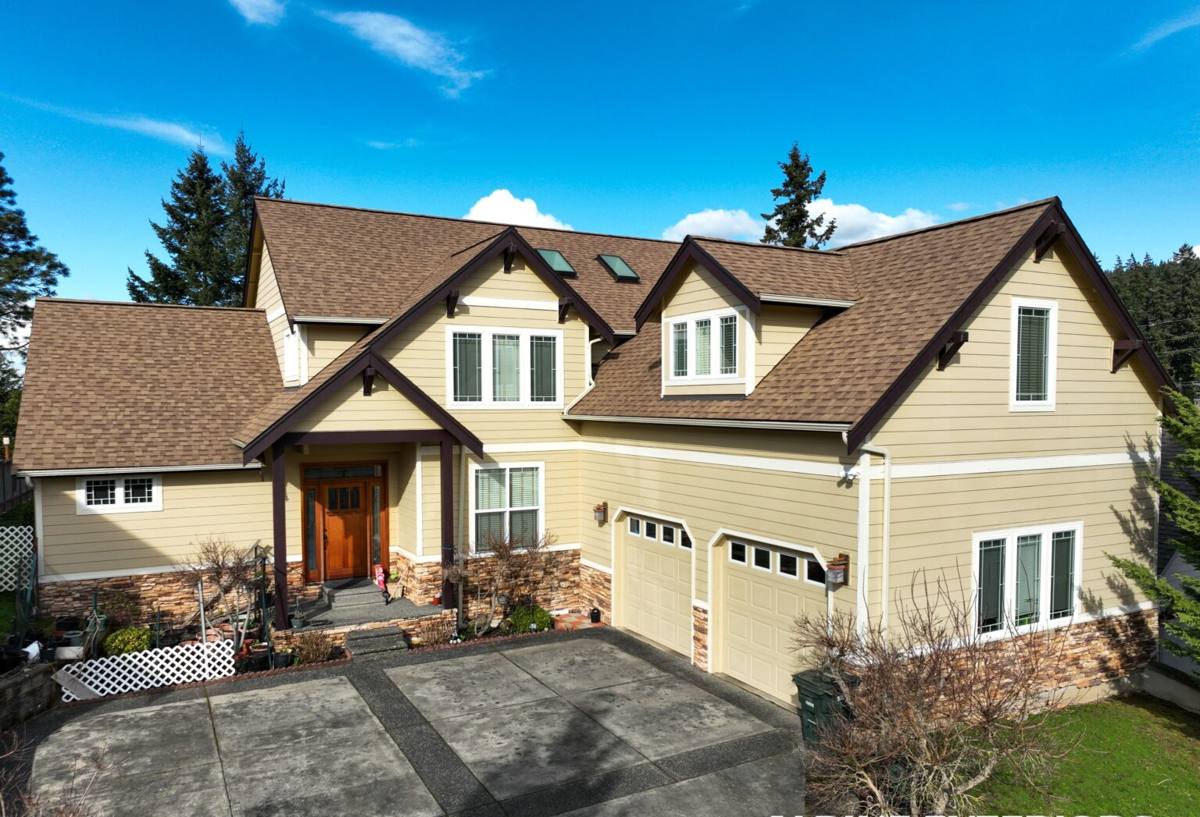
What Whatcom County's Climate Does to a Deck
A few specific conditions drive almost every deck problem we get called out to look at in this area:
- Salt air influence: Even away from the immediate shoreline, marine air moving inland corrodes untreated or poorly rated hardware faster than manufacturers' generic ratings assume.
- Driving rain: Wind-driven rain doesn't just fall straight down — it gets pushed sideways into ledger connections, under flashing laps, and into end grain that isn't sealed.
- Long moss season: Shaded, north-facing, or tree-covered decks stay damp for months at a time. Moss and algae hold moisture directly against the board surface, which is what actually causes rot — not rain itself, but rain that never gets a chance to dry.
- Freeze-thaw cycling: Whatcom County gets enough freeze-thaw swings each winter to heave a footing that wasn't poured to the right depth, which shows up later as a bouncy or uneven deck.
None of this means a deck can't last decades here. It means the build details that get skipped on a rushed job — flashing, fastener grade, drainage gaps, footing depth — are the exact details that determine whether a deck needs major repair in year six or is still solid in year twenty-five.
The Structural Details That Actually Matter
Footings
Frost depth and soil drainage in this part of Whatcom County mean footings need to be sized and set to local code, not guessed at. Poor drainage around a footing is one of the more common causes of a deck that starts to lean or settle unevenly after a few wet winters.
Ledger Board Flashing
Where a deck attaches to the house is the single most common point of hidden water damage we see. A ledger board that isn't properly flashed lets water track behind it and into the house's rim joist and framing — damage that's invisible from the deck side until it's serious. Correct flashing, with proper laps and a water-resistant barrier behind the ledger, is not optional in a climate that sees this much sideways rain.
Fasteners and Hardware
Given the salt air influence and constant moisture, we use fastener and connector hardware rated for exterior, corrosive-prone environments — hot-dip galvanized or stainless steel, matched to the metal type of the connector it's paired with. Mixing incompatible metals causes galvanic corrosion that can weaken a connection from the inside, long before it shows on the surface.
Joist Protection and Drainage
Joist tape over the top of framing members, proper gapping between deck boards, and airflow underneath the structure all matter more here than in a drier climate. Boards installed tight against each other, or a deck built low to the ground with no ventilation, trap moisture exactly where moss and rot get started.
Choosing the Right Decking Material for This Area
There's no single "best" decking material — there's a best material for a given budget, sun exposure, and how much maintenance a homeowner actually wants to do. In a moss-prone, high-moisture area like Everson, moisture behavior matters more than it would in a drier region.
| Material | Moisture & Moss Resistance | Maintenance | Typical Lifespan |
|---|---|---|---|
| Pressure-treated wood | Good if sealed regularly; end grain and cut edges need re-treatment | Annual cleaning and re-sealing recommended | 15–20 years with upkeep |
| Cedar | Naturally rot-resistant but still needs sealing in shaded, damp spots | Regular sealing; shows weathering without it | 15–25 years with upkeep |
| Composite decking | Strong resistance to rot; surface can still grow algae/moss film in deep shade | Periodic washing; no sealing or staining | 25–30+ years, manufacturer-warrantied |
| PVC/capped polymer | Best moisture resistance of the group; fully sealed surface | Lowest maintenance; occasional washing | 25–30+ years, manufacturer-warrantied |
Composite and PVC decking cost more up front, but in a climate where a wood deck's real lifespan depends heavily on how consistently it gets maintained, they trade a higher initial price for far less ongoing work. For homeowners who plan to reseal and maintain wood on schedule, cedar or pressure-treated lumber is still a solid, honest choice — it just requires follow-through.
Railings and Code Requirements
Any deck more than 30 inches above grade needs a compliant guardrail system under Washington building code — generally a minimum 36-inch height for residential decks, with baluster spacing that prevents a 4-inch sphere from passing through. Stair railings have their own height and graspability requirements. These aren't arbitrary rules; they're based on real fall-prevention data, and an inspector will catch a railing that's out of spec before your permit closes out.
We build railings to match the house's style — wood, metal baluster, or cable rail — while keeping every dimension inside code from the start, so there's no rework at inspection.
Permits and Inspections in Whatcom County
Most new decks and significant deck rebuilds in Whatcom County require a building permit, particularly once you're attaching a structure to the house or building above a certain height. Permit requirements can vary depending on whether a property is inside Lynden city limits or in unincorporated Whatcom County near Everson, so this gets confirmed at the start of a project, not assumed. Skipping a required permit can cause real problems later — at resale, with insurance claims, or if a structure needs to be modified.
Handling permitting correctly the first time means fewer surprises and no scrambling to bring an unpermitted deck up to code down the road.
Our Process for a Custom Deck Build
- On-site consultation: We walk the property, look at drainage, sun/shade exposure, and how the deck will connect to the house.
- Design and material selection: We go over material options honestly, including trade-offs in cost, maintenance, and appearance for your specific site conditions.
- Permitting: We handle the permit application and coordinate required inspections.
- Site prep and footings: Footings are dug and poured to the depth and spacing the design calls for.
- Framing and flashing: Ledger attachment, joist layout, and flashing details are done to spec — this is the stage that determines long-term durability.
- Decking, railing, and finish work: Boards, railings, stairs, and any built-in features are installed and finished.
- Final walkthrough: We go over the finished deck together, including basic care instructions specific to the material you chose.
Maintenance Checklist by Material
- Wood decks: clean and inspect each spring; reseal every 1–2 years or when water stops beading on the surface.
- Composite/PVC decks: wash with mild soap and water once or twice a year, more often in heavily shaded areas prone to moss film.
- All decks: keep gutters and downspouts clear so runoff isn't draining directly onto the deck surface or framing below.
- All decks: trim back overhanging branches and vegetation to reduce shade and speed up drying time after rain.
- All decks: check fastener heads and railing connections annually for corrosion or loosening.
- All decks: clear debris from between boards where it traps moisture against the framing.
Why a Crew That Already Works in Everson Matters
A deck built to a generic national spec can still fail early in a climate like this one. A crew that regularly works Everson and the surrounding Lynden area already knows which framing and flashing details matter most for local rain patterns, which fastener grades hold up against the area's moisture and salt air influence, and how permitting works with Whatcom County versus inside city limits. That local familiarity shortens the guesswork on every project and means fewer surprises mid-build.
It also matters after the build is done. A local crew is easier to reach for a warranty question or a maintenance check-in a few years down the line, rather than a company that's moved on to projects hours away.
Cost Factors to Expect
| Factor | How It Affects Cost |
|---|---|
| Size and layout | Larger footprints, multiple levels, or built-in features increase material and labor time |
| Material choice | Pressure-treated wood is the lowest upfront cost; composite and PVC cost more but reduce long-term maintenance spending |
| Height and railing complexity | Taller decks require more substantial footings and railing systems, plus stairs |
| Site access and grading | Difficult access or uneven ground adds labor time for footings and material staging |
| Permitting | Permit fees and required inspections vary by jurisdiction and project scope |
We give straightforward, itemized estimates so you know what's driving the number, rather than a single lump figure with no explanation behind it.
If you're planning a new deck or replacing one that's showing its age in Everson or anywhere around Lynden, we're happy to take a look and put together a free, no-pressure estimate. Fill out the form below and we'll follow up to schedule a time to walk the site with you.