 Lynden Siding
 Decks Built for Custer's Coastal Weather
Custer sits close enough to Puget Sound and Birch Bay that homes here deal with a different set of conditions than a deck built twenty miles inland. Salt-laden air moves through on a regular basis, driving rain comes in sideways off the water during fall and winter storms, and the shoulder seasons stay damp and shaded long enough to grow a heavy coat of moss on anything that doesn't drain or dry out quickly. A deck built without those specifics in mind will still look fine the day it's finished. The problems show up two or three winters later, in the form of rusted fasteners, soft framing, and a walking surface that turns slick every time the temperature drops.
We build and repair decks throughout Whatcom County, and Custer's mix of coastal exposure and rural, tree-shaded lots comes up often enough that we plan for it from the first conversation, not as an afterthought once a problem shows up.
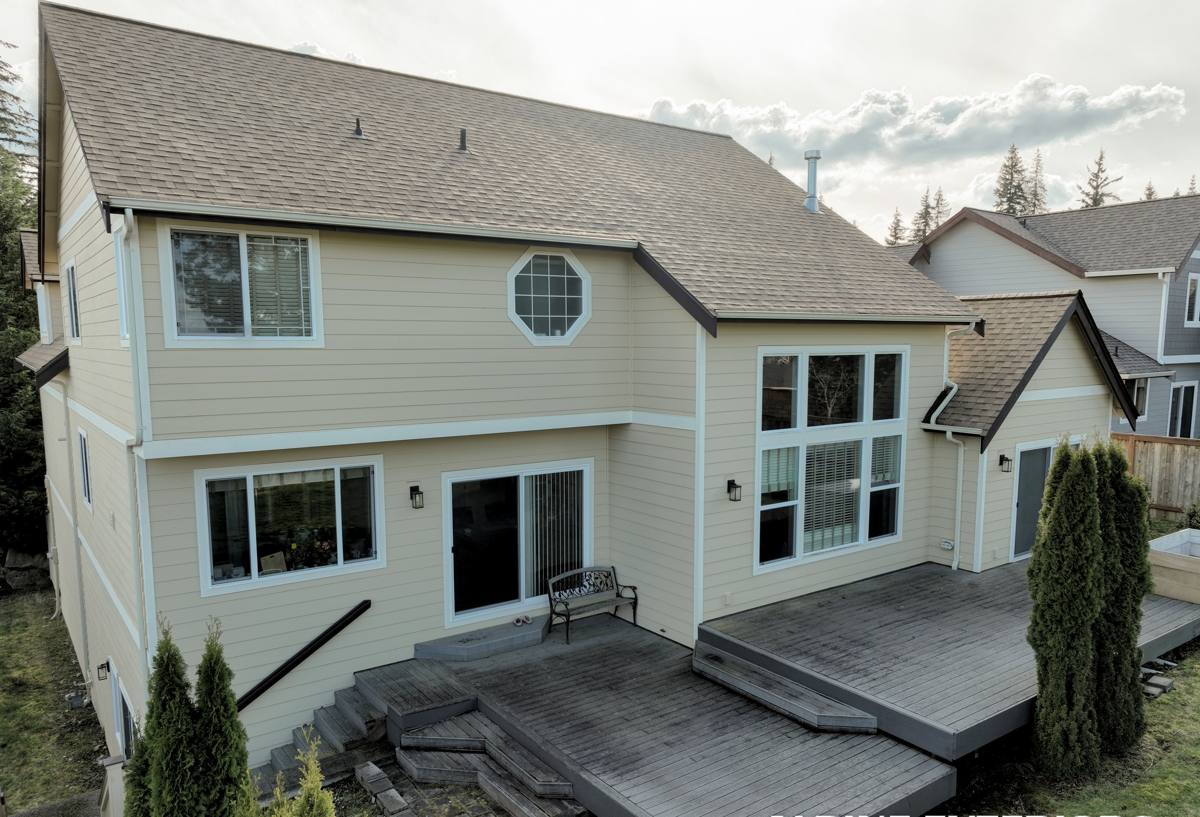
What Salt Air, Rain, and Moss Actually Do to a Deck
Salt Air and Metal Hardware
Airborne salt accelerates corrosion on anything metal — screws, joist hangers, bolts, railing brackets. Standard coated deck screws that would last for years in a drier inland climate can start showing rust streaks and weakening within a couple of seasons this close to the water. Once a fastener corrodes, it loses holding strength long before it looks obviously bad, which is part of why fastener choice matters more here than most homeowners expect.
Driving Rain and Water Management
Wind-driven rain doesn't just fall straight down — it gets pushed sideways and up under railings, ledger boards, and stair stringers. A deck that isn't flashed and sloped correctly will trap water in exactly those spots, and trapped water is what causes rot, not rainfall itself. This is the single most common root cause we find in older Whatcom County decks that need major repair.
Moss, Algae, and Surface Decay
Custer's tree cover and long stretches of overcast, damp weather are ideal for moss and algae growth, especially on the north or shaded side of a house where boards stay wet longest. Beyond the cosmetic issue, a mossy deck surface is a real slip hazard, and moss holds moisture against the board surface, which speeds up decay in wood decking and can stain composite material if it's left unaddressed for a full season.
Choosing Decking Material for Custer Homes
There's no single "best" decking material — the right choice depends on how much upkeep you want to do, your budget, and how exposed the deck is to weather. Here's how the common options compare for a coastal Whatcom County property.
| Material | Maintenance | Moisture Handling | Typical Cost Tier | Best Fit |
|---|---|---|---|---|
| Pressure-treated wood | Annual cleaning, periodic sealing/staining | Good if sealed regularly; vulnerable if maintenance lapses | Budget-friendly | Owners who don't mind yearly upkeep |
| Cedar | Sealing every 1-2 years to hold color and resist moisture | Naturally rot-resistant but still needs a sealed finish here | Mid-range | Owners who want a natural wood look and will maintain it |
| Composite (capped) | Occasional washing, no sealing or staining | Very good — resists moisture absorption and rot | Higher upfront | Owners who want low upkeep long-term |
| PVC decking | Lowest — soap and water | Excellent; doesn't absorb moisture at all | Highest upfront | Heavily shaded or moss-prone lots |
On shaded Custer lots where moss is a recurring problem, we often steer homeowners toward capped composite or PVC specifically because uncapped wood surfaces give moss and algae something to grip. That doesn't mean wood is off the table — plenty of homeowners are happy to stay on top of a yearly cleaning and sealing schedule in exchange for the lower material cost and the look they want.
Framing and Structure: Where Decks Actually Fail
The decking boards are the part everyone sees, but the framing underneath is what determines whether the deck is still sound in fifteen years. A few things we treat as non-negotiable on every deck we build in this area:
- Ledger boards flashed correctly where the deck attaches to the house, so water is directed away from the wall framing instead of into it
- Joist tape or an equivalent moisture barrier on top of framing lumber, since exposed end grain and top surfaces are where rot typically starts
- Corrosion-resistant fasteners and hardware — hot-dip galvanized at minimum, stainless steel in the most exposed spots — given how much faster standard coatings break down in salt air
- Footings sized and set to local frost depth and soil conditions, not just poured to the minimum
- Board spacing and airflow underneath the deck to let the structure dry out between rain events instead of staying damp
None of this is visible once the deck is finished, which is exactly why it's worth asking a contractor directly how they handle it rather than assuming.
Railings and Hardware That Hold Up Near the Water
Railings take the brunt of weather exposure since they're the tallest, most exposed part of the structure and get direct wind-driven rain and salt spray. We build railing systems with corrosion-resistant posts and hardware, and we're upfront with homeowners about the trade-offs between railing materials — a painted or powder-coated metal railing looks great initially but needs a finish that will hold up to salt exposure, while wood railings need the same sealing discipline as wood decking. Cable and glass rail systems can work well here too, but the hardware quality matters more in this climate than it would twenty miles inland, so we spec components rated for coastal exposure rather than the standard interior-grade hardware.
Our Process for a Custer Deck Project
- Site visit and consultation — we look at sun exposure, drainage, tree cover, and how the deck will tie into the house before talking materials.
- Design and material selection — we walk through the trade-offs above so you're choosing based on how you'll actually use and maintain the deck, not just upfront price.
- Permitting — decks over a certain height or attached to the home typically require a permit through Whatcom County; we handle that process as part of the job.
- Construction — framing, flashing, and structural work first, with every connection point treated for this climate before the decking or railing ever goes on.
- Final walkthrough — we go over the finished deck with you, including what maintenance it does and doesn't need going forward.
Living With a Deck Through a Long Moss Season
Even a well-built deck needs some seasonal attention in this climate. A little consistency goes a long way toward avoiding bigger repairs later:
- Sweep or blow off leaves and debris regularly in fall — trapped organic material holds moisture and feeds moss growth
- Clean moss and algae off the surface before it builds up, using a deck-safe cleaner rather than a pressure washer set too aggressively, which can damage both wood and composite surfaces
- Check and clear gaps between boards so water keeps draining through instead of pooling
- Inspect railing posts and stair connections once a year for movement or corrosion at the hardware
- Reseal or restain wood decking on the schedule the product calls for — skipping a year is usually when problems start
- Keep an eye on shaded, north-facing sections specifically, since they'll need attention more often than sunnier parts of the same deck
Permits and Site Considerations in Whatcom County
Most attached or elevated decks in Whatcom County require a building permit, and guardrail and stair requirements are governed by code once a deck reaches a certain height off the ground. Setback rules can also come into play depending on your lot and how close the deck sits to a property line. We factor this into the design phase rather than treating it as paperwork to sort out afterward, so the plan we build to is one that will actually pass inspection the first time.
Why a Local Crew Matters in Custer
A contractor who mainly works drier, inland jobs can still build a deck that looks right, but the details that keep a deck sound for the long run — fastener grade, flashing details, material choice for a shaded lot — come from having seen what actually fails in this exact climate. We work Custer and the rest of Whatcom County regularly enough to know which corners of a property tend to hold moisture, where moss becomes a recurring problem, and what hardware actually holds up once the salt air and winter storms have had a few seasons to work on it.
If you're planning a new deck or replacing one that's showing its age, we're happy to take a look and put together a free, no-pressure estimate — just fill out the form below and we'll go from there.