 Lynden Siding
 Building a Deck That Actually Holds Up Near Aldergrove, BC
A deck near Aldergrove, BC and the greater Lynden area lives through a different kind of weather year than a deck in a dry climate. The air carries moisture most months of the year, driving rain comes in sideways during fall and winter storms, and shaded or north-facing yards can stay damp long enough to grow a steady coat of moss on any surface that doesn't shed water well. Add in the salt-tinged air that drifts inland on stronger weather systems, and you've got a combination that's hard on fasteners, hardware, and any decking material that wasn't chosen or installed with that in mind.
None of this means a deck in this area can't last. It means the choices made before the first board goes down — material, fastener grade, drainage, and framing detail — matter more here than they would somewhere drier. A deck built the same way you'd build one in an arid climate will show problems within a few seasons: soft spots, rust streaks, green film on the boards, or a ledger board that's quietly rotting where it meets the house.
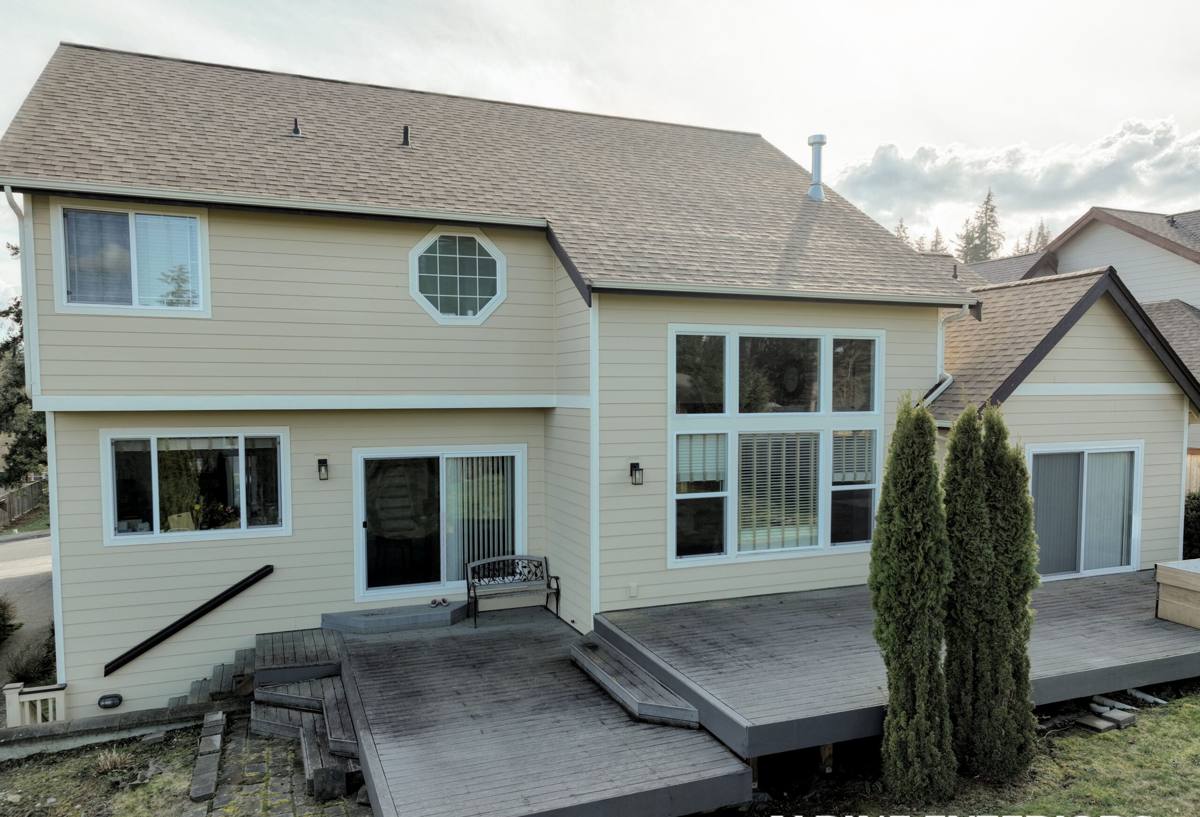
Choosing a Decking Material for This Climate
There isn't one "right" material for every homeowner — it depends on budget, how much upkeep you want to do, and how shaded your yard is. What we won't do is recommend a material without being upfront about what it costs you in maintenance over the years, especially in a climate that stays damp for long stretches.
Wood Decking (Cedar and Pressure-Treated)
Wood is still the most affordable option and, when properly maintained, looks the part. The trade-off in this climate is that it needs regular attention — cleaning, brightening, and resealing on a schedule — or moisture and organic growth will get ahead of you, particularly in shaded corners of a yard where boards don't dry out between rains.
Composite Decking
Composite boards resist moisture absorption far better than wood, so they don't rot or splinter the same way. They still need periodic cleaning because algae and moss film can form on the surface in shaded, damp spots — composite resists rot, but it doesn't repel every kind of growth. The upfront cost is higher, but the maintenance burden over a 20-plus year span is noticeably lower.
PVC Decking
Fully synthetic PVC decking is the most water-resistant option and holds up well in persistently damp conditions, since there's no wood content to absorb moisture at all. It carries the highest material cost of the three, and it's worth pairing with a contractor who's installed it before — PVC expands and contracts with temperature more than composite, and gapping mistakes show up as a wavy deck surface over time.
| Factor | Wood (Cedar/PT) | Composite | PVC |
|---|---|---|---|
| Upfront cost | Lowest | Mid-range | Highest |
| Moisture resistance | Fair — needs sealing | Good | Best |
| Moss/algae resistance | Low without upkeep | Moderate | Moderate to good |
| Ongoing maintenance | Annual cleaning + sealing | Periodic washing | Periodic washing |
| Typical lifespan | 10–20 years with upkeep | 25–30 years | 25–30+ years |
What a Correctly Built Deck Involves
The decking surface is what you see, but most deck failures we get called out to fix started underneath it. A handful of framing details make the difference between a deck that lasts and one that starts failing in five to eight years.
Ledger Board Flashing
Where the deck attaches to the house is the single most common failure point in a wet climate. Without proper flashing behind and over the ledger board, driving rain works its way behind the board and rots the rim joist inside the wall — a repair that's far more expensive than the deck itself. This is not an area to cut corners on, regardless of decking material.
Joist Protection
A strip of self-adhering flashing tape over the top of every joist keeps water from soaking into the framing lumber through screw holes and gaps in the decking above. It's inexpensive to add during construction and one of the most effective things we do to extend the life of the structure underneath a deck.
Board Spacing and Footings
Correct gapping between deck boards lets water and debris pass through instead of sitting on the surface, which cuts down significantly on moss buildup. Footings need to be sized and set to the depth required for this region's frost and soil conditions — undersized or shallow footings are a common shortcut that shows up years later as a deck that shifts or settles unevenly.
Hardware That Doesn't Corrode
Salt-tinged, moisture-heavy air is hard on standard fasteners. Modern pressure-treated lumber also uses a copper-based preservative that reacts with regular galvanized hardware and accelerates corrosion. We use fasteners and structural connectors rated for contact with today's treated lumber — typically stainless steel or heavy-duty coated hardware — so you don't end up with rust streaks bleeding down your decking or, worse, a structural connector that's lost integrity where you can't see it.
- Stainless steel or ACQ-rated coated screws and structural screws throughout the frame
- Corrosion-resistant joist hangers and post connectors rated for treated lumber contact
- Hidden fastening systems on composite and PVC decking to avoid surface corrosion staining
- Railing hardware matched to the same corrosion-resistant standard, since railings take the brunt of wind-driven moisture
Drainage and Moss Prevention Underneath the Deck
A deck that sheds water on the surface but traps it underneath still has a moisture problem — it just shows up more slowly. Grading the ground under a low deck so water drains away from the house, adding ventilation gaps in skirting rather than sealing the underside completely, and keeping downspouts routed away from footings all matter in a climate where the ground rarely gets a long dry stretch to catch up. Decks built tight to the ground with no airflow underneath are the ones we most often see with persistent moss and mildew problems along the perimeter.
Our Process, Start to Finish
On-Site Assessment and Design
We start by walking the site with you — sun and shade exposure, drainage direction, how the deck will tie into the house, and what you actually want to use the space for. That shapes the material recommendation as much as budget does.
Permitting
Permit requirements vary by jurisdiction and by the size and height of the deck. We handle figuring out what's required for your specific property and take care of the paperwork so you're not left guessing what your local building department needs.
Construction
Framing first, with ledger flashing, joist protection, and footings done to spec before any decking goes down — none of that is visible once the project is finished, so it's the part worth getting right the first time. Decking, railing, and any finish work follow.
Final Walkthrough
We walk the finished deck with you, cover what maintenance to expect based on the material you chose, and make sure everything's solid before we call it done.
Ongoing Maintenance in This Climate
Whatever material you choose, plan on an annual check before the wet season sets in: clear debris from between boards and along the ledger, check for any green film building up in shaded areas, and look at railing posts and fastener heads for early rust staining. Wood decks need a cleaning and resealing cycle to stay ahead of moisture; composite and PVC need less, but "low-maintenance" doesn't mean "no-maintenance" in a climate this damp.
Why a Crew Already Working in Aldergrove, BC Matters
A contractor who already works this stretch near Lynden and Aldergrove, BC has seen how the local weather actually treats a deck over several years, not just on the day it's installed — which yards hold moisture longest, which exposures take the worst of the driving rain, and which shortcuts show up as callbacks two winters later. That's the kind of judgment that doesn't come from a spec sheet. It also means we're close by if you need us back for a warranty item or a maintenance question down the road, rather than waiting on a crew that has to drive in from somewhere else.
Signs Your Current Deck May Need Attention
- Boards that feel soft, spongy, or flex more than they used to
- Green or black staining that keeps coming back after cleaning
- Rust streaks trailing down from screw heads or connectors
- Gaps or dark staining where the deck meets the house at the ledger board
- Water pooling on the surface instead of draining through
- A railing that feels loose or flexes under normal weight
If you're planning a new deck or wondering whether your current one is holding up the way it should, we're happy to come take a look. The estimate is free, there's no pressure, and you'll get a straight answer about what your yard and budget call for — just fill out the form below to get started.