 Lynden Siding
 Windows in Custer Take a Different Kind of Beating
Custer sits close enough to the water that salt air is part of daily life, and that changes what a window has to survive. Add Whatcom County's long stretch of driving rain each fall and winter, plus a moss and mildew season that can run half the year on shaded north- and west-facing walls, and you've got conditions that punish a poorly installed or poorly chosen window faster than they would almost anywhere else in the state. This isn't a page about windows in general. It's about what actually holds up on a Custer home, and what a correct installation looks like when salt, wind, and standing moisture are working against it every single day.
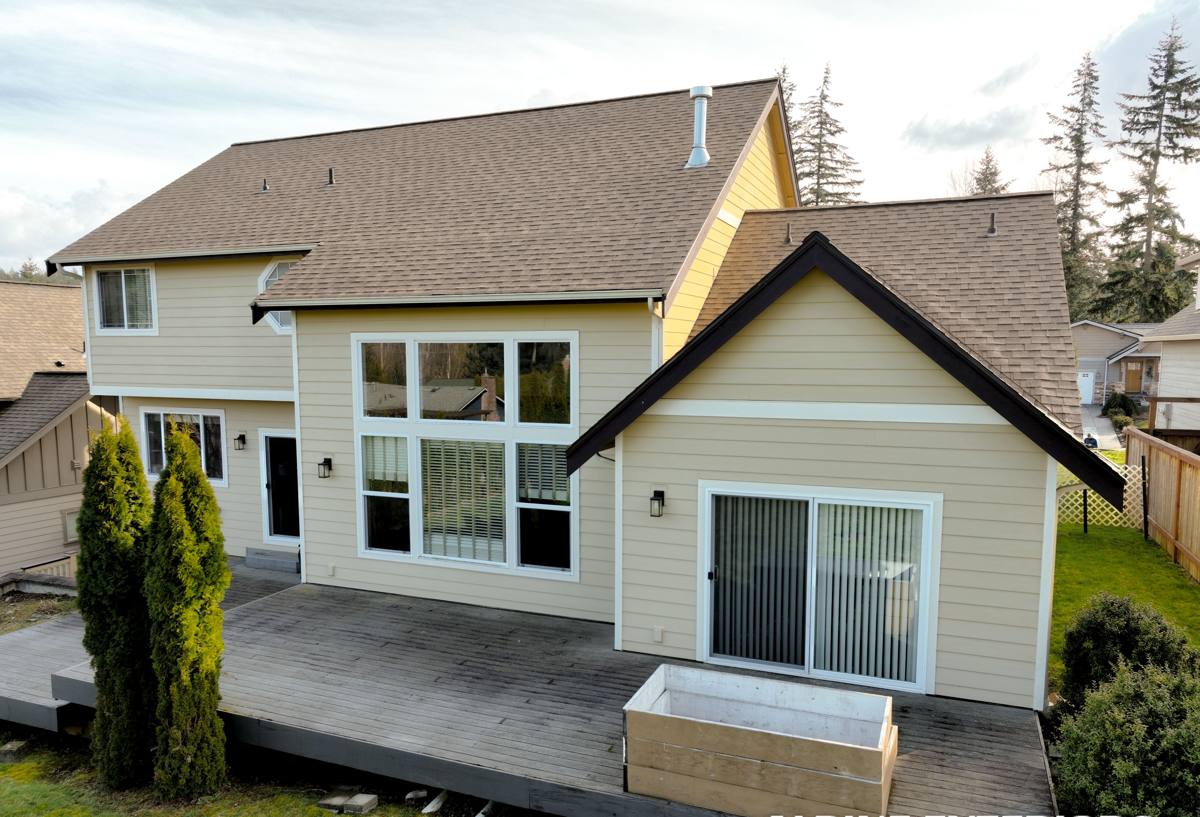
What Salt Air, Rain, and Moss Actually Do to a Window
Homeowners often assume window failure means broken glass or a cracked frame. In practice, most window problems we find in this area start quieter than that.
Salt Air
Airborne salt is corrosive to metal hardware — hinges, locks, balance systems, and especially aluminum components. It also breaks down certain sealants and finishes faster than manufacturers rate for, which is why warranty language written for a national average climate doesn't always hold up on the coast. Corrosion usually shows up first as hardware that sticks, locks that won't seat cleanly, or a chalky white residue on frames.
Driving Rain
Whatcom County storms frequently come in sideways, not straight down. Wind-driven rain finds any gap in flashing, sealant, or the window's own drainage path and pushes water where gravity alone never would. A window that's fine in a light vertical rain can still leak badly in a 30 mph gust from the water. This is a flashing and installation issue far more often than it's a product defect.
Moss and Prolonged Moisture
Shaded exteriors, siding, and trim in this area stay damp longer than they would inland, which is exactly the environment moss, algae, and wood rot need. Wood-frame windows and wood trim around any window are especially exposed if the surrounding siding and caulking aren't keeping water moving away from the opening.
Signs a Custer Home May Need New Windows
Not every issue means full replacement, but these are the signals worth taking seriously before they become bigger repairs:
- Fogging or a hazy film between panes on double- or triple-glazed units — a sign the seal has failed
- Soft or discolored wood at the sill or corners of the frame
- Drafts you can feel by hand along the frame edge on a windy day
- Hardware that's stiff, corroded, or won't lock flush anymore
- Visible daylight or gaps between the frame and the siding or trim
- Paint or finish that's peeling specifically around the window, not the whole wall
- A musty smell or visible mold on the interior sill or lower corners
What a Correct Window Installation Involves
A window is only as good as the opening it's set into. Most leaks and premature failures we're called to fix trace back to installation shortcuts, not the window itself.
Flashing Comes First
Before a new window ever goes in, the opening needs proper flashing — a sequenced layer of water-resistant barrier and flashing tape that directs any water that gets past the window back out, not into the wall cavity. This is the single most important step for a home exposed to driving rain, and it's also the step that's easiest to rush or skip entirely.
Level, Plumb, and Square
A window that's out of square puts uneven stress on the frame and hardware, which accelerates wear on locks and balances — the same hardware already under extra pressure from salt air. It also opens gaps that sealant alone can't reliably close for the long term.
Sealing and Insulation, Not Just Caulk
The gap between the window frame and the rough opening needs to be insulated and air-sealed correctly, then finished with exterior sealant rated for the exposure. Caulk is the last line of defense, not the whole strategy — a window relying on a bead of caulk to stay dry will eventually leak.
Drainage Path Left Open
Every quality window has a built-in weep system to drain water that gets into the frame track back outside. If that path gets blocked with sealant, insulation, or debris during installation, water has nowhere to go but in.
Choosing a Frame Material for This Exposure
Material choice matters more here than in a drier, inland climate. Here's how the common options actually perform under salt air, driving rain, and prolonged damp shade:
| Frame Material | Salt Air Resistance | Moisture Behavior | Maintenance |
|---|---|---|---|
| Vinyl | Strong — won't corrode or rust | Doesn't absorb water; stable in damp shade | Low — occasional cleaning |
| Fiberglass | Strong — very stable in coastal air | Minimal expansion/contraction, resists moss and mildew buildup | Low to moderate |
| Aluminum | Weak without upgraded coatings — prone to pitting and corrosion near salt air | Conducts cold, can promote interior condensation | Higher — hardware and finish need monitoring |
| Wood / Wood-clad | Moderate — exterior cladding helps, exposed wood does not | Vulnerable to rot if finish or flashing fails | Highest — repainting, sealing, inspection |
We're not against wood-frame windows on principle — they have real appeal and can perform well — but on a home this close to the water, we're honest with clients about the added maintenance commitment it takes to keep exposed wood ahead of moss and rot. Vinyl and fiberglass tend to be the lower-maintenance, more forgiving choice for Custer's specific exposure, which is why we install and recommend them most often in this area.
How We Approach a Window Installation Job
1. On-Site Assessment
We look at the existing opening, siding condition, sun and wind exposure on each elevation, and any signs of past water intrusion before recommending a product or scope of work.
2. Careful Removal
Old windows and any compromised trim or sheathing are removed without damaging surrounding siding, so we're not creating new entry points for water in the process.
3. Opening Inspection and Repair
If we find soft sheathing, prior water damage, or missing house wrap, we address it before the new window goes in. Installing a new window into a damaged opening just hides the problem temporarily.
4. Flashing and Weatherproofing
Flashing tape and water-resistive barrier are installed in the correct shingled sequence — head flashing overlapping side flashing overlapping the sill pan — so water is always directed outward and downward.
5. Setting the Window
The unit is shimmed, leveled, and secured per manufacturer specification, with attention to keeping it square under load so hardware operates smoothly for years, not just on install day.
6. Insulation and Interior/Exterior Sealing
The gap is insulated, then sealed on both the interior and exterior with sealant appropriate for coastal exposure, keeping the weep and drainage path clear.
7. Trim, Cleanup, and Walkthrough
Interior and exterior trim is finished, the site is cleaned up, and we walk the homeowner through operation and what to watch for going forward.
Mistakes We're Careful to Avoid
These are the shortcuts that cause most of the callbacks and repairs we see on windows that were installed elsewhere:
- Skipping or improperly sequencing flashing, relying on caulk to do a flashing layer's job
- Installing a window out of square, straining hardware and creating uneven gaps
- Blocking weep holes with sealant, foam, or trim during installation
- Reusing old, compromised sheathing or house wrap without inspecting it first
- Choosing a frame material without accounting for salt air or shade exposure on that specific wall
Cost Factors for Window Installation in Custer
Every home and opening is different, so we won't quote a number without seeing the job, but these are the main factors that move the price:
| Factor | Why It Matters |
|---|---|
| Frame material | Vinyl, fiberglass, aluminum, and wood-clad all carry different material and labor costs |
| Opening condition | Rot or water damage found behind old trim adds repair scope before installation |
| Number and size of windows | Larger units and full-home replacements have different labor and material logistics than single replacements |
| Glass package | Double- vs triple-pane, and coatings for sun or noise, affect unit cost |
| Access and elevation | Second-story or hard-to-reach windows add setup and safety time |
Why a Crew That Already Works Custer Matters
Window installation isn't a one-size-fits-all trade. A crew that installs mostly in dry, inland conditions can do solid work and still under-detail the flashing or over-rely on caulk simply because that's what their usual climate tolerates. On a Custer home facing salt air and wind-driven rain off the water, those shortcuts show up as leaks and corrosion within a few seasons, not decades. Working regularly in Whatcom County means we're used to sequencing flashing for sideways rain, recommending frame materials that actually hold up near salt air, and scheduling installs around this area's weather windows instead of fighting them.
After Installation: Keeping Windows Performing
New windows installed correctly need very little from a homeowner, but a few habits extend their life in this climate:
- Rinse accumulated salt residue and grime off frames and glass a couple times a year
- Keep gutters and downspouts clear so roof runoff isn't sheeting directly over window heads
- Check exterior caulk lines annually for cracking or separation, especially after a hard winter
- Trim back vegetation or moss buildup on nearby siding so shaded walls can dry out between rains
- Operate locks and hardware periodically even on windows you rarely open, so hardware doesn't seize
If your Custer home has drafty, foggy, or hard-to-operate windows — or you're planning ahead for a home that can actually handle salt air and driving rain — we're happy to take a look and walk you through honest options. Fill out the form below for a free, no-pressure estimate.