 Lynden Siding
 Composite Decking Built for Everson's Wet, Mossy Climate
Everson homeowners already know what a Whatcom County winter does to an outdoor living space. Weeks of low-angle rain, long stretches without full drying time, and a marine-influenced air mass that carries moisture (and, closer to the water, some salt) across the whole county add up to conditions that punish a poorly built deck fast. Composite decking was designed for exactly this kind of environment, but "composite" isn't one product — the board you choose and how it's installed matter as much as the material itself.
This page is specifically about composite decking for homes in and around Everson. We're not going to talk you through generic decking advice that applies the same way in Arizona as it does here. The goal is to explain what this climate actually does to a deck over time, what a correct installation looks like as a result, and what to expect if you hire us to build one.
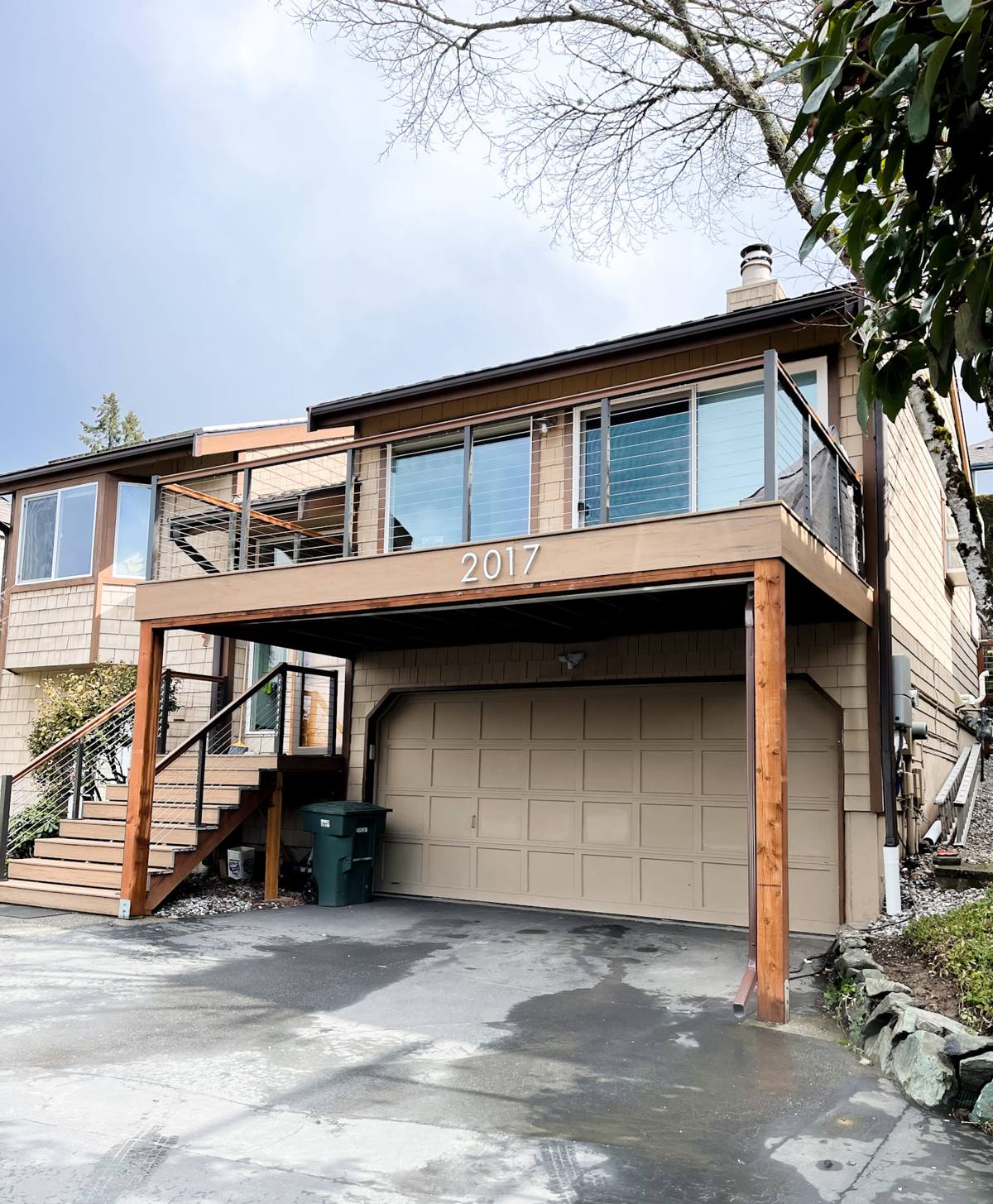
What Whatcom County Weather Does to a Deck
Moisture That Never Fully Dries
The problem with decks in this region usually isn't a single big storm — it's the slow cycle of rain, damp air, brief sun, and rain again that repeats for months at a time. Wood fibers swell and shrink with every cycle. Fasteners work loose. Gaps between boards close up with debris and stop draining the way they're supposed to. A deck built without that cycle in mind will show problems within a few seasons, even if it looks fine on installation day.
Moss, Algae, and Organic Growth
Lynden-area properties with any shade from trees, fences, or the house itself deal with a moss and algae season that runs far longer than most of the country ever sees. Moss holds moisture against a deck surface, and on the wrong material that trapped moisture leads to soft spots, staining, or rot underneath a surface that still looks intact from a few feet away. Surface texture, drainage gap, and how a board sheds water all affect how much moss actually takes hold.
Salt-Influenced Marine Air
Whatcom County's climate is shaped by its proximity to Puget Sound and Bellingham Bay, and that marine air mass moves across the whole county, not just the shoreline. It shows up as accelerated corrosion on fasteners, hardware, and any metal components used in a deck's structure. Even homes well inland from the water benefit from hardware and fastener choices that assume some corrosive exposure, not the bare minimum spec.
What a Correct Composite Deck Installation Actually Involves
Substructure and Drainage Come First
The composite boards get the attention, but the framing underneath decides whether the deck survives this climate. That means joist spacing tightened up from typical wood-deck standards (composite behaves differently under load and over spans than dimensional lumber), joist tape or another moisture barrier on top of the frame, and a layout that actually lets water get out from under the deck instead of pooling against ledger boards or posts.
Fastening and Board Spacing
Composite boards expand and contract with temperature and moisture more than most homeowners expect. Gapping between boards has to account for that movement, and it has to follow the specific manufacturer's spec rather than a rule of thumb, because gapping requirements vary by brand and board profile. Get it wrong and you either end up with boards that buckle when they swell, or gaps wide enough to catch heels and drop debris straight onto the framing below.
Flashing at the Ledger Board
Most of the deck failures we get called out to inspect in this region trace back to one place: where the deck attaches to the house. Without proper flashing, water works its way behind the ledger board and into the rim joist or wall framing, and in a climate that stays damp for months at a time, that hidden moisture doesn't get a chance to dry out between storms. This is a place where corners get cut on a fast, cheap install and where the damage stays invisible until it's expensive.
Choosing the Right Composite Board for This Climate
Not every decking product performs the same way under constant moisture and moss pressure. Here's how the main options generally compare for a home in the Everson area:
| Material | Moisture Behavior | Moss / Mold Resistance | Maintenance | Typical Lifespan |
|---|---|---|---|---|
| Pressure-treated wood | Absorbs and releases moisture constantly; prone to warping and splitting | Low without regular treatment | Annual cleaning, periodic sealing or staining | 10–15 years |
| Uncapped composite | Better than wood but the exposed core can still absorb some moisture at cut ends and fastener holes | Moderate | Periodic cleaning; more prone to surface staining over time | 15–20 years |
| Capped composite | A protective polymer shell sheds water and resists staining at the surface | Good with regular cleaning | Occasional washing; no sealing or staining required | 20–30 years, often warrantied longer |
| PVC (cellular) decking | Essentially non-absorbent; performs well in constant-damp conditions | Good with regular cleaning | Occasional washing | 25+ years, often warrantied longer |
For most Everson projects we steer homeowners toward capped composite or PVC, specifically because of how much time a deck here spends damp rather than dry. Uncapped composite and untreated wood aren't wrong choices for every budget, but they ask more of the homeowner in ongoing maintenance to hold up in this climate, and we'll say that plainly rather than oversell a cheaper product.
Our Process for a Composite Deck Project in Everson
Every property is a little different, but the sequence we follow doesn't change:
- On-site assessment of the existing structure (if any), grading, drainage path, and sun/shade exposure that affects moss growth.
- Board and structural material selection based on budget, appearance goals, and how much maintenance the homeowner actually wants to do long-term.
- Permitting through the applicable local jurisdiction — requirements depend on deck size, height, and attachment to the home.
- Framing and substructure work, including moisture barrier and fastener choices suited to a wet, marine-influenced climate.
- Composite board installation to manufacturer spacing and fastening specs, preserving the warranty.
- Final walkthrough covering drainage, board gapping, and what routine maintenance actually looks like for the specific product installed.
Maintenance That Actually Matters in This Climate
Composite decking is marketed as low-maintenance, and compared to wood it is — but "low-maintenance" doesn't mean "no maintenance" in a place with a moss season this long. A short list of what actually keeps a composite deck performing:
- Sweep debris (leaves, needles, seed pods) off the deck surface regularly, especially in fall, so it doesn't stay wet against the boards.
- Wash the deck surface at least once or twice a year with a soft-bristle brush and a cleaner rated for composite — pressure washers can damage the cap layer if used incorrectly.
- Check that the gaps between boards stay clear so water and debris can pass through to the ground below.
- Trim back overhanging vegetation that keeps sections of the deck shaded and damp longer than the rest.
- Inspect fasteners, hardware, and any flashing at the house connection once a year for corrosion or movement.
- Address moss as soon as it appears rather than waiting for it to spread — early growth is far easier to remove without staining the surface.
Why Hiring a Crew That Already Works in Everson Matters
A composite deck built to a generic national spec sheet can still fail early in this climate if the person installing it hasn't accounted for how wet Whatcom County actually stays for how much of the year. A crew that already works in and around Everson and Lynden knows what the moss season does to shaded sections of a deck, understands local permitting expectations, and has already seen what happens when ledger flashing or drainage gets rushed on a job in this specific climate. That local track record matters more here than it would in a drier region, where a shortcut might not show consequences for a decade instead of a couple of seasons.
Mistakes We See on Poorly Built Decks in This Area
Most of the repair calls we get on composite decks in this region trace back to a small handful of recurring problems: framing built to standard wood-deck joist spacing instead of the tighter spacing composite spans require, missing or improper ledger flashing, board gapping that ignored the manufacturer's spec, and fasteners or hardware that weren't rated for a damp, marine-influenced climate. None of these show up on installation day. They show up two, three, or five years later, usually as soft framing, staining that won't clean off, or boards that have buckled or cupped. Getting the substructure and fastening right the first time costs less than fixing it after the fact.
If you're planning a composite deck for your Everson home and want a straight answer on what it should cost, what material makes sense for your yard's sun and drainage, and how the job would actually get built, we're glad to walk the property with you. The estimate is free, there's no pressure, and you'll get an honest recommendation even if that means suggesting a simpler approach than you expected. Use the form below to get started.