 Lynden Siding
 Composite Decking Built for Bellingham's Marine Climate
A deck in Bellingham lives a different life than a deck fifty miles inland. Between the salt air rolling off Bellingham Bay and Puget Sound, the driving winter rain that Whatcom County is known for, and a moss season that can stretch from fall through spring, outdoor structures here take a beating that drier climates simply don't produce. We're a Lynden-based crew that builds and replaces decks throughout the Bellingham area, and we've shaped our composite decking process around exactly these conditions rather than treating every install like it's happening in a dry, inland yard.
This page is about one job in one place: composite decking for Bellingham homes. Not a general decking overview, and not a sales pitch for a specific brand — just a straight rundown of what the local climate does to a deck, what a correctly built composite deck needs to hold up against it, and how we approach the work.
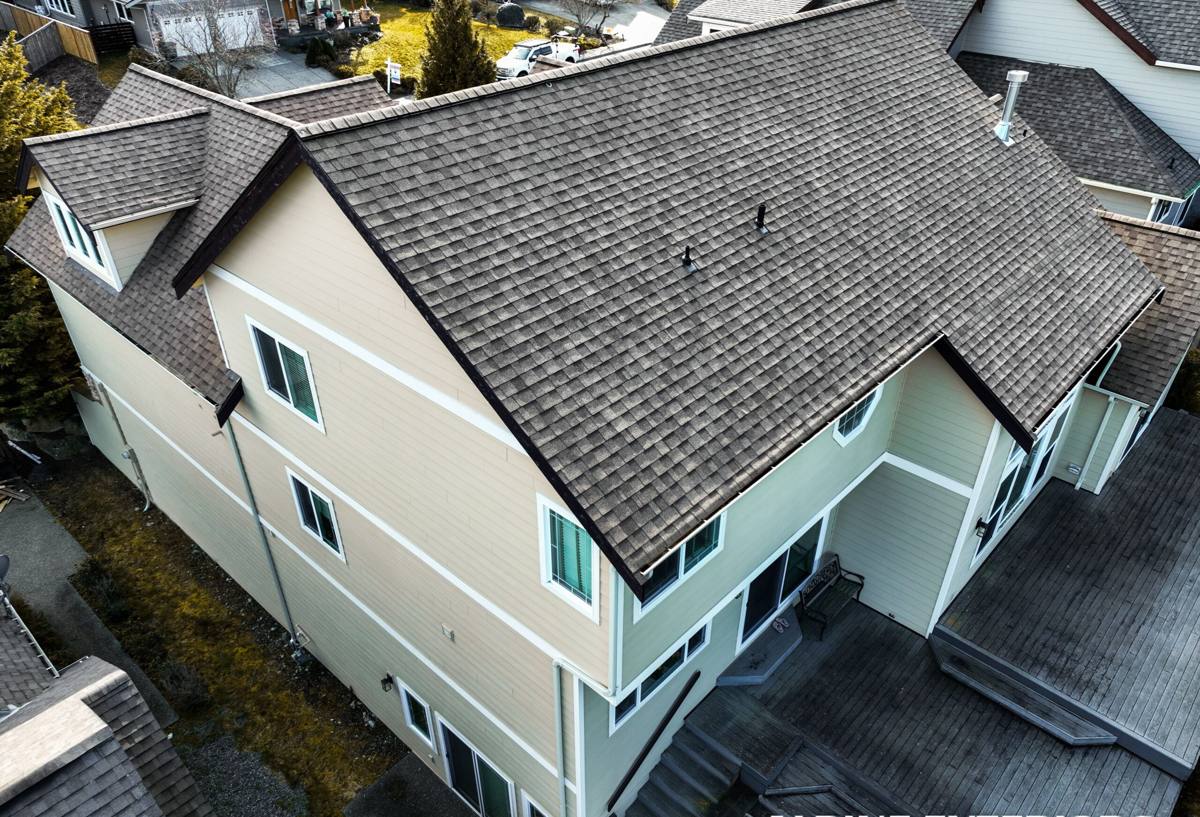
What Whatcom County Weather Actually Does to a Deck
Salt Air and Metal Fasteners
Homes closer to Bellingham Bay and the Sound get a steady, low-level exposure to salt-laden air. It's rarely dramatic, but it's constant. Over years, that air accelerates corrosion on unprotected metal — screw heads, joist hangers, bracket hardware — long before it does any visible damage to the decking boards themselves. A deck can look fine on the surface while its fasteners are quietly rusting underneath.
Driving Rain and Standing Water
Pacific storm systems don't just drop rain here, they drive it sideways, which pushes moisture into gaps, seams, and end cuts that a straight-down rain would never reach. Combined with our long wet season, that means any spot on a deck where water can collect and sit — a low corner, a poorly sloped board, a tight gap against the house — stays damp far longer than it would in a drier region.
A Long Moss Season
Shade, moisture, and mild temperatures are exactly what moss and algae need, and Whatcom County offers all three for a good chunk of the year. Decks under tree cover or on the north side of a house are especially prone to a green film building up on the surface, which isn't just cosmetic — it's slick, and it holds moisture against the board longer than a clean, dry surface would.
Why Composite Holds Up Better Than Wood in This Climate
Wood decking can absolutely be built well, and plenty of homeowners still prefer the look of it. But in a climate that stays wet this often, wood asks for more from the homeowner every single year — sanding, staining, sealing, and watching for soft spots — to keep doing what composite does with far less upkeep. Here's the honest side-by-side for this specific climate:
| Factor | Composite Decking | Wood Decking |
|---|---|---|
| Moisture absorption | Very low; boards don't swell or cup the way wood can | Absorbs water readily; prone to cupping, splitting, checking |
| Moss and mildew resistance | Solid surface resists growth better; still needs periodic cleaning | Grain and fiber give moss and mildew more to grip onto |
| Fastener corrosion risk | Same risk as wood — depends entirely on hardware quality, not the decking material | Same risk — hardware quality is what actually matters here |
| Annual maintenance | Occasional wash-down; no staining or sealing | Staining or sealing on a recurring schedule to hold up in this rain |
| Warranty structure | Typically longer, manufacturer-backed warranties on the boards | Warranty (if any) usually limited to the lumber's structural grade, not weathering |
| Upfront material cost | Higher per square foot | Lower per square foot, but higher lifetime cost from upkeep |
The trade-off is straightforward: composite costs more to install and wood costs more to own over time in a climate like ours. For most Bellingham homeowners weighing a deck they don't want to think about every spring, that trade-off tips toward composite.
What a Correct Composite Deck Build Requires
Composite boards are only as good as what's underneath them. A deck that fails early in this climate almost never fails because of the decking material — it fails because the substructure or fastening wasn't built for the moisture load. A correct build includes:
- Pressure-treated or composite-rated joists, properly spaced for the specific board being installed (composite spans differently than wood, and manufacturers publish exact spacing limits)
- Joist tape or an equivalent moisture barrier over every joist top, so water shed by the deck boards doesn't sit directly on exposed framing
- Corrosion-resistant, coated or stainless fasteners and hardware throughout — this matters more here than almost anywhere inland, given the salt air
- Proper ledger flashing where the deck meets the house, so driving rain can't work its way into the band joist or siding behind it
- A slight, consistent slope away from the house so water sheets off instead of pooling
- Enough clearance and airflow underneath the deck to let the substructure dry out between storms
Skip any one of these and the boards can look perfect for years while the frame underneath is quietly deteriorating — which is a much more expensive problem to fix later than it would have been to build right the first time.
Choosing the Right Boards for This Climate
Not all composite decking is built the same way, and the differences matter more in a wet climate than a dry one. The biggest distinction is capped versus uncapped composite. Capped boards have a plastic polymer shell wrapped around a wood-composite core, which is what actually gives composite its moisture and stain resistance — the core is protected from direct water contact. Uncapped composite exposes more of that core to the elements, and in a climate with this much sustained moisture, it's more prone to surface wear and moisture absorption over time. We generally steer Bellingham clients toward capped boards for that reason, not because of any one brand, but because the manufacturing approach itself is better matched to marine climate exposure.
Color and texture matter too, though less than substructure does. Deep, dark boards run hotter in direct sun and can show dust, pollen, and light moss film more visibly than mid-tone or variegated colors. A grain or streaked pattern also does a better job of hiding the light surface residue that builds up between cleanings than a flat, solid color does. None of this changes how the deck performs structurally — it's purely about how much you'll notice buildup between washes.
Drainage, Airflow & Preventing Moss Buildup
Even a well-built composite deck will develop some moss or algae film in a climate that stays damp and shaded this much of the year — that's true of any exterior surface here, not a defect specific to decking. What actually varies is how fast it builds up and how easy it is to keep ahead of. A few signs worth checking on any deck, new or existing:
- Water that visibly pools on the surface after rain instead of draining off within an hour or two
- A greenish tint developing in shaded corners well before the rest of the deck
- Debris — leaves, needles, pollen — collecting in gaps between boards instead of washing through
- Musty smell or visible damp spots underneath the deck between joists
- Slick footing in shaded areas, especially on stairs
Most of this comes down to two things: getting the slope and airflow right at install, and a simple rinse-and-brush cleaning a couple of times a year, more often under heavy tree cover. Composite doesn't need staining or sealing, but it isn't maintenance-free — it's low-maintenance, which is a meaningful difference in a climate this wet.
Our Process, Start to Finish
- On-site assessment of the existing structure (if replacing a deck) or the build area, including sun exposure, tree cover, and drainage path
- Review of substructure needs — framing condition, ledger attachment, and any repairs required before new decking goes down
- Board and color selection based on your home's exposure and how much sun or shade the deck actually gets
- Permitting as required by the local jurisdiction, handled before any framing work begins
- Build-out with corrosion-resistant hardware, joist tape, proper flashing, and correct slope — the details covered above
- Final walkthrough so you know what routine care the deck actually needs, and what it doesn't
Why a Local Crew Matters for This Job
Composite decking installation isn't exotic work, but installing it correctly for a Bellingham property benefits from knowing the area's conditions ahead of time — which yards tend to hold shade and moisture longer, what driving rain does to a ledger connection on an older Whatcom County home, and which fastener and framing choices are worth the extra cost here versus a drier climate where they'd matter less. A crew that already works this area isn't guessing at any of that. We're not a national outfit rotating through on a install schedule — we're based right up the road in Lynden, and we're the ones you'll call if a question comes up two years from now.
If you're weighing a new composite deck or a replacement for an aging wood one, we're glad to come take a look and give you a straight, no-pressure estimate — what it would take to build it right for your specific yard, sun exposure, and budget. Use the form below to get started.