 Lynden Siding
 Blaine's Coastal Climate Is Hard on Decks
Blaine sits right up against the water in the northwest corner of Whatcom County, and that location comes with a specific set of problems for anything built outdoors. Salt-laden air off the Strait of Georgia and Boundary Bay works its way into fasteners, flashing, and any exposed metal on a deck, speeding up corrosion in ways that inland homes rarely deal with. Add in driving rain that comes sideways during winter storms, and water gets pushed into joints and seams that a south-facing deck in a calmer part of the county might never see moisture in.
Then there's moss. Whatcom County's long, wet stretch from fall through spring gives moss and algae months to establish themselves on any shaded or north-facing deck surface. Moss holds moisture against the wood or composite decking long after the rain stops, and it turns boards slick and dangerous underfoot. A deck in Blaine that isn't inspected and maintained on a regular schedule will show wear years before an identical deck in a drier climate would.
None of this means a deck in Blaine is destined to fail early. It means the repair work has to account for salt exposure, wind-driven rain, and moss cycles specifically, not just general wear and tear. That's the lens we bring to every deck repair job in this area.
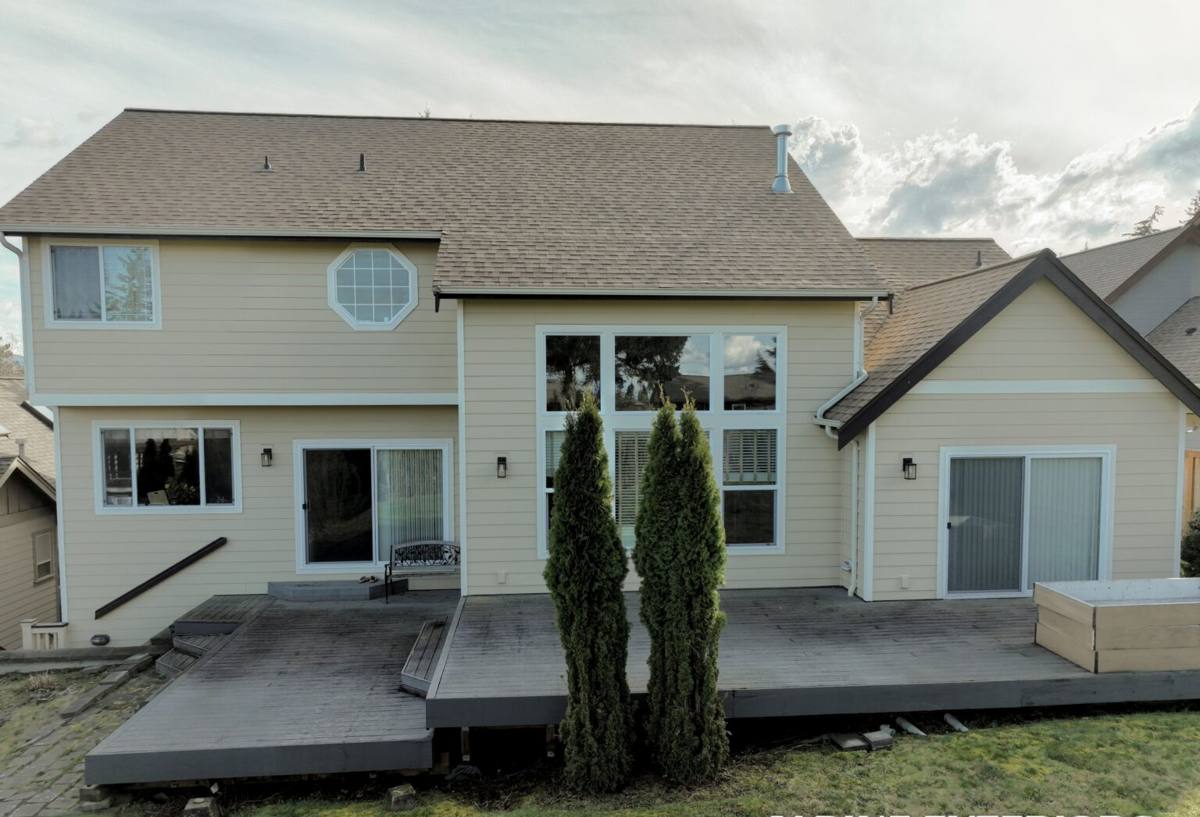
Signs Your Blaine Deck Needs Repair, Not Replacement
Most decks don't fail all at once. They give warning signs first, and catching those signs early is usually the difference between a repair bill and a full rebuild. Homeowners in Blaine should watch for:
- Soft or spongy spots underfoot, especially near the house or in shaded corners where moss tends to collect
- Rust streaks running down from fasteners, joist hangers, or railing brackets
- Gaps opening up where the deck ledger board meets the house
- Railings or posts that wiggle more than they used to
- Boards that have cupped, split, or pulled away from their fasteners
- Green or black staining that keeps coming back even after cleaning
- Stairs that feel less solid than the rest of the deck
Any one of these on its own might be a small fix. Several at once, or anything involving the structural framing rather than just the surface boards, is worth a proper inspection before you decide what route to take.
What a Correct Deck Repair Actually Involves
A repair that only addresses what's visible on the surface tends to leave the underlying cause untouched, which means the same problem shows up again in a season or two. We break every repair down into three layers, because in a climate like Blaine's, the surface, the structure, and the moisture path all need separate attention.
Structural Framing
This is the part of the deck that holds everything up: the ledger board attaching to the house, the joists, the beams, and the posts or footings. Structural issues are the ones we take most seriously, because a deck can look fine on top while the framing underneath has been quietly rotting or rusting for years. We check ledger flashing and fasteners closely, since a poorly flashed ledger is one of the most common failure points on coastal homes and one of the least visible from the top of the deck.
Surface Boards and Fasteners
Decking boards take the most direct weather exposure and are usually the first thing to show damage. Repair here can mean replacing individual boards, resetting or upgrading fasteners that have started to corrode, or addressing cupping and splitting before it spreads. In salt air environments, we pay close attention to fastener material — the wrong screw or nail in the wrong wood can start rusting within a couple of seasons.
Moisture Management
This is the layer that's easy to overlook but often the root cause of everything else. Proper flashing at the ledger, adequate drainage under and around the deck, and gaps between boards that let water pass through instead of pooling all matter more in a wet, moss-prone climate than they would somewhere drier. A repair that fixes a soft board but ignores why it got soft in the first place isn't a complete repair.
Common Deck Repairs We Handle in Blaine
Every deck is different, but certain repair categories come up again and again in this part of Whatcom County. The table below gives a general sense of what's typically involved and what drives the cost, though every job gets its own on-site estimate rather than a number pulled from a chart.
| Repair Type | Common Cause in Blaine | Typical Scope |
|---|---|---|
| Board replacement | Moisture retention, moss, sun/rain cycling | Localized, often a few hours to a day |
| Ledger board repair | Poor original flashing, wind-driven rain intrusion | Moderate — may involve partial siding removal |
| Fastener/hardware replacement | Salt air corrosion | Ranges from spot fixes to full re-fastening |
| Railing and post repair | Loosened connections, rot at post base | Moderate, safety-critical |
| Stair repair | High-traffic wear, moisture at stringer base | Moderate to significant |
| Structural framing repair | Long-term moisture intrusion, undersized original framing | Larger scope, may require permits |
Straightforward board or fastener repairs are usually the most affordable, often a modest cost when caught early. Ledger, framing, or stair work involves more labor and sometimes code considerations, which pushes cost up. The honest answer to "what will this cost" almost always requires someone standing on the deck first.
Repair or Replace? How We Help You Decide
Not every deck problem justifies a full rebuild, and not every deck is worth pouring repair dollars into indefinitely. We walk homeowners through this decision honestly rather than defaulting to whichever option is more profitable for us.
| Factor | Leans Toward Repair | Leans Toward Replacement |
|---|---|---|
| Structural framing | Sound, isolated issues only | Widespread rot or corrosion in joists/posts |
| Age of deck | Under 15-20 years, well-built originally | Original construction is old or was undersized |
| Extent of damage | Contained to a few boards or fasteners | Damage spread across multiple systems |
| Ledger/flashing condition | Flashing intact, isolated fix needed | Flashing missing or failed at the source |
| Homeowner plans | Staying several more years, budget-conscious | Wanting a different layout, size, or material |
When a deck's framing is sound and the damage is contained, repair is almost always the more sensible route, both financially and in terms of disruption. When the framing itself has been compromised by years of moisture, no amount of surface repair will hold up for long.
Our Repair Process
1. On-Site Inspection
We walk the entire deck, not just the area you called about. Boards, railings, stairs, the ledger connection, and the framing underneath where accessible all get checked, since problems in a coastal climate rarely stay isolated for long.
2. Honest Assessment and Estimate
You get a clear picture of what's actually wrong, what's optional, and what shouldn't wait. We explain our reasoning in plain terms — no pressure to approve more work than the deck actually needs.
3. The Repair Itself
Work is done to match the existing deck where possible and to correct underlying issues, not just patch symptoms. If a repair reveals additional hidden damage once we open something up, we stop and talk to you before proceeding rather than assuming approval.
4. Final Check and Cleanup
We test what we fixed, walk the deck with you if you'd like, and clean up the work area before we leave.
Why Hire a Crew That Already Works Blaine
General contractors from outside the area can absolutely do deck work, but there's real value in hiring a crew that already understands what Whatcom County's coastal conditions do to a deck over time. We know what salt air does to different fastener types, how moss behaves on north-facing surfaces through a Pacific Northwest winter, and where wind-driven rain tends to find its way into a ledger connection. That local pattern recognition often means catching a problem during an inspection that a less climate-familiar crew might miss until it's bigger.
It also means we're not guessing at what materials hold up here. Some fastener grades and board treatments that perform fine in drier inland climates don't hold up the same way a few blocks from Boundary Bay. We build repairs around what actually lasts in this specific environment.
Maintaining Your Deck After Repair
A repair holds up longer when it's paired with some basic seasonal upkeep, especially given how much moss and moisture this area deals with. A few habits go a long way:
- Clear moss and debris from the deck surface and between boards before it builds up, especially heading into fall
- Keep gutters and downspouts clear so runoff isn't draining directly onto or under the deck
- Check railings and stair connections for looseness once or twice a year
- Look at fastener heads periodically for early rust staining, since it's cheaper to address early
- Reapply sealant or finish on wood decking on the schedule recommended for the product used
- Keep vegetation trimmed back so shaded, damp areas of the deck get some airflow and light
None of this eliminates the effects of Blaine's climate entirely, but it slows the clock down considerably and makes future repairs smaller and less frequent.
When to Call Us
If you're noticing soft spots, rust streaks, loose railings, or a deck that just doesn't feel as solid as it used to, it's worth having it looked at before the next stretch of wet Whatcom County weather makes things worse. Catching an issue while it's still a repair — rather than after it's become a safety problem or a full rebuild — is almost always the better outcome for your budget and your deck's lifespan.
We're happy to come take a look, walk the deck with you, and give you a straightforward assessment of what it actually needs. There's no pressure and no cost to get that estimate — just fill out the form below and we'll get in touch.