 Lynden Siding
 Roofing Built for Blaine's Coastal Weather
Blaine sits close enough to the water that homes here take on a different kind of weather stress than roofs just a few miles inland. Salt-laden air off the Strait of Georgia works on metal fasteners and flashing year-round, driving rain off Semiahmoo Bay finds every weak seam in an underlayment system, and the long, damp Whatcom County winters give moss and algae months to gain a foothold on north-facing slopes. A roof that would hold up fine in a drier part of the state can wear out early here if it wasn't built with these specific conditions in mind.
We install and repair asphalt shingle roofs throughout Blaine and the surrounding Lynden area, and the approach we use reflects what actually happens to a roof out here over ten, twenty, and thirty years — not just what passes inspection on installation day.
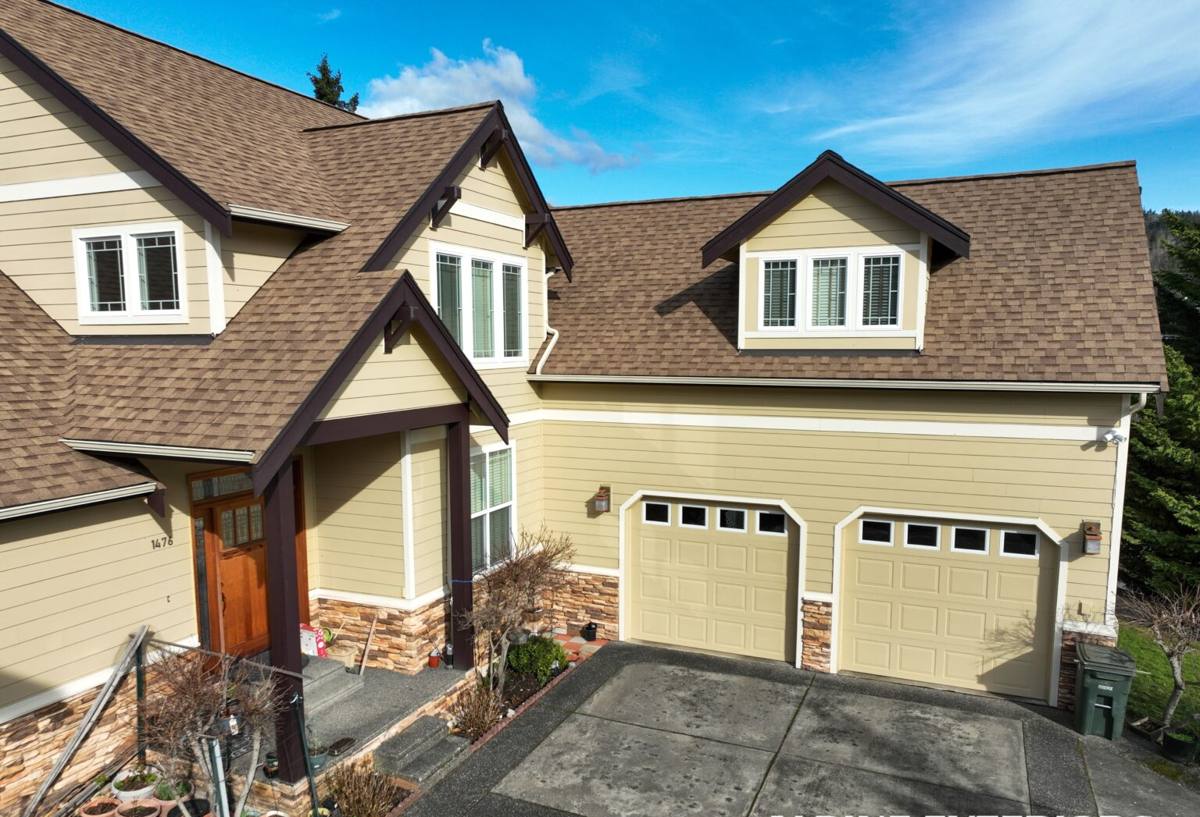
Why Blaine's Climate Is Hard on Asphalt Shingle Roofs
Salt Air and Metal Components
Every asphalt shingle roof depends on metal in places most homeowners never think about: drip edge, step flashing around chimneys and walls, valley metal, and the nails or staples holding the shingles down. Salt air accelerates corrosion on lower-grade or improperly coated metal, and once flashing starts to pit or thin, water finds a way underneath the shingles long before the shingles themselves look worn.
Driving Rain and Wind-Driven Moisture
Rain that comes in at an angle, which is common in exposed parts of Blaine, doesn't just run down a roof — it gets pushed sideways and upward under shingle tabs, around vents, and along valleys. A roof system that relies on the shingles alone to keep water out, without proper underlayment and flashing detail, will eventually leak in exactly these spots.
Moss, Algae, and a Long Wet Season
Whatcom County's shoulder seasons stay damp for months at a time, and shaded or north-facing roof sections in Blaine often stay wet longer than they get a chance to dry. That's ideal growing conditions for moss and algae, both of which trap moisture against the shingle surface, work into granule loss over time, and can lift shingle edges enough for wind and rain to get underneath.
What a Correctly Installed Shingle Roof Needs in This Climate
A roof that's going to hold up in Blaine isn't just about the shingle brand on top. It's about everything underneath and around it.
- Ice-and-water shield in vulnerable areas — valleys, eaves, and roof-to-wall transitions get a self-adhering waterproof membrane, not just standard felt, because these are the spots driving rain and wind-driven moisture target first.
- Synthetic underlayment across the full deck — a durable, water-resistant layer beneath the shingles gives you a real second line of defense if wind ever lifts a shingle edge.
- Corrosion-resistant flashing and fasteners — metal that's rated to hold up against salt air, not the minimum-grade hardware that's cheapest to buy.
- Balanced attic ventilation — intake at the eaves and exhaust at the ridge, sized correctly for the attic volume, so moisture doesn't condense on the underside of the deck and shorten the roof's life from the inside out.
- Correct nailing pattern — proper nail count and placement per shingle, since under-nailing is one of the most common causes of shingle blow-off in coastal wind events.
Signs Your Blaine Roof Needs Attention
Most shingle roof problems don't show up as a dramatic leak — they show up as small signs first, usually on the parts of the roof that get the least sun.
- Dark streaking or green-black patches, usually starting on north-facing slopes
- Moss clumps along the shingle edges or in valleys
- Granules collecting in gutters or at downspout outlets
- Shingle edges that look curled, cupped, or lifted
- Soft spots or discoloration on interior ceilings after heavy rain
- Flashing around chimneys or vent pipes that looks rusted, loose, or gapped
Any one of these on its own may not mean much. Two or three together, especially heading into another wet Whatcom County winter, are worth having looked at before they turn into a deck-level repair.
Choosing the Right Shingle for a Blaine Home
Not every asphalt shingle is built the same way, and in a marine climate the differences matter more than they would somewhere dry. The table below compares the two main categories most homeowners choose between.
| Factor | 3-Tab Shingles | Architectural (Dimensional) Shingles |
|---|---|---|
| Typical lifespan | Shorter, lighter-weight construction | Longer-rated, heavier laminate construction |
| Wind resistance | Lower wind rating | Higher wind rating — better suited to exposed coastal lots |
| Algae resistance | Available on some lines | Widely available with copper- or zinc-infused granules |
| Appearance | Flat, uniform look | Dimensional, shadow-line look |
| Upfront cost | Lower | Higher, but often lower cost over the roof's life |
For most Blaine homes, especially anything on an exposed lot near the water, we steer people toward algae-resistant architectural shingles. The higher wind rating matters here, and the granule technology genuinely slows down the staining that's so common on shaded slopes in this climate. It's not that 3-tab shingles are a bad product — they're just a better fit for a more sheltered, drier setting than most Blaine properties actually have.
Our Installation Process, Start to Finish
Assessment and Estimate
We start with an on-site look at the existing roof, deck condition, ventilation, and any trouble spots — valleys, chimneys, skylights — before putting together a written estimate. If the deck has soft spots from a prior leak, we flag that up front rather than discovering it mid-project.
Tear-Off and Deck Inspection
Old shingles and underlayment come off down to the deck. This is the point where hidden rot, old flashing failures, or ventilation gaps actually get found — you can't see them from the ground or from inside the attic in every case.
Deck Repair
Any damaged sheathing gets replaced before anything new goes down. Installing a new roof over a compromised deck just hides the problem for a year or two.
Underlayment and Flashing
Ice-and-water membrane goes in valleys and vulnerable transitions first, then synthetic underlayment across the rest of the deck, then new flashing at every penetration and wall intersection.
Shingle Installation
Shingles go down with the correct nailing pattern and exposure for the product and the local wind exposure. Ridge and starter courses get the same attention as the field of the roof — these are common places for shortcuts that don't show up until a storm hits.
Ventilation and Final Walkthrough
We confirm intake and exhaust ventilation is balanced, clean up the site including magnetic sweeps for stray fasteners, and walk the finished roof with the homeowner before calling the job done.
Repair vs. Full Replacement
Not every roof problem means a full tear-off. The right call depends on the roof's age, how widespread the damage is, and what's happening underneath the shingles.
| Factor | Leans Toward Repair | Leans Toward Replacement |
|---|---|---|
| Roof age | Under 10-12 years | Approaching or past typical shingle lifespan |
| Damage extent | Isolated — one valley, one flashing point | Widespread granule loss, curling across multiple slopes |
| Deck condition | Solid, no soft spots | Rot or repeated soft spots found |
| Leak history | First occurrence, clear single cause | Recurring leaks in different spots |
| Moss/algae condition | Surface growth, shingles intact underneath | Growth has lifted or degraded shingle edges |
We'll always tell you honestly which category a given roof falls into. A well-timed repair can add real years to a roof that's otherwise sound, and there's no reason to sell a Blaine homeowner a full replacement when a valley re-flash and some flashing work will genuinely solve the problem.
Maintenance That Actually Extends Roof Life Here
Given how long the wet season runs in this part of Whatcom County, a little maintenance goes further here than it would in a drier climate. A short seasonal checklist:
- Keep gutters and downspouts clear so water isn't backing up under the eave line
- Have moss and debris cleared from shaded slopes before it builds up thick
- Trim back overhanging branches that keep sections of the roof shaded and damp
- Check attic ventilation isn't blocked by insulation at the eaves
- Have flashing around chimneys and vents inspected every few years, not just when a leak shows up
- Walk the roofline visually after major windstorms for lifted or missing shingles
None of this replaces a proper inspection, but it catches the small, cheap-to-fix problems before they become deck-level repairs.
Why Hire a Crew That Already Works Blaine
Roofing detail work that's correct in one climate can be exactly wrong in another. A crew used to working inland or in drier regions may not automatically size ventilation for a consistently damp attic, may under-spec flashing for salt air, or may not think to recommend algae-resistant shingles because it simply hasn't come up as often in their usual service area. Working Blaine and the greater Lynden area regularly means we're making those calls by default, not as an afterthought — because we've seen what actually fails on roofs out here and what holds up.
That local familiarity also means a more accurate estimate. We're not guessing at what a Blaine roof needs based on general specs — we're pricing based on conditions we see on this stretch of coastline routinely.
Get a Straight Answer on Your Roof
Whether you're dealing with visible moss, a slow leak you can't pin down, or a roof that's simply getting close to the end of its service life, we're happy to take a look and give you an honest read on where things stand. Reach out for a free, no-pressure estimate — there's no obligation, just a clear picture of your options.