 Lynden Siding
 Birch Bay Homes Take a Different Kind of Beating
Birch Bay sits right on the water, and that changes what a siding job needs to survive. Homes a few miles inland in Lynden deal with plenty of rain and a long gray winter, but Birch Bay adds something extra: salt-laden air coming straight off the shoreline, wind-driven rain that hits walls at an angle instead of falling straight down, and a moss season that can run from early fall through late spring. Siding that would hold up fine on a sheltered inland lot can fail years early out here if it wasn't chosen or installed with that exposure in mind.
We're a Lynden-based crew, and Birch Bay is part of our regular service area, not a once-in-a-while job we take on when asked. That matters more than most homeowners realize, and we'll explain why further down. First, it's worth understanding what's actually working against your siding.
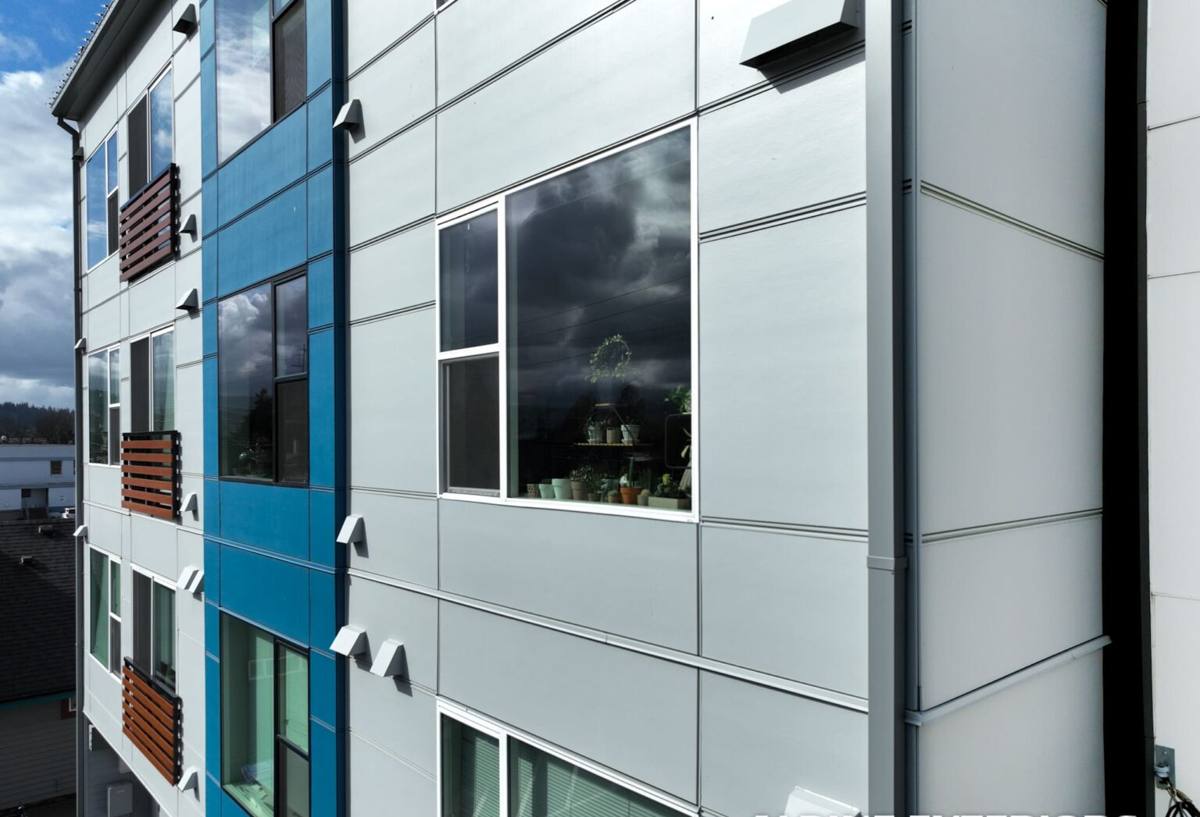
What Salt Air, Rain, and Moss Actually Do to Siding
Salt Air
Airborne salt is corrosive and it's persistent — it settles on siding, trim, and fasteners even on days without a storm. Over years, it accelerates the breakdown of caulking and finishes, and it's especially hard on any metal fasteners or trim that aren't rated for coastal exposure. Siding materials that rely on paint film alone for protection tend to chalk and fade faster in this environment than the same product would a few miles inland.
Wind-Driven Rain
Waterfront and near-waterfront lots see rain pushed sideways by wind off the water, not just falling straight down. That means water gets forced into laps, seams, and trim joints that would stay dry in a calmer setting. Any weak point in the water-resistive barrier, flashing, or caulking is more likely to get tested — and to fail — on an exposed Birch Bay wall than on a protected inland one.
Moss and Algae
Whatcom County's damp, mild winters already favor moss growth, and Birch Bay's shaded, moisture-heavy microclimate near the water pushes that further. Moss holds moisture against the siding surface long after a storm has passed, which keeps wood-based products damp for extended stretches and can encourage rot at the exact spots where moisture already collects — inside corners, under eaves, and along the lower courses of a wall.
Signs Your Birch Bay Home May Need Siding Replacement
Some of these show up gradually, and it's easy to write them off as cosmetic. On a home this close to the water, they're usually a sign the siding is losing the fight it's been in for years.
- Persistent moss or dark streaking that comes back within a season or two of cleaning
- Soft or spongy spots when you press on the siding, especially near the bottom courses or corners
- Paint that's peeling, bubbling, or chalking faster than it should between repaints
- Visible cracking, warping, or cupping of boards or panels
- Gaps opening up at seams, corners, or where siding meets trim and window frames
- A musty smell along exterior walls, or higher heating bills that suggest air and moisture are getting in
- Rust staining running down from fasteners or trim pieces
Any one of these on its own might just need a repair. Several together, especially on the water-facing side of the house, usually means the siding system as a whole has reached the end of its useful life.
Why We Install Only James Hardie Fiber Cement
We don't install vinyl, LP SmartSide, primed spruce, cedar, or other fiber cement brands. That's a deliberate standard, not a default. In a climate like Birch Bay's, the trade-offs of those products show up faster and cost homeowners more over time.
Vinyl can warp and become brittle with temperature swings and UV exposure, and its seams give wind-driven rain more opportunities to work behind the material. Wood and wood-composite products need a maintained paint or sealant film to keep moisture out, and once that film is compromised — which happens faster in salt air and a long moss season — rot can set in underneath before it's visible from outside. Other fiber cement brands vary in formulation and factory finish quality, and we've standardized on James Hardie because of its consistency and its climate-specific product engineering.
James Hardie's fiber cement is non-combustible, doesn't support moss or algae growth as a food source the way wood does, and its ColorPlus factory finish is baked on and warranted separately from the substrate — it isn't relying on field-applied paint to do the protective work. Hardie also engineers its formulations by climate zone; homes in wetter coastal regions like ours are matched to the company's moisture-focused HZ10 product line rather than a one-size-fits-all formulation. Combined with a strong transferable warranty, that's the combination we're comfortable standing behind on a home that's going to face salt air and rain for the next several decades.
Material Comparison for a Birch Bay Exposure
| Factor | James Hardie Fiber Cement | Vinyl | Wood / Cedar |
|---|---|---|---|
| Salt air resistance | Strong — factory finish, non-organic material | Moderate — can chalk, fade, and become brittle | Weak without diligent maintenance |
| Moss / algae resistance | Strong — cement-based, not an organic food source | Moderate | Weak — organic material, prone to growth and rot |
| Wind-driven rain performance | Strong when flashed and installed to spec | Seam-dependent, can allow water intrusion | Depends heavily on maintained sealant/paint |
| Fire resistance | Non-combustible | Combustible | Combustible |
| Maintenance | Low — periodic cleaning and caulk checks | Low, but limited repair options once damaged | High — regular repainting/sealing required |
| Typical lifespan when installed to spec | Decades, with strong transferable warranty | Variable, shorter in harsh coastal exposure | Shorter without consistent upkeep |
What a Correct Siding Replacement Involves
The material is only part of the equation. Most siding failures we see, on any brand, trace back to installation shortcuts rather than the product itself — and in a high-moisture, salt-air environment, those shortcuts show up sooner.
Tear-Off and Sheathing Check
We remove the old siding and trim and inspect the sheathing underneath for rot or soft spots before anything new goes up. Covering over damaged sheathing just traps the problem behind new material.
Water-Resistive Barrier and Flashing
A new weather-resistive barrier gets installed with proper overlaps, and flashing goes in at every penetration — windows, doors, hose bibs, vents, and any trim transitions. This is the layer that actually keeps wind-driven rain out of the wall assembly, and it matters more here than almost anywhere else.
Fastening and Clearances
Hardie siding needs to be fastened per manufacturer spec — correct nail type, spacing, and depth — and kept at the right clearance from grade, roofing, and decks so water has somewhere to go instead of wicking up into the material. Caulking is used at the joints Hardie specifies, not as a substitute for proper flashing.
Finish and Trim Details
Corners, trim boards, and butt joints are detailed to shed water rather than collect it, which is especially important on the sides of a home that face prevailing wind and rain off the water.
Our Process for Birch Bay Projects
- On-site assessment of the existing siding, sheathing condition, and the home's specific wind and moisture exposure
- Written estimate covering material, tear-off, sheathing repair allowance, and installation
- Product and color selection from James Hardie's lineup suited to coastal exposure
- Tear-off, sheathing inspection and repair as needed, and installation to manufacturer spec
- Final walkthrough covering flashing details, clearances, and care going forward
We schedule around Birch Bay's weather patterns rather than fighting them — timing tear-off and dry-in work to avoid leaving a home exposed during a stretch of wind-driven rain.
Why a Crew That Already Works Birch Bay Matters
Siding crews that mostly work drier, more sheltered neighborhoods don't always adjust their default details for a marine exposure — they'll flash and fasten the way they always do, because it's worked everywhere else they've worked. On a Birch Bay lot facing the water, that can mean under-detailing the exact joints that take the worst of the wind-driven rain.
Working this area regularly also means knowing what Whatcom County's building department expects for a residential re-side in a coastal-adjacent area, having a realistic sense of how moss and salt exposure vary block by block near the shoreline, and not needing a learning curve on a homeowner's project. For a Lynden-based crew, Birch Bay isn't a special trip — it's part of the territory we already know.
Get a Straightforward Look at Your Siding
If your Birch Bay home is showing moss buildup, soft spots, or siding that's just tired-looking after years of salt air and rain, it's worth getting an honest, no-pressure look before deciding what to do next. We'll walk the exterior with you, point out what we actually see, and lay out options in plain terms. Use the form below to request a free estimate.