 Lynden Siding
 Birch Bay's Coastal Climate Is Hard on Roofs
Homes along Birch Bay sit right where salt-laden air off the water meets the wind and rain patterns common to Whatcom County. That combination is tougher on a roof than most homeowners realize. Salt air accelerates corrosion on exposed metal fasteners, flashing, and vent caps years faster than the same materials would wear inland. Driving rain, especially during winter storms that come in sideways off the bay, finds its way under loose shingles, worn flashing, and aging pipe boots in a way that straight-down rain never would. And the long, damp moss season that stretches through much of the fall, winter, and spring gives organic growth plenty of time to take hold on north-facing slopes and shaded valleys.
None of that means a Birch Bay roof is doomed to constant problems. It means the repair work has to account for those specific stresses instead of treating every roof the same way it would be treated in a drier part of the state.
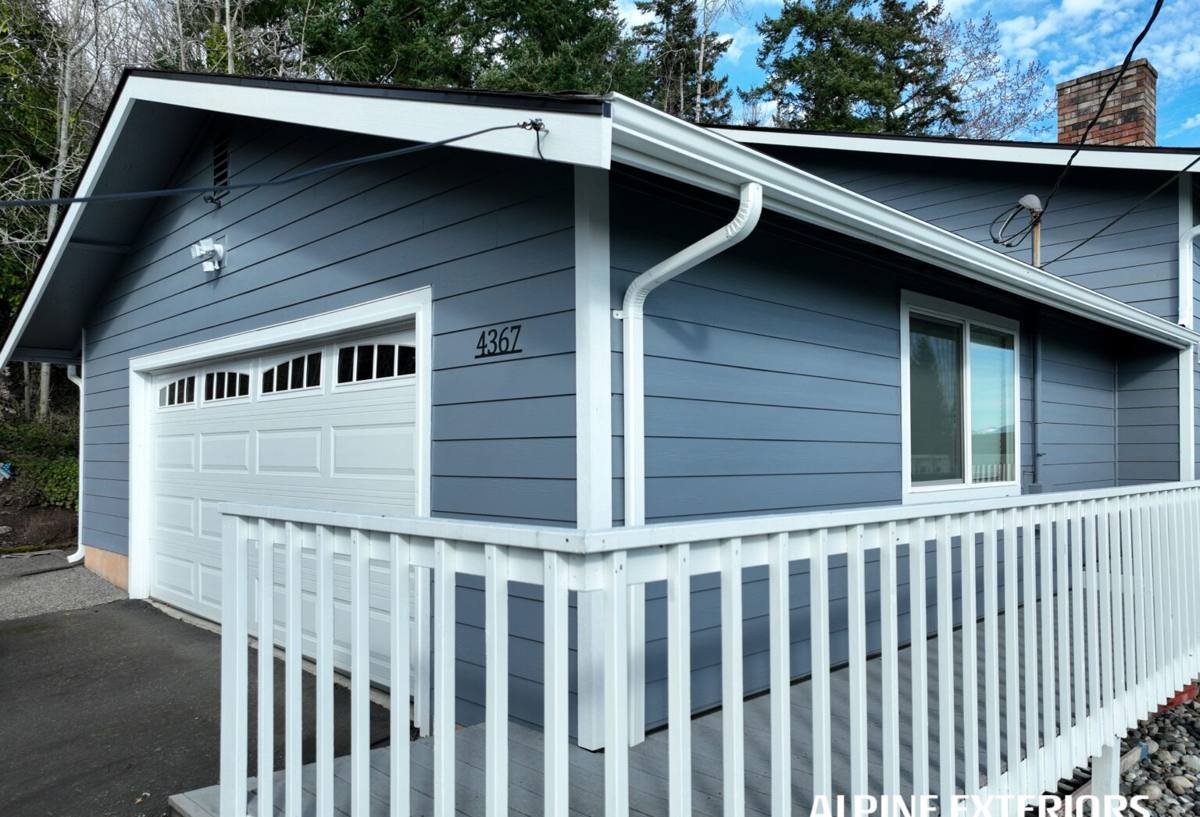
Signs a Birch Bay Roof Needs Repair, Not Replacement
Most roofs don't fail all at once. They show localized trouble first, and catching it early is almost always the difference between a repair bill and a full replacement bill. Watch for:
- Dark streaking or a green-black tint on shingles, especially on shaded or north-facing sections
- Granules collecting in gutters or at the base of downspouts
- Soft or spongy spots when walking a roof, which usually means the decking underneath has taken on moisture
- Rust staining around nail heads, vent stacks, or metal flashing
- Curling, cracked, or lifted shingle edges, particularly on slopes that face prevailing wind and rain
- Water stains on interior ceilings or in the attic near chimneys, skylights, or roof valleys
- Visible gaps or corrosion at flashing around chimneys, dormers, and where the roof meets a wall
If a roof is showing one or two of these in isolated spots, that's typically a repair situation. If several of these show up across multiple slopes, or the decking has soft spots in more than one area, that's usually a sign the roof is past the point where patching makes sense.
What a Correct Roof Repair Actually Involves
A repair that's done right addresses the cause of the damage, not just the symptom. On a Birch Bay home, that usually means paying close attention to a few specific areas.
Flashing and Transition Points
Most roof leaks near the coast don't start in the open field of shingles — they start at flashing: chimneys, skylights, dormers, and roof-to-wall transitions. Salt air corrodes exposed metal fasteners and thin flashing faster than in drier climates, so a proper repair means inspecting and often replacing flashing in these spots rather than just resealing over old, failing metal with caulk.
Underlayment and Decking Condition
Once shingles are pulled back in the repair area, the underlayment and decking underneath tell the real story. If wind-driven rain has been getting past the surface layer for a while, the decking can be soft, delaminated, or stained. A repair that only replaces surface shingles without checking what's underneath is a repair that will likely need to be redone.
Moss and Organic Growth Removal
Moss doesn't just look bad — its root structure holds moisture against the shingle surface and can lift shingle edges over time, which is exactly where wind-driven rain gets a foothold. A correct repair includes careful moss removal (not aggressive pressure washing, which can strip granules and shorten shingle life) and treatment to slow regrowth, rather than leaving it in place and patching around it.
Ventilation Check
Attic ventilation affects how much moisture builds up under the roof deck, especially during the damp months. A repair project is a good opportunity to check that intake and exhaust venting are actually balanced, since poor ventilation can accelerate the same moss and moisture problems the repair is meant to fix.
Repair Approaches Compared
Not every repair looks the same, and the right approach depends on how localized the damage is and what's happening underneath the surface.
| Approach | Best For | Trade-Offs |
|---|---|---|
| Spot patch (shingles + flashing) | Isolated leak or storm damage in one small area, decking still sound | Fastest and least expensive, but only addresses the repaired section |
| Section replacement | Damage concentrated on one slope or valley, such as moss-heavy north faces | More labor than a spot patch, but resets an entire problem area including decking if needed |
| Flashing overhaul only | Roof field is in good shape but chimney, skylight, or wall flashing has failed | Targeted and cost-effective, but won't help if the shingle field itself is aging out |
| Full tear-off and replacement | Widespread wear, multiple soft decking areas, or a roof near the end of its service life | Highest cost, but the only option that resets everything at once |
We'll tell you honestly which category your roof falls into. There's no benefit to us in talking a homeowner into a full replacement when a section repair will hold up, and no benefit in patching a roof that's going to need real work again within a year.
Our Process, Start to Finish
- Inspection. We walk the roof (not just look from the ground) and check the attic from the inside where accessible, looking at flashing, decking condition, ventilation, and the extent of any moss or granule loss.
- Honest assessment. We explain what we found in plain terms — what needs to happen now, what can wait, and what's just cosmetic.
- Written estimate. You get a clear scope of work and price before anything starts, with no surprise add-ons once we're on the roof.
- Repair work. We remove damaged material back to sound decking, replace what needs replacing, and rebuild flashing details properly rather than covering them with sealant.
- Cleanup and walkthrough. We clear debris, check gutters and downspouts for granules or moss that came loose during the work, and walk the repair with you before we consider the job done.
What Affects the Cost of a Roof Repair
Costs on any repair vary with the scope of the damage and what's found once work begins, but a few factors consistently move the price up or down.
| Factor | Why It Matters |
|---|---|
| Size of the affected area | A single flashing repair costs far less than a full slope section replacement |
| Decking condition | Soft or rotted decking found under damaged shingles adds material and labor beyond the surface repair |
| Roof pitch and access | Steeper roofs and homes with limited access take longer and require more safety equipment |
| Extent of moss or organic growth | Heavy moss buildup adds removal and treatment time before repair work can start |
| Flashing complexity | Chimneys, skylights, and multiple roof valleys each add detail work beyond a flat shingle field |
Before hiring anyone for repair work, it's worth asking a few direct questions so you know what you're actually getting:
- Will you check the decking condition, or only replace visible shingles?
- Is flashing being replaced, or just resealed with caulk?
- Is the estimate itemized, so you know what's covered if something else turns up?
- Does the crew carry proper insurance and offer a workmanship warranty on the repair itself?
- Will moss be physically removed, or just treated chemically over the existing growth?
Keeping Moss and Salt Damage From Coming Back
A repair holds up longer with a small amount of ongoing attention. Keeping gutters clear of granules and debris prevents water from backing up under the shingle edge during heavy rain. Periodic moss treatment on shaded slopes, done gently rather than with high-pressure washing, keeps regrowth from undoing the repair. And a quick visual check after major windstorms — common in this area through the fall and winter — can catch a lifted shingle or dented flashing before it turns into a leak. None of this requires climbing on the roof yourself; a lot of it can be assessed from the ground or through an occasional professional check-up.
Why Hiring a Crew That Already Works Birch Bay Matters
A roofer who mostly works drier, inland areas of Whatcom County will approach a Birch Bay repair the same way they'd approach any other job — and that's exactly where problems get missed. Knowing that salt air shortens the working life of certain fasteners and flashing, that moss season here runs longer than it does even a few miles inland, and that wind-driven rain during coastal storms behaves differently than a straight downpour all change what a correct repair looks like on this specific roof, in this specific location. It's the difference between a repair that's built for the conditions it actually has to survive and one that's built for conditions somewhere else.
If you're seeing signs of wear, staining, or moss buildup on your roof, we're happy to take a look and give you a clear, honest picture of what's going on. Reach out for a free, no-pressure estimate using the form below.