 Lynden Siding
 Composite Decking Built for Birch Bay's Coastline
Birch Bay sits right on the Salish Sea, and that location shapes everything about how a deck needs to be built here. Homes just a few blocks inland from the water still take on salt-laden air, and the combination of onshore wind, driving rain, and a long gray moss season puts more stress on exterior wood and hardware than most inland Whatcom County properties ever see. A deck that would hold up fine in Lynden proper can fail years earlier out at Birch Bay if it isn't built with that exposure in mind.
Composite decking has become the go-to choice for homeowners here for good reason. It doesn't absorb moisture the way solid wood does, it won't feed the moss and algae that thrive in our wet, shaded shoreline microclimate, and it holds up to repeated wet-dry cycling without cupping, splintering, or graying out in a single season. But composite is not a material you can install the same way everywhere. The details that matter in Birch Bay — fastener selection, airflow underneath the boards, flashing at the house connection — are exactly the details that get skipped by crews who don't regularly build this close to salt water.
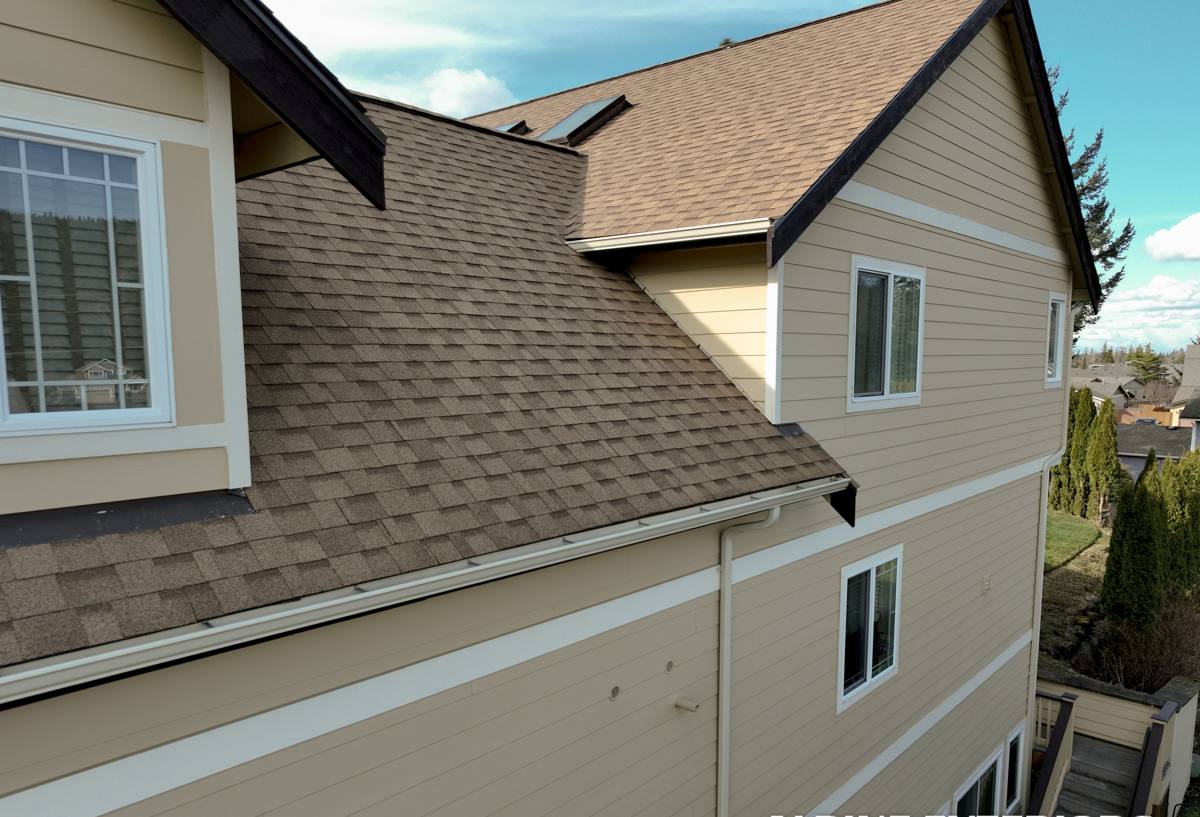
What Salt Air and Driving Rain Actually Do to a Deck
It helps to understand the specific failure modes we're building against, rather than just treating "coastal" as a vague concern.
Salt Air and Corrosion
Airborne salt doesn't just sit on the surface of a deck — it works into every metal connection point. Standard coated deck screws, joist hangers, and fastener clips that are rated for general outdoor use can start corroding within a few years this close to the water. Once a fastener corrodes, it loses holding strength long before the visible signs show up, which is how you end up with boards that feel loose or squeaky well ahead of schedule.
Wind-Driven Rain
Birch Bay gets rain that comes in sideways off the water more often than sheltered inland lots do. That means water gets pushed up under rail caps, into end grain at board cuts, and behind ledger boards where the deck meets the house — areas that stay relatively dry on a typical inland deck. Any gap in flashing or sealant at those points becomes a chronic moisture entry.
Moss and Algae Season
Whatcom County's wet season stretches long, and shaded or north-facing decks near the water can stay damp for weeks at a stretch. Solid wood decking gives moss and algae organic material to grow on and roughen surfaces, making the problem worse each year. Composite doesn't feed that growth the same way, but airflow underneath the deck still matters — a deck built low to the ground with poor ventilation will stay damp longer and grow surface film faster regardless of the decking material on top.
Composite vs. Other Decking Materials in This Climate
We install composite most often out at Birch Bay, but it's worth being honest about how it compares to the alternatives homeowners ask about.
| Material | Coastal Moisture Behavior | Maintenance Burden | Typical Lifespan Here |
|---|---|---|---|
| Capped Composite | Sheds water, resists moisture absorption into the core | Occasional wash; no staining or sealing | 25-30+ years with correct install |
| Uncapped Composite | More prone to surface moisture absorption and mold on the face | Periodic cleaning to prevent surface staining | 15-20 years |
| Pressure-Treated Wood | Absorbs and releases moisture constantly; prone to cupping near salt air | Annual sealing/staining recommended | 10-15 years before major repair |
| Cedar | Naturally rot-resistant but still absorbs moisture; grays and softens near salt exposure | Regular oiling/sealing to maintain | 12-18 years |
This isn't a knock on wood — cedar and pressure-treated lumber are honest, traditional choices and some homeowners prefer the look and the ability to refinish it themselves. The trade-off is maintenance frequency, and in a salt-air, high-rain environment like Birch Bay, that maintenance schedule gets tighter than it would inland. Capped composite is what we recommend most often specifically because it removes that ongoing sealing and staining cycle.
What Correct Installation Looks Like on a Birch Bay Deck
Composite boards themselves are largely the same product whether they're installed in Lynden or right on the water. The difference in a coastal build is everything underneath and around them.
Ledger Board Flashing
Where the deck attaches to the house is the single most common source of hidden water damage on any deck, and it's a bigger risk here because of wind-driven rain. Proper flashing — installed correctly behind the siding or trim, not just caulked over the top — is non-negotiable on every deck we attach to a structure.
Board Gapping and Airflow
Composite boards need consistent gapping for expansion and drainage, and the substructure needs enough clearance and ventilation underneath to let the space dry out between rain events. A deck built low and tight to the ground traps moisture and shortens the life of everything underneath the decking surface, composite or not.
Cut-End Sealing
Every field cut on a composite board exposes the core material. On a standard inland deck that's a minor detail; on a deck taking regular salt spray and driving rain, unsealed cut ends are where moisture intrusion starts. We treat every cut end before it goes into place.
Substructure and Hardware: The Part Nobody Sees
The decking surface gets all the attention, but the substructure is what determines whether a deck is still solid in fifteen years. This is where corner-cutting shows up first in a coastal environment.
- Stainless steel or coated fasteners rated for coastal/marine exposure, not general-purpose exterior screws
- Joist tape or protective flashing on top of every joist to stop moisture wicking into the wood
- Hot-dip galvanized or stainless joist hangers and structural connectors
- Proper joist spacing for the specific composite product being installed — spacing varies by brand and board profile
- Adequate under-deck clearance and cross-ventilation to let the structure dry between storms
- Ledger flashing installed correctly at the house connection, not just sealant applied over a gap
None of this is visible once the deck is finished, which is exactly why it's the part most likely to get shortcut by a crew that isn't used to building this close to the water.
Railings, Fascia, and Finishing Details
Many Birch Bay homes are built to take advantage of water views, which means railings see more direct wind and salt exposure than they would on a sheltered inland lot. Aluminum or composite rail systems generally hold up better here than wood rail assemblies, which are prone to the same moisture cycling issues as wood decking. Fascia boards along the deck edge should be capped composite or a moisture-resistant material as well — it's a small surface area, but it's also one of the most visible parts of the deck and one of the first places wear shows up if the wrong material is used.
Our Process for a Birch Bay Composite Deck
Every property is different, but the general sequence we follow stays consistent:
- On-site assessment of the existing structure (if replacing a deck) or the build site, including exposure direction relative to the water and existing drainage
- Design and material selection based on the home's exposure, shade pattern, and the homeowner's maintenance preferences
- Substructure build with coastal-rated hardware, proper joist spacing, and ledger flashing where applicable
- Composite board installation with correct gapping, sealed cut ends, and manufacturer-specified fastening
- Railing and fascia installation matched to the deck's exposure conditions
- Final walkthrough covering the deck's expected maintenance needs specific to its location
Maintenance: What Composite Actually Needs Here
One of the reasons homeowners switch to composite in this area is the reduced maintenance load, but "low-maintenance" isn't "no-maintenance," especially with a long moss season and regular salt exposure. A periodic rinse or light wash to keep salt residue and organic buildup from accumulating on the surface goes a long way. Shaded areas of the deck, or spots that stay damp longer after a storm, are worth an occasional closer look for surface film. Hardware and connections at the ledger board and stair stringers are worth a visual check each year, since that's where corrosion or movement would show up first even on a well-built deck.
Why It Matters to Hire a Crew That Already Works Birch Bay
A lot of decking problems we get called out to fix didn't come from bad composite board — they came from a substructure and hardware package that was built to a general inland standard and installed in a coastal exposure it wasn't rated for. That's the gap that matters most. A crew that regularly works Birch Bay and the surrounding Whatcom County shoreline knows which fastener grade to spec, where flashing failures actually start, and how much ventilation a given lot's shade and drainage pattern actually needs. That's knowledge that comes from building here repeatedly, not from a general decking checklist.
If you're planning a new composite deck or replacing an aging one out at Birch Bay, we're happy to take a look at your property and talk through what it actually needs. Reach out for a free, no-pressure estimate using the form below.