 Lynden Siding
 Board & Batten Siding Built for the Bellingham Climate
Board and batten has become one of the most requested siding styles for homes in and around Bellingham — the vertical lines read as modern farmhouse on a new build and as a clean, textured accent on a remodel. It works on a full elevation or as a contrast material against lap siding on a gable or entry feature. But in this part of Whatcom County, board and batten is not just an aesthetic choice. The material and the installation details behind those vertical boards determine whether the siding holds up or becomes a maintenance headache within a few years.
Homes near Bellingham sit close enough to the water to catch salt-laden air, get hit with driving, wind-pushed rain off the Strait and the Sound, and spend a good part of the year under damp, shaded conditions that grow moss on anything that holds moisture. Vertical board and batten has more seams and more fastening points than horizontal lap siding, which means more places for water to find a way in if the job isn't done correctly. Getting this style right in our climate is as much about what's underneath the boards as what you see on the wall.
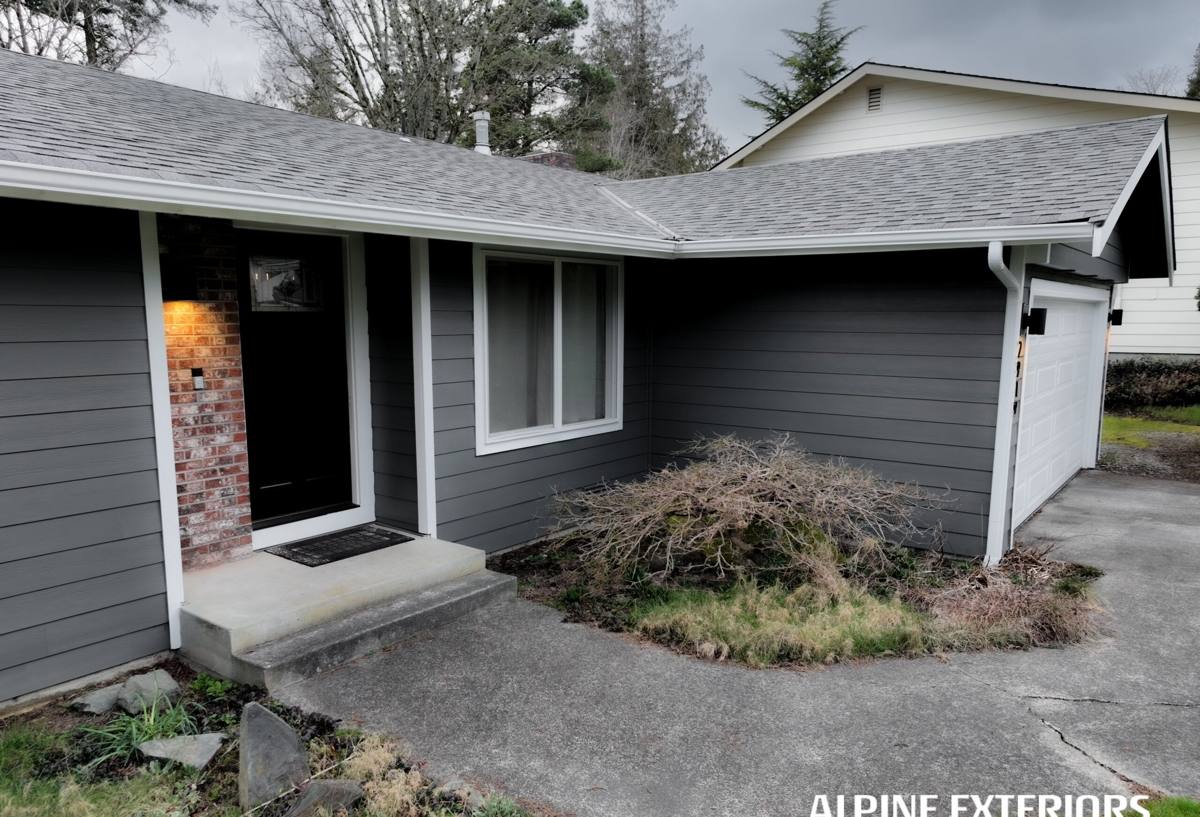
What Bellingham's Climate Actually Does to Siding
Salt Air
Proximity to Bellingham Bay and the surrounding saltwater means airborne salt settles on exterior surfaces year-round. Salt accelerates corrosion on fasteners and metal flashing, and it's abrasive to lower-grade finishes over time. Materials and hardware that aren't rated for coastal exposure age faster here than they would twenty miles inland.
Driving Rain
Whatcom County doesn't just get rain — it gets wind-driven rain that hits siding at an angle instead of running straight down. Vertical board and batten has horizontal joints at board ends and butt seams that are more exposed to wind-driven moisture than a shingled lap profile. Flashing details and sealant choices at those joints matter more here than they would in a drier climate.
Moss Season
Long stretches of overcast, damp weather each year create ideal conditions for moss and algae growth, especially on north-facing walls, shaded elevations, and anywhere siding stays wet longer than it should. Moss holds moisture against the surface, and on the wrong substrate that trapped moisture leads to rot, swelling, or coating failure well before the siding's expected lifespan is up.
What a Correct Board & Batten Installation Involves
Board and batten looks simple from the curb — vertical boards, battens covering the seams — but the assembly behind it is what actually keeps water out. A correct installation in this climate includes:
- A drainage plane (weather-resistive barrier) installed and lapped correctly behind the siding, not just stapled on as an afterthought
- A rain screen gap — vertical furring strips that create an air space between the siding and the wall, letting incidental moisture drain and dry instead of sitting against the sheathing
- Correct fastener spacing and embedment into framing or furring, using fasteners rated for the material and for coastal exposure
- Proper flashing at every horizontal joint, window and door head, and wherever the siding meets a roofline, deck ledger, or dissimilar material
- Factory-finished boards wherever possible, so field-cut ends are the only exposed edges needing sealant, rather than entire faces relying on site-applied paint
- Consistent, correctly caulked butt joints — not gapped, not overfilled — using a sealant rated for exterior movement and UV exposure
Skip the rain screen gap or get the flashing sequence wrong at even a few joints, and board and batten in a wet, salt-air climate will show problems — staining, swelling, moss buildup, or coating failure — years before it should. This is a style where the installation crew's attention to the assembly matters as much as the material itself.
Why We Install Board & Batten Only in James Hardie Fiber Cement
We install James Hardie exclusively, and board and batten is one of the applications where that standard matters most. Hardie's vertical board and batten profiles are engineered fiber cement — non-combustible, dimensionally stable, and available with a factory-applied ColorPlus finish that's baked on and warrantied against fading and chipping in a way field-applied paint simply isn't. In a climate that alternates between soaking rain and drying wind, a material that doesn't swell, cup, or absorb water the way wood-based products can is the difference between siding that holds a straight, crisp line for decades and siding that needs recaulking and repainting every few years.
| Factor | James Hardie Fiber Cement | Primed Wood / Engineered Wood | Vinyl Board & Batten |
|---|---|---|---|
| Moisture response | Dimensionally stable, resists swelling | Can swell, cup, or delaminate at cut edges if not fully sealed | Doesn't absorb water, but can warp under heat and trap moisture behind panels |
| Salt air / coastal exposure | Engineered for coastal durability; HZ5 line built for harsh climates | Vulnerable without diligent maintenance and repainting | Generally stable but fasteners and trim can corrode |
| Finish longevity | Factory ColorPlus finish, long warranty on color and coating | Field-applied paint, shorter repaint cycle | Color molded in but fades with UV over years; can't be repainted easily |
| Fire resistance | Non-combustible | Combustible | Combustible, can melt/deform near heat sources |
| Long-term maintenance | Periodic wash; recaulk joints on standard schedule | Regular repainting, edge sealing, moisture monitoring | Low maintenance but limited repair options if damaged |
Other board and batten materials aren't automatically wrong choices everywhere — but in a marine climate with this much moisture and salt exposure, we've standardized on Hardie because it's the product we're confident will still look and perform right ten and twenty years out, without the homeowner needing to stay on top of repainting and edge sealing every few seasons.
Our Process for a Board & Batten Project in the Bellingham Area
1. On-Site Assessment
We walk the exterior, check the current wall assembly and any existing moisture or rot issues, and talk through which elevations make sense for board and batten — a full-house treatment, an accent wall, or a mix with Hardie lap siding elsewhere.
2. Detailed Estimate
You get a written scope covering material, the rain screen and flashing details, color and profile selection from the Hardie line, and a realistic timeline — no vague allowances.
3. Tear-Off and Substrate Check
Old siding comes off, and we inspect the sheathing underneath for rot or moisture damage before anything new goes up. Problems found here get addressed before, not covered over.
4. Weather Barrier and Rain Screen Installation
This is the step that determines long-term performance. We install the water-resistive barrier correctly lapped, then furring strips to create the drainage gap behind the boards.
5. Board & Batten Installation
Boards and battens go up to Hardie's fastening and spacing specifications, with flashing integrated at every horizontal break, window, and roofline intersection.
6. Final Detailing and Walkthrough
Caulking, touch-up, and a walkthrough so you know what routine maintenance to expect and what's covered under warranty.
Maintenance in a Marine Climate
Board and batten installed correctly with Hardie fiber cement doesn't need much — but "not much" isn't "nothing" in a climate like ours. A yearly rinse-down helps keep salt residue and moss spores from taking hold, especially on shaded, north-facing walls. Keep an eye on caulked joints over the years; sealant is the one component that wears out on its own schedule and is a normal, inexpensive part of upkeep rather than a sign anything went wrong. Trim back vegetation and keep gutters clear so water isn't sheeting down the wall or splashing back onto lower courses, which is one of the more common (and avoidable) causes of moss buildup and premature staining we see on homes throughout Whatcom County.
Cost Factors for Board & Batten Projects Near Bellingham
| Factor | How It Affects Cost |
|---|---|
| Full elevation vs. accent application | Accent walls or gables cost less than full-house board and batten |
| Substrate condition | Rot repair or sheathing replacement adds cost but is essential, not optional |
| Rain screen / furring assembly | Adds labor and material but is critical for performance in this climate |
| Board width and reveal | Narrower boards and battens mean more seams, more fasteners, more labor |
| Color and finish | Factory ColorPlus finishes vs. field-painted affects material cost and long-term repaint savings |
| House complexity | Dormers, multiple gables, and cutouts around windows/doors add labor time |
We give straightforward, written estimates based on your specific home rather than a generic per-square-foot number — board and batten pricing varies more than lap siding because of the added framing and flashing work behind it.
Why a Crew That Already Works Bellingham Matters
Board and batten done wrong doesn't usually fail in an obvious way right away. It fails quietly — a joint that wasn't flashed correctly, a missing rain screen gap, moss creeping in behind a batten — and by the time it's visible, there's often sheathing damage behind it. A crew that already works homes in the Bellingham and Lynden area has seen how local wind-driven rain, shade patterns, and salt exposure play out on real houses here, not in a climate zone chart. That local pattern recognition is what catches the details that matter before they become a callback.
We also know the practical side: permitting expectations in Whatcom County, how local HOAs and design guidelines tend to treat vertical siding accents, and realistic scheduling around our wet season so installation isn't rushed into a stretch of bad weather.
What to Look For When Vetting a Board & Batten Contractor
- Do they specify a rain screen / furring assembly in writing, or just "install siding"?
- Do they explain their flashing plan at joints, windows, and rooflines before work starts?
- Are they installing a factory-finished product or relying on field-applied paint for weather protection?
- Can they speak specifically to how their approach handles local moss, salt air, and driving rain — not just generic siding talk?
- Is the warranty backed by the manufacturer, not just a verbal promise from the crew?
If you're considering board and batten siding for a home in the Bellingham area, we're happy to walk your property, look at your existing wall assembly, and give you a straightforward, no-pressure estimate on what a correctly built James Hardie board and batten installation would look like for your house.