 Lynden Siding
 Roofing in Acme's Wet, Shaded Microclimate
Acme sits in one of the wetter, shadier pockets of Whatcom County. Between the tree canopy, the proximity to Lake Whatcom and the surrounding foothills, and the long stretch of fall-through-spring rain that defines this part of Washington, roofs here work harder than roofs on open, sunny lots closer to town. Shade means slower drying after every rain. Slower drying means moss, moisture-loving algae, and organic buildup get a head start on a roof long before it's actually worn out.
We've replaced enough roofs in and around Acme to know the pattern: a roof that would coast to 25 years on a clear, breezy lot in Lynden proper can start showing real trouble at 15 to 18 years out here if it wasn't installed with this climate in mind. That's not a knock on any particular product — it's just what heavy shade, standing damp, and a long moss season do over time. A correctly built roof, matched to the site, is what closes that gap.
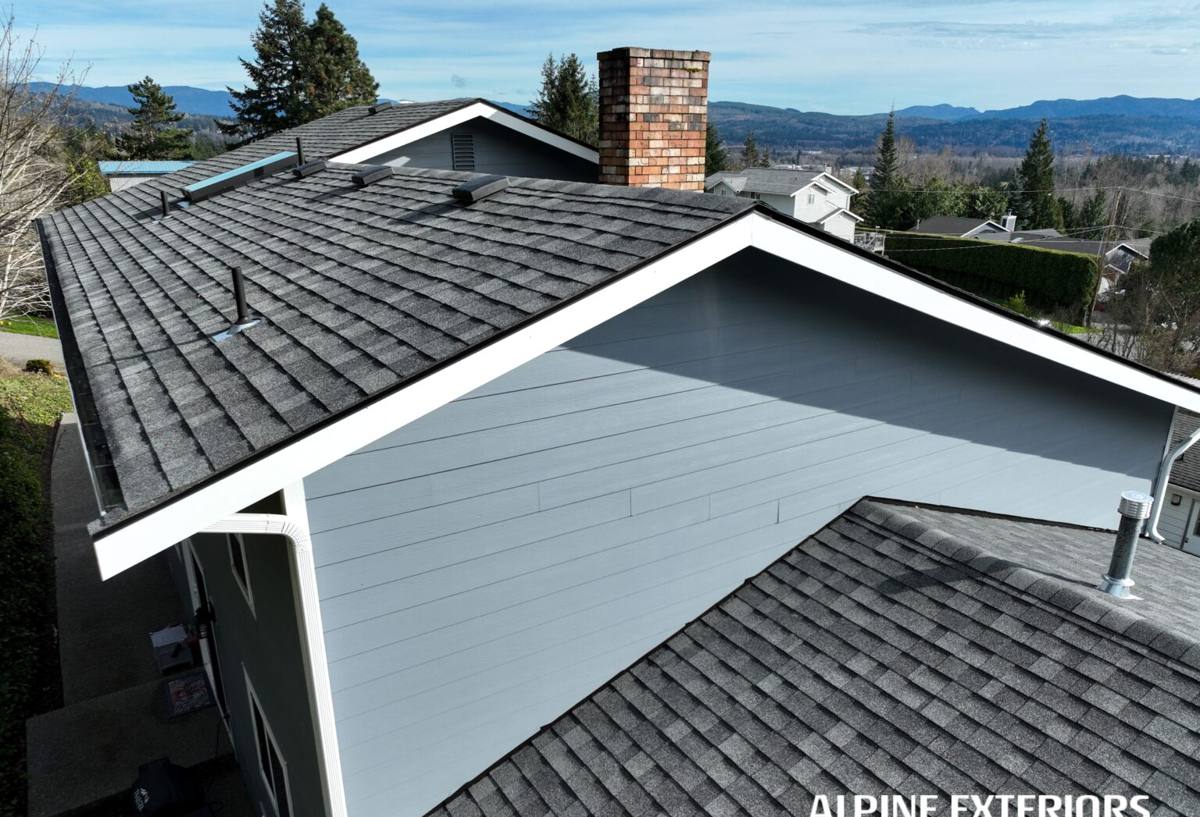
Signs an Acme Roof Needs Replacement, Not Another Repair
Homeowners in shaded, wooded settings often patch the same roof for years because the damage doesn't announce itself the way it might on a roof that dries out fast in full sun. Here's what tends to signal you're past the point where another repair makes sense:
- Moss or dark algae streaking that comes back within months of being cleaned off
- Granules collecting in gutters or at downspout outlets, a sign the shingle surface is wearing thin
- Soft or spongy spots underfoot on the roof deck, especially near valleys or under heavy tree cover
- Daylight visible through the attic roof boards, or damp insulation after a heavy rain
- Curling, cupping, or missing shingles concentrated on the shaded, north-facing slope
- Interior ceiling stains that reappear in the same spot after storms
Any one of these on its own might be a repair. Several together, especially on a roof already past 15-20 years, usually means the underlying materials have absorbed more moisture cycling than they were built to handle, and patching just delays a bigger repair bill.
What a Correct Roof Replacement Actually Involves
A roof replacement done right is not "new shingles over old." It's a full system rebuild, and in a moisture-heavy setting like Acme, skipping steps here is exactly how a roof ends up failing early a second time.
Tear-Off and Deck Inspection
We strip the roof down to the deck. This is the only point where you can actually see what years of trapped moisture have done to the plywood or plank sheathing underneath. Soft, delaminated, or rotted deck sections get replaced before anything new goes down — covering over bad decking is one of the most common shortcuts that leads to a roof failing years ahead of schedule.
Underlayment and Ice-and-Water Protection
Given how much sustained rain this area sees, we treat underlayment as more than a formality. Synthetic underlayment across the field, with self-adhered ice-and-water membrane at eaves, valleys, and around every penetration, gives the deck a real second layer of defense in the spots most likely to see wind-driven rain work its way under the roofing material.
Flashing
Flashing around chimneys, skylights, dormers, and roof-to-wall transitions is where the vast majority of roof leaks actually originate — not in the open field of shingles. New step flashing, counter-flashing, and valley metal, properly lapped and sealed, matters more on a shaded lot where standing moisture has more time to find a way in.
Ventilation
Balanced intake and exhaust ventilation keeps the attic from becoming a trapped-moisture box. On heavily treed lots, we often find prior ventilation was undersized or partially blocked by insulation or debris — we correct that as part of the replacement, not as an afterthought.
Choosing a Roofing Material for a Shaded, Mossy Lot
There's no single "best" roofing material for every home — the right choice depends on the amount of shade, the roof's pitch, and how much upkeep the homeowner wants to take on. Here's how the common options compare for a setting like Acme:
| Material | Typical Lifespan Here | Moss/Moisture Resistance | Maintenance | Relative Cost |
|---|---|---|---|---|
| Standard 3-tab asphalt | 12-18 years in heavy shade | Low — moss takes hold quickly | Frequent cleaning needed | Lowest |
| Architectural (laminate) asphalt | 20-25 years | Moderate; algae-resistant granule options help | Periodic cleaning | Moderate |
| Metal (standing seam or panel) | 40+ years | High — sheds moss and debris well on adequate pitch | Low | Higher upfront |
| Cedar shake | Highly variable in shade | Low without diligent upkeep — organic material retains moisture | High — regular treatment required | High |
For most Acme homes under heavy tree cover, we steer customers toward architectural asphalt with algae-resistant granules or metal roofing, depending on budget and roof pitch. We're honest that cedar shake, while attractive, asks a lot of a homeowner in a lot this shaded — it's a wood product sitting under a wet canopy for months at a time, and the maintenance schedule needed to keep it performing is a real, ongoing commitment rather than a one-time install decision.
Our Roof Replacement Process
- On-site assessment — we walk the roof and attic, check the deck, ventilation, and flashing points, and take real measurements rather than estimating from the ground.
- Written estimate — a clear scope covering tear-off, deck repair allowance, underlayment, flashing, material, and ventilation, so there are no surprise line items mid-project.
- Scheduling around the weather — we build in realistic windows for this area's rain patterns rather than promising a start date we can't hold to.
- Tear-off and deck repair — old roofing removed, deck inspected and repaired, debris hauled same-day wherever possible so the roof isn't left open overnight.
- Installation — underlayment, flashing, ventilation, and finish roofing installed to manufacturer specification, which is also what keeps material warranties valid.
- Final walk-through — we review the completed roof and gutters with you before calling the job done.
Ventilation and Moisture: The Part Homeowners Don't See
A new roof can still fail early if the attic underneath it is trapping moisture. In shaded, high-rainfall settings like Acme, warm interior air meeting a cold, damp attic space condenses if it isn't given a way to move. Over time that shows up as damp insulation, mildew smell, or premature rot in the roof deck from the underside — even with a perfectly good roof surface overhead. Correct intake ventilation at the eaves paired with exhaust at or near the ridge lets that moisture escape instead of settling into the wood. This is one of the most overlooked parts of a roof replacement, and one of the most consequential.
Living With Moss and Shade Between Roof Replacements
No roof in a setting this shaded stays maintenance-free, no matter what it's made of. A few habits go a long way toward getting full life out of whatever roof you choose:
- Keep overhanging limbs trimmed back to cut down on shade, falling debris, and abrasion
- Clean gutters and valleys at least twice a year so water isn't backing up under the roofing edge
- Have moss and algae growth removed with a soft-wash method rather than pressure-washed, which can strip granules and shorten the roof's life
- Walk the attic after major storms to check for new water staining or damp spots
- Address small leaks and lifted flashing promptly — in this climate, small problems don't stay small for long
Why a Crew That Already Works Acme Matters
Acme isn't downtown Lynden. Longer driveways, heavier tree cover, and more rural road access all affect how a roofing job actually gets staged and executed — dumpster placement, material staging, and crew logistics look different out here than they do on a standard in-town lot. A crew that's worked this specific area knows what a heavily shaded roof deck typically looks like once you tear into it, what pitch and tree-cover combinations tend to need extra ventilation correction, and how to plan around this area's rain patterns instead of getting caught mid-tear-off by a system rolling in off the Sound. That familiarity shows up in fewer surprises once the old roof is off and the real condition of the deck is exposed.
It also matters for something less visible: knowing which local factors actually affect a Whatcom County roof and which don't. We don't upsell homeowners on premium systems they don't need, and we don't cut corners that only show up as a problem five years down the road, well after the invoice is paid.
Get a Straight Answer About Your Acme Roof
If your roof is showing moss, granule loss, soft spots, or you just want an honest read on how many years it's realistically got left, we're happy to take a look. There's no pressure and no obligation — just a clear assessment and a written estimate you can think over. Use the form below to request your free estimate.