 Lynden Siding
 Energy-Efficient Windows for Acme Homes
Acme sits in the foothill country east of Lynden, where Whatcom County's marine-influenced weather collides with the terrain around the Nooksack valley. Homes out here deal with a long wet season, driving rain that comes in sideways during winter storms, and enough sustained dampness to keep moss and mildew active for much of the year. Windows are one of the first places that weather finds a way in — and one of the biggest reasons a home's heating bill creeps up every winter. When we talk about energy-efficient windows for Acme properties, we're not just talking about a glass upgrade. We're talking about how the whole window unit — frame, glazing, flashing, and seal — holds up against the specific conditions this part of the county throws at it.
This page covers what actually matters for an Acme window replacement or upgrade: what the climate demands, what a correct installation involves, how our process works, and why local installation experience matters more than most homeowners realize until something goes wrong.
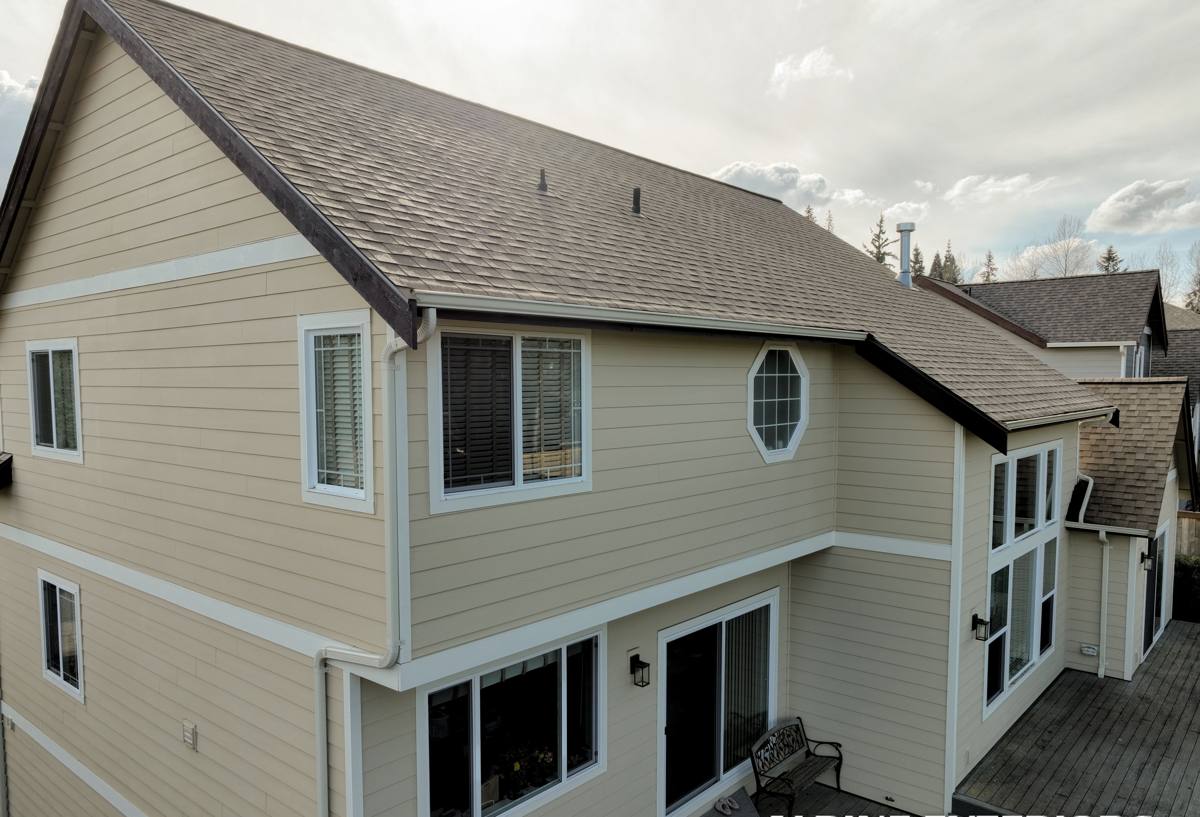
What Acme's Climate Actually Does to Windows
Every region has weather. What matters is which specific stresses show up most often and how they wear on a window system over years, not days.
Driving Rain and Wind-Driven Moisture
Whatcom County storms frequently push rain horizontally rather than straight down, especially during fall and winter frontal systems. That matters because a window that sheds water fine in a calm rain can still leak under wind pressure if the flashing details and sill pan aren't done correctly. Wind-driven rain finds gaps at the head flashing, at the sides where the window meets the wall assembly, and at the sill — the same three spots that cause the vast majority of window-related water intrusion we see in older homes.
Extended Damp Season and Moss Growth
Acme's long stretch of overcast, moist weather keeps humidity levels high around window openings for months at a time. On the exterior, that dampness feeds moss and algae growth on sills, trim, and nearby siding — which holds moisture against the window frame longer than it would in a drier climate. On older wood or poorly sealed vinyl frames, that prolonged contact with moisture is what eventually leads to rot, swelling, or seal failure.
Marine Air and Material Fatigue
Whatcom County's proximity to Puget Sound and the Strait of Georgia means the broader region deals with salt-tinged marine air moving inland on weather systems, which over years can accelerate corrosion of lower-grade hardware, fasteners, and metal components in window assemblies. It's a slower process than direct coastal exposure, but it's part of why we spec corrosion-resistant hardware on installs out this way rather than builder-grade parts.
Temperature Swings Between Seasons
Summers in this part of the county can get genuinely warm, while winters bring sustained cold snaps. That swing matters for glazing performance — a window that's fine in mild weather can underperform noticeably once you're heating a house through a real Whatcom County winter, showing up as cold drafts near the glass or condensation on interior surfaces.
What "Energy-Efficient" Actually Means for This Area
Energy-efficient windows aren't a single product — they're a combination of glazing, frame material, and installation quality working together. For Acme's climate, we prioritize a few things above marketing labels.
Glazing Package
Double-pane windows with low-E coating and argon gas fill are the baseline we recommend for this climate. The low-E coating reflects radiant heat back into the home during winter and blocks excess solar heat gain in summer, while the argon fill slows heat transfer through the glass unit itself. For homes with more exposure to wind and weather, triple-pane is worth discussing, though the return on investment depends on the specific wall and window orientation.
Frame Material Trade-Offs
| Frame Type | Moisture Handling | Maintenance | Notes for This Climate |
|---|---|---|---|
| Vinyl | Very good — won't rot or corrode | Low | Our most common recommendation for Acme; consistent performance in wet, mixed-humidity conditions |
| Fiberglass | Excellent — dimensionally stable when wet or dry | Low | Strong option where budget allows; handles temperature swings with minimal expansion/contraction |
| Wood-clad | Good if maintained, vulnerable if not | Higher | Requires consistent upkeep in a damp climate; we're honest with clients about the maintenance commitment before recommending it |
| Aluminum | Poor — conducts cold and moisture | Moderate | We generally steer clients away from it for primary living-space windows in this region; thermal performance and condensation resistance are weak points |
Why We Don't Push Every Product on the Market
Some window products marketed as budget-friendly rely on frame designs or seal systems that are more sensitive to installation error, which matters in a climate where the margin for a sloppy flashing detail is thin. Our standard is to install products with a proven track record for moisture performance and a warranty structure that actually holds up, rather than chasing the lowest sticker price on a product line with a shorter service life in wet climates.
What a Correct Installation Involves
The window unit itself is maybe half the equation. The other half is installation — and this is where most long-term window failures actually originate, not in the product itself.
- Removing the old window and fully inspecting the rough opening for hidden rot, insect damage, or prior water intrusion before anything new goes in
- Installing a proper sloped sill pan so any water that does get past the window has somewhere to drain, rather than pooling against the frame
- Sequencing flashing tape and building wrap correctly — sill first, then jambs, then head — so water is always directed outward and downward, never trapped behind a layer
- Setting the window level, plumb, and square, with shims placed to avoid frame distortion that stresses the seal over time
- Using low-expansion foam or backer rod and sealant at the right points — never foam alone as a substitute for proper flashing
- Sealing and finishing the exterior trim in a way that sheds water and resists the moss and algae growth common in this climate
- Checking operation and seal integrity before calling the job complete, not just visually inspecting the frame
Our Process for Acme Projects
1. On-Site Assessment
We look at each window opening individually — not every window on a house is in the same condition, especially on older homes where some openings have taken more weather exposure than others. We check for existing rot, drafts, condensation issues, and how the current flashing was done.
2. Straightforward Recommendation
We'll tell you plainly which windows need replacement now, which can wait, and which options make sense for your budget and the specific exposure that opening deals with. We don't upsell triple-pane on a sheltered north-facing window that doesn't need it.
3. Installation
Full removal, opening inspection and repair as needed, correct flashing sequencing, and careful setting and sealing of the new unit — done to hold up against Acme's rain and humidity, not just pass a quick visual check.
4. Final Walkthrough
We test operation, check seals, and walk the exterior finish work with you before we consider the job done.
Signs Your Windows Are Falling Behind
A few things we hear consistently from Acme-area homeowners before they call us:
- Visible condensation or fogging between the panes — a sign the seal has failed and the insulating gas fill is gone
- Cold drafts near the window even when it's fully latched
- Soft or discolored wood trim around the frame, especially on the sill
- Difficulty opening or closing, which often points to frame swelling from moisture
- Moss or dark staining building up on the sill or lower trim faster than the rest of the house
- A noticeable jump in heating costs without any other explanation
Why Local Installation Experience Matters
A window that performs well in a drier region isn't automatically the right call for Whatcom County. Crews who install windows regularly around Lynden and communities like Acme know which flashing details actually hold up against sustained driving rain, which frame materials handle the area's humidity without complaint, and which shortcuts show up as callbacks two winters later. That's not something you get from a general contractor doing the occasional window job between other work — it comes from seeing how this specific climate treats window installations over time and adjusting the approach accordingly.
If your Acme home has drafty windows, fogged glass, or you're planning ahead for a full replacement, we're happy to take a look and give you a straight assessment — no pressure, no upsell. Reach out using the form below to schedule a free estimate.