 Lynden Siding
 Roofing in Abbotsford's Corner of the Fraser Valley
Abbotsford sits just across the international border from our home base in Lynden, and the two areas share almost identical weather. That's not a small detail when it comes to roofing. Homes here deal with a long wet season, persistent cloud cover, salt-tinged marine air moving in off the coast, and driving rain that comes in sideways during winter storms. Add in the shade from mature Douglas fir and cedar trees common on Fraser Valley lots, and you get roofs that stay damp far longer than roofs in drier climates. That combination is exactly what shortens a roof's usable life and what a correct replacement needs to be built to handle.
We work Abbotsford regularly, not as an occasional out-of-town job. That matters because roofing problems here aren't generic — they're shaped by this specific stretch of Whatcom County and the Fraser Valley, and a crew that only sees the area once a year tends to miss the details that actually matter.
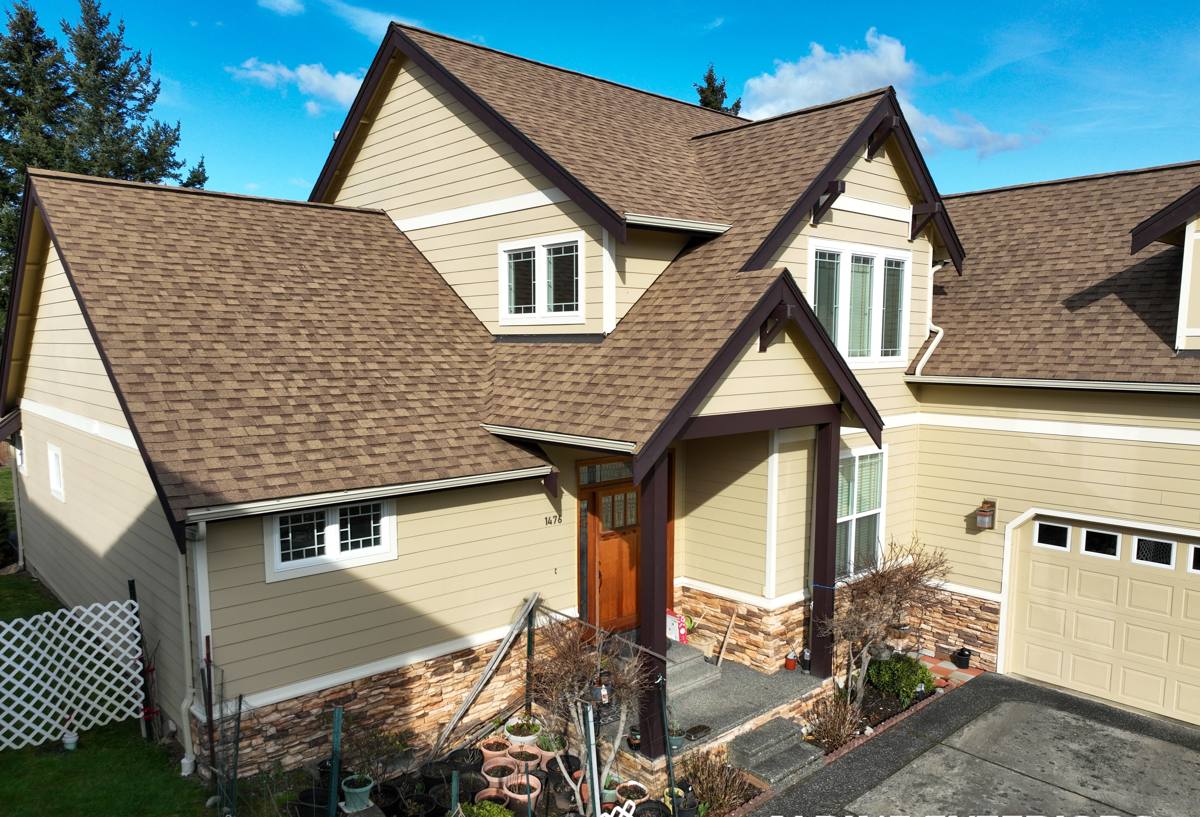
Signs Your Roof Has Reached the End of Its Service Life
Most homeowners don't think about their roof until there's a leak, but by the time water is showing up inside the house, the roofing system has usually been failing for a while. Watch for these signs:
- Shingles that are cupping, curling at the edges, or missing granules in patches
- Dark streaking or thick moss growth, especially on north-facing slopes that stay shaded
- Soft spots or sagging when walked on, which usually means the decking underneath has taken on moisture
- Daylight visible through the attic roof boards, or damp insulation near the roofline
- Granules collecting in gutters, which signals the shingles are breaking down faster than they should
- A roof that's 20+ years old, regardless of how it looks from the ground
One or two of these on their own might mean a repair is enough. Several together, especially on an older roof, usually mean it's time to talk about full replacement rather than patching problem areas one at a time.
What Goes Into a Roof Replacement Done Right
A roof replacement is more than swapping old shingles for new ones. The parts you don't see — the decking, the underlayment, the ventilation, the flashing — are what actually determine whether the new roof holds up through another decade of Fraser Valley winters.
Tear-Off and Deck Inspection
We remove the old roofing down to bare decking rather than layering new shingles over old ones. That lets us actually see the plywood or board sheathing underneath and catch soft or rotted sections before they're sealed under a new roof. In a climate this wet, hidden deck damage is common on older homes, and it's the single biggest reason a "new" roof can fail early if it isn't caught during tear-off.
Underlayment and Water Protection
Underlayment is the roof's backup line of defense if wind-driven rain gets past the shingles, which happens more often here than in drier parts of the country. We use synthetic underlayment for its tear resistance and consistent water resistance, and we add ice-and-water shield membrane at vulnerable spots — eaves, valleys, and around penetrations — where wind-driven rain is most likely to find a way in.
Ventilation
Proper intake and exhaust ventilation keeps the attic close to outdoor temperature and lets moisture escape instead of condensing on the underside of the deck. In a damp climate, poor ventilation is one of the most common causes of premature deck rot and shingle failure from underneath — problems that show up as a leak but actually started as a ventilation gap.
Flashing and Transitions
Chimneys, skylights, vent pipes, and roof-to-wall junctions are where the vast majority of roof leaks actually originate — not in the open field of shingles. We replace flashing rather than reuse old pieces, and we pay close attention to step flashing along walls and dormers, since a shortcut there is invisible until the next heavy rain finds it.
Choosing a Roofing Material for This Climate
There's no single "best" roofing material — the right choice depends on your budget, your roof's slope and shade exposure, and how much long-term maintenance you're willing to do. Here's how the common options stack up for a moss-prone, high-rainfall area like Abbotsford:
| Material | Typical Lifespan | Moss/Moisture Resistance | Maintenance |
|---|---|---|---|
| Architectural asphalt shingles | 25–30 years | Good with proper ventilation; algae-resistant granules help | Periodic moss removal, especially on shaded slopes |
| 3-tab asphalt shingles | 15–20 years | Fair; wears faster under constant damp | More frequent moss and wear monitoring |
| Metal roofing | 40–50+ years | Excellent; moss struggles to hold on a smooth, sloped metal surface | Low; occasional debris clearing |
| Cedar shake | 20–30 years with upkeep | Poor without diligent upkeep; absorbs moisture and hosts moss readily | High; regular treatment and moss control required |
Architectural asphalt shingles remain the most common choice because they balance upfront cost, appearance, and durability well. Metal is worth serious consideration on steeper, shaded roofs where moss is a recurring fight, since its surface doesn't give moss the foothold that textured shingles or shakes do. We'll talk through the honest trade-offs for your specific roof rather than pushing one product across the board.
What Drives the Cost of a Roof Replacement
Every roof is priced individually, but the same handful of factors move the number up or down on nearly every job:
| Factor | Why It Matters |
|---|---|
| Roof size and number of stories | More square footage and steeper access mean more material and labor time |
| Pitch and complexity | Multiple valleys, dormers, and steep slopes take longer to flash and detail correctly |
| Existing deck condition | Rotted sheathing found during tear-off adds material and labor to replace it |
| Material choice | Asphalt, metal, and cedar carry very different material and installation costs |
| Number of layers to remove | Tearing off multiple old layers takes longer than a single-layer tear-off |
| Ventilation upgrades needed | Adding proper intake/exhaust venting on an older home can require extra work |
We won't know your real number until we've walked the roof, but we'll explain what's driving the estimate line by line rather than handing over a flat figure with no context.
Our Process, Start to Finish
- On-site inspection. We walk the roof and attic, note the material condition, deck condition, and ventilation setup, and take photos of anything worth discussing.
- Written estimate. You get a clear breakdown of material, labor, and any deck repair allowance, with options explained rather than a single take-it-or-leave-it number.
- Scheduling around weather. Given how wet this region gets, we plan tear-off in stages so your roof isn't left exposed longer than necessary and we stage materials to minimize weather delays.
- Tear-off and deck repair. Old roofing comes off, the deck gets inspected, and any soft or damaged sheathing is replaced before anything new goes down.
- Underlayment, flashing, and roofing installation. Each layer goes down to manufacturer specification, with particular attention to valleys, penetrations, and wall transitions.
- Final walkthrough and cleanup. We check the finished roof with you, clear debris and nails from the property, and answer any questions about care going forward.
Moss, Algae, and Keeping a New Roof Looking Good
A long moss season is one of the defining challenges of roofing in this part of Whatcom County and the Fraser Valley, and it doesn't stop just because the roof is new. A well-installed roof resists it far better, but a little ongoing attention goes a long way toward protecting your investment:
- Keep overhanging branches trimmed back so shaded roof sections get more sun and airflow
- Clean gutters at least twice a year so water isn't backing up under the shingle edges
- Have visible moss growth removed gently rather than left to spread, since moss holds moisture against the roofing surface
- Avoid pressure washing shingles directly, which can strip protective granules
- Schedule a quick visual check after major storms to catch lifted shingles or debris buildup early
None of this requires a major time investment, but skipping it is how a well-installed roof ends up looking neglected within a few years in a climate this damp.
Why Work With a Crew That Already Serves Abbotsford
Roofing companies that treat Abbotsford as an occasional add-on to their territory tend to under-price the moss and moisture side of the job, because they're used to drier or less shaded conditions elsewhere. We're based just across the border in Lynden and treat this area as part of our regular service territory, not a special trip. That means our estimates already account for the deck condition issues we consistently find in this climate, our material recommendations are based on what actually holds up here, and scheduling around the region's wet season is second nature rather than a surprise.
It also means if something needs a follow-up look after the job is done — a question about ventilation, a spot of moss that shows up in year two — we're a short drive away, not a company that has to schedule a special trip back across the region.
Get a Straightforward Estimate
If your roof is showing its age or you just want an honest read on how much life it has left, we're happy to take a look. The estimate is free, there's no pressure to commit on the spot, and you'll get a clear explanation of what we see and what your options are. Use the form below to get started.