 Lynden Siding
 Window Installation Built for Deming's Wet, Wooded Conditions
Deming sits back in the trees along the Mt. Baker Highway corridor, east of Lynden in unincorporated Whatcom County. It's a different environment than the open valley floor: more tree canopy, more shade, more standing moisture on siding and trim, and a longer stretch of the year where surfaces just don't dry out. Add in the driving rain that comes through this part of Washington and the moss that takes hold anywhere shade and dampness combine, and windows here take a specific kind of beating — one that's different from what a house in town deals with.
That matters for window installation. A window that's sealed and flashed correctly in a dry, open lot can still fail early on a shaded Deming property if the installer doesn't account for slower drying times, heavier moss and debris buildup, and rain that comes in sideways during a fall or winter storm. This page is about what that means in practice — what local homes actually need, what a correct installation involves, and why it's worth hiring a crew that already understands this specific part of Whatcom County.
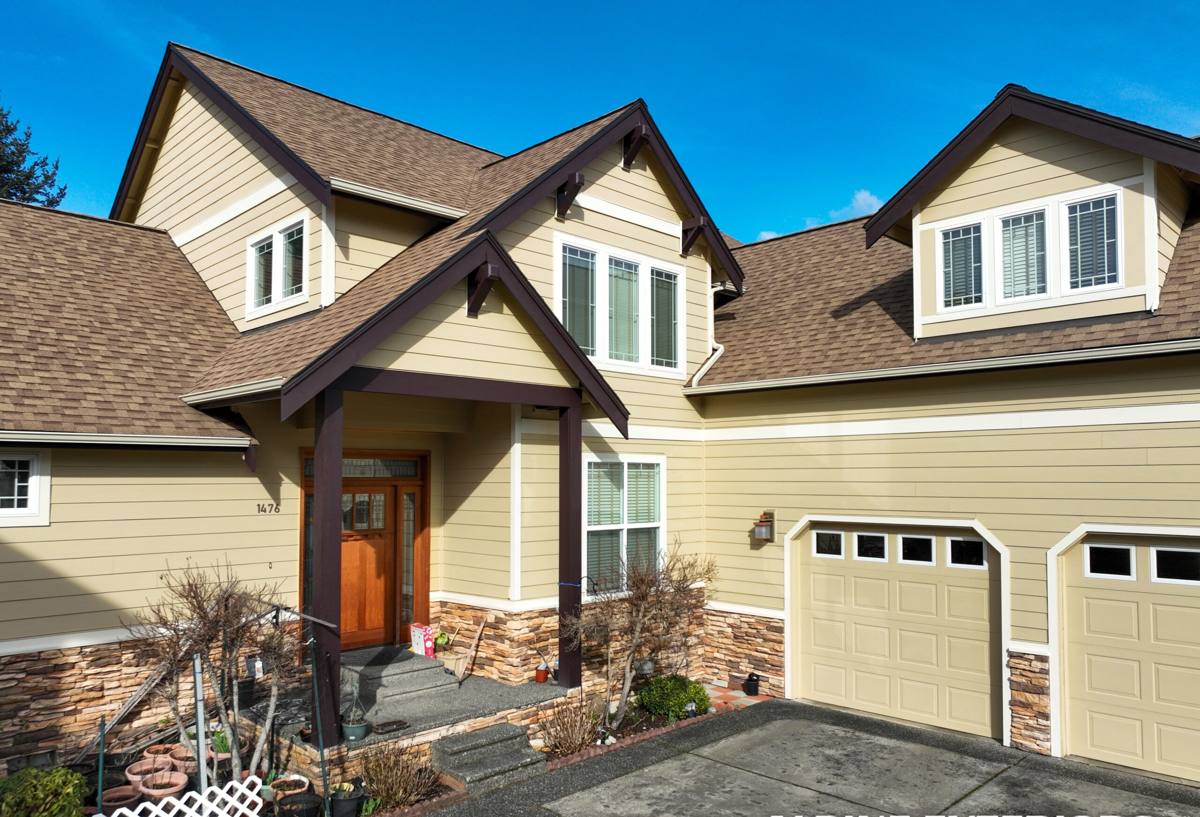
What Deming Homes Are Up Against
A few conditions show up again and again on properties out this way:
- Extended shade and slow drying. Heavier tree cover means window sills, trim, and the siding around window openings stay damp longer after a storm than they would on an open, sun-exposed lot.
- Moss and organic buildup. Moss doesn't just grow on roofs — it collects in window tracks, on sills, and in the gaps around older trim, holding moisture directly against wood and caulk joints.
- Driving, wind-driven rain. Storms moving through the foothills can push rain sideways into window openings, which is exactly when a poorly flashed or poorly sealed window shows its weaknesses.
- Older housing stock. Many homes in this area were built decades ago with original wood or early aluminum windows that were never designed for the service life we're now asking of them.
- Debris load. Needles, leaves, and moss fragments collect in window wells and tracks faster here than in more open parts of Lynden, which can trap moisture against frames if it's not cleared.
None of this means Deming homes need something exotic. It means the installation has to be done with these specific stressors in mind — proper flashing, the right sealants, and product choices that hold up in shaded, damp conditions rather than just conditions that look fine on a sunny install day.
Signs Your Windows Need Replacing
Before jumping to replacement, it's worth knowing what actual failure looks like versus normal wear. Here's what we look for during an on-site evaluation:
- Fogging or moisture between panes on double- or triple-pane windows — this means the seal has failed and the insulated glass unit can't be repaired, only replaced.
- Soft or spongy wood at the sill or bottom corners of the frame, often hidden under paint or trim.
- Visible moss or dark staining building up in the window track or on the exterior sill.
- Drafts you can feel with a hand near the frame on a windy day, even with the window fully latched.
- Windows that are difficult to open, close, or lock — a sign the frame has shifted or swollen from moisture.
- Peeling paint or bubbling finish around the window opening, which usually points to moisture getting into the wall assembly, not just the window itself.
- Noticeably higher heating bills in a home with original single-pane or early double-pane windows.
A window with one or two of these signs might be a candidate for repair or resealing. A window with several of them, especially soft wood or persistent moisture between panes, usually means it's time to replace before the damage spreads into the wall framing around it.
What a Correct Installation Actually Involves
Window installation looks simple from the outside — old window out, new window in — but the parts that determine whether it lasts are mostly invisible once the job is done.
Removal and Opening Inspection
Once the old window is out, the rough opening gets inspected before anything new goes in. This is the point where hidden rot, soft framing, or old moisture damage gets caught — and it's more common in shaded, damp-prone areas like Deming than it is elsewhere. Any compromised framing gets addressed before a new window ever goes into the opening. Skipping this step is one of the most common ways a "new window" ends up with the same moisture problem within a few years.
Flashing and Moisture Management
This is the single most important part of the job for long-term performance. Proper flashing directs any water that gets past the exterior trim back out, away from the framing, rather than letting it collect at the sill. In an area with driving rain and long wet stretches, a flashing detail done wrong doesn't show up as a problem right away — it shows up as rot two or three years later, hidden behind trim that still looks fine from the outside.
Air Sealing and Insulation
The gap between the new window frame and the rough opening gets sealed and insulated correctly — not overpacked with expanding foam that can bow the frame, and not left with gaps that let air and moisture through. This step is what actually stops drafts; the window unit itself is only part of the equation.
Exterior Finish and Trim
Trim and caulking get finished to shed water, not trap it. In shaded, moss-prone spots, we pay particular attention to how water will run off the top of the window and whether any horizontal trim surface can hold moisture and organic debris against the frame over time.
Choosing the Right Window for a Deming Property
There's no single "best" window — the right choice depends on the home, the budget, and how much upkeep the owner wants to take on. Here's how the common options stack up for this kind of climate:
| Frame Material | Moisture Performance | Maintenance | Typical Cost Position |
|---|---|---|---|
| Vinyl | Handles damp, shaded conditions well; won't rot | Low — occasional cleaning | Most affordable |
| Fiberglass | Excellent stability in wet, temperature-swinging conditions | Low | Mid to upper range |
| Wood | Attractive but vulnerable to prolonged shade and moisture without diligent upkeep | High — regular painting/sealing | Higher, especially with cladding |
| Wood-clad (exterior vinyl/fiberglass, interior wood) | Good — exterior shell resists moisture, interior keeps traditional look | Moderate | Upper range |
For a shaded, damp lot like a lot of what we see in Deming, we generally steer owners toward vinyl or fiberglass on the exterior face — not because wood windows are a bad product, but because a material that doesn't need repainting or resealing on a schedule is simply a better match for a property where surfaces stay wet longer. If the look of real wood matters to you on the interior, a wood-clad option gives you that without putting painted wood on the exterior side, where the moisture exposure actually happens.
Glass and Performance Options
Double-pane, low-E glass is the standard baseline for this region and makes sense on nearly every home. Triple-pane is worth discussing on rooms that face prevailing weather or where the home runs cold in winter, but it adds cost and weight, and isn't necessary on every opening. We'll talk through where it actually pays off rather than upselling it across the board.
Our Process, Start to Finish
- On-site evaluation. We look at every window being considered, check the condition of the surrounding trim and framing, and note any moisture or moss issues specific to that opening.
- Honest recommendation. We tell you which windows genuinely need replacing now, which can wait, and which just need maintenance — not every window on a damp lot needs to come out at once.
- Clear estimate. You get a written quote covering product, labor, and anything the opening inspection is likely to turn up, so there are no surprises mid-job.
- Careful removal and opening inspection. Old windows come out, framing gets checked, and any hidden damage gets addressed before the new unit goes in.
- Proper installation. Correct flashing, air sealing, insulation, and trim work — the parts that determine whether the window lasts fifteen years or thirty.
- Cleanup and walkthrough. We clear debris and walk you through the finished work, including anything worth watching over the following storm season.
Why a Crew That Already Works Deming Matters
A contractor who mostly works in dry, open subdivisions doesn't automatically know how to detail a window for a shaded, moss-heavy property back in the trees. Flashing that's adequate on a sun-exposed lot in town can be undersized for a spot that stays wet for days after a storm. Crews that already work this area know to check for the moisture patterns specific to shaded framing, to size flashing for driving rain rather than the average case, and to flag moss and organic buildup before it becomes a structural issue rather than after.
There's also a practical side to it: knowing the roads, the typical lot layout, and the permitting expectations for unincorporated Whatcom County properties versus in-town Lynden addresses means fewer surprises and a smoother job from estimate to completion.
Maintaining Your Windows After Installation
A correctly installed window still benefits from basic upkeep, especially in this environment:
- Clear moss, needles, and debris from tracks and sills a couple of times a year, more often under heavy tree cover.
- Check caulking around the frame annually and touch up anywhere it's cracked or pulled away.
- Keep nearby trees and shrubs trimmed back enough that air can move across the window and trim to help them dry out between storms.
- Address any soft trim or peeling paint near a window promptly — it's usually cheaper to fix early than after moisture works its way further into the wall.
If you're dealing with drafts, fogged glass, soft trim, or windows that just feel like they've reached the end of their useful life, we're happy to take a look and give you a straightforward read on what's actually going on — no pressure, no upsell, just an honest estimate. Use the form below to get started.