 Lynden Siding
 Metal Roofing in Sumas: Why the Local Climate Changes the Job
Sumas sits at the far northern edge of Whatcom County, close enough to the border that homeowners here deal with the same weather pattern that hits Lynden and the rest of the county — long stretches of low, moisture-laden marine air pushing in off the water, driving rain that comes in sideways more often than straight down, and a moss season that can run from fall through spring. None of that is unusual for this part of Washington. What matters is that a roof installed without that pattern in mind will show it within a few years, not decades.
Metal roofing holds up well against that combination when it's detailed correctly, but "metal roofing" isn't one product or one installation method. The panel profile, the fastening system, the underlayment, and the flashing details all have to be chosen for how water actually moves across a roof in this climate — not just for how the panels look going on. We work on homes in Sumas as part of our regular Lynden-area service territory, and the jobs we get called back for years later are the ones where those details were right the first time.
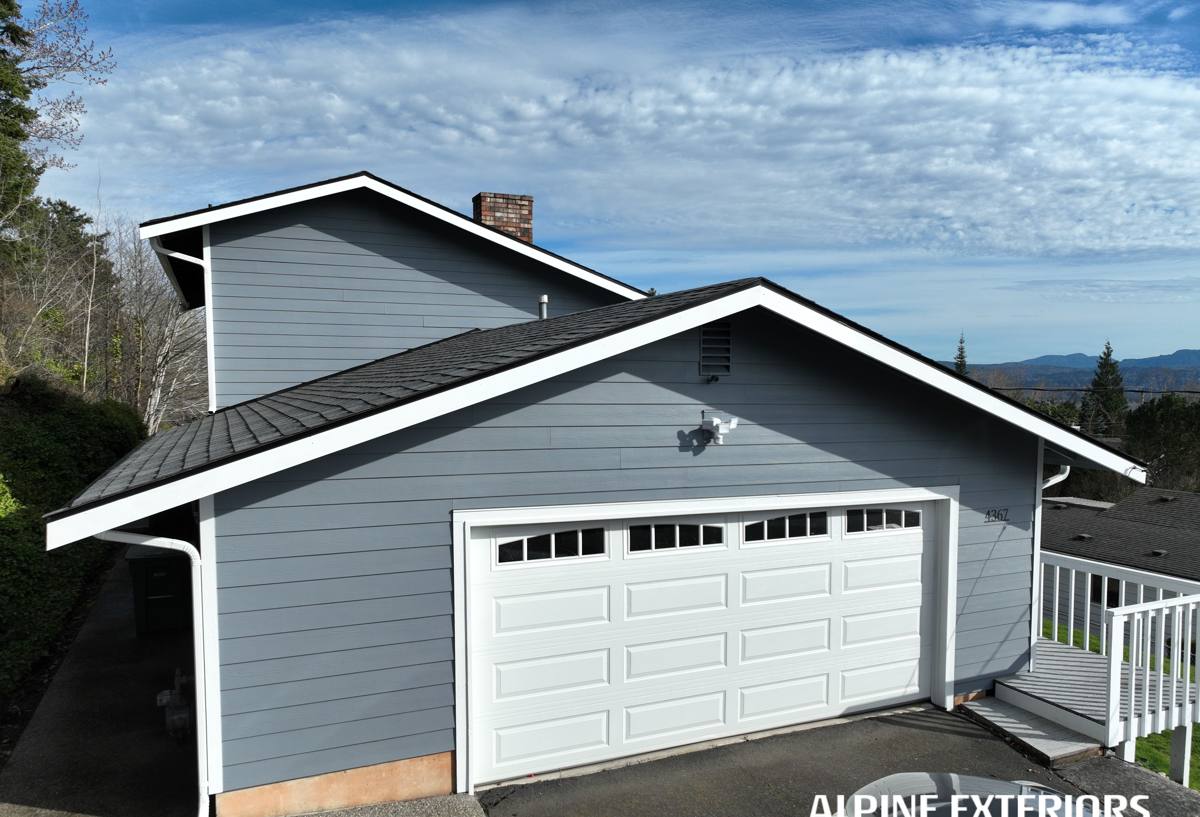
What Driving Rain and a Long Moss Season Actually Do to a Roof
Wind-Driven Rain
When rain comes in at an angle instead of falling straight down, it gets pushed up under laps, around fasteners, and into any seam that wasn't sealed or overlapped with that in mind. On a metal roof, this shows up as water finding its way past exposed-fastener panels at the screw penetrations, or working past flashing at valleys and wall transitions that wasn't lapped in the right direction. It's rarely a dramatic leak — usually it's a slow stain in an attic or a soffit years before anyone notices water on a ceiling.
Moss and Sustained Moisture
Moss needs shade, moisture, and time to establish, and a roof that stays damp for long stretches of the year — especially on north-facing slopes or under tree cover — gives it exactly that. On asphalt shingles, moss roots into the mat and lifts granules as it grows, shortening the roof's life. Metal doesn't give moss the same foothold, but debris and organic buildup in valleys and behind snow-retention or trim details still holds moisture against the panel and its fasteners longer than it should. A roof that sheds water and debris cleanly stays drier, and a drier roof lasts longer no matter what it's covered with.
Temperature Swings and Panel Movement
Metal expands and contracts with temperature more than most roofing materials, and Whatcom County gets enough swing between summer afternoons and winter nights to matter over a 30-to-50-year roof life. Panels and fastening systems that don't allow for that movement eventually work fasteners loose or stress seams — which is one of the reasons panel choice and fastener type matter as much as the metal itself.
Choosing the Right Metal Panel System for a Sumas Home
There isn't a single "best" metal roof — there's a best fit for a given roof pitch, budget, and how long the homeowner wants to go without maintenance. Here's how the systems we install most often compare for this climate:
| System | How It's Fastened | Best For | Trade-Offs |
|---|---|---|---|
| Standing seam | Concealed clips, no exposed fasteners on the field | Homes wanting the longest maintenance-free life, low-slope sections, coastal/marine exposure | Higher upfront cost; installation is less forgiving of a rushed crew |
| Exposed-fastener (screw-down) panel | Screws through the panel face into the deck or purlins | Outbuildings, garages, budget-conscious re-roofs on steeper pitches | Fasteners and their washers are a maintenance item — they need periodic inspection and eventual replacement |
| Stone-coated steel | Concealed or exposed depending on profile, interlocking panels | Homeowners who want the look of shingle or tile with metal's core durability | More seams and profile detail than standing seam, so flashing work at penetrations takes more care |
For most Sumas homes, we lean toward standing seam on primary roof sections because the concealed fastening removes the single most common long-term failure point on a metal roof — a fastener that backs out or loses its seal after repeated wet-dry cycles. That's a professional judgment call based on how this climate treats exposed hardware over time, not a claim that screw-down panels are unsuitable everywhere; they still make sense on lower-cost structures where the maintenance trade-off is acceptable.
What a Correct Metal Roof Installation Actually Involves
The panels are the visible part, but most of what determines whether a metal roof performs in this climate is underneath them or at the edges.
Underlayment
We install a synthetic, high-temperature underlayment rated for use under metal — not a generic felt product. In valleys, at eave edges, and around any penetration, we add self-adhered ice-and-water membrane as a second line of defense, because wind-driven rain is exactly the condition that exposes a roof with only single-layer underlayment.
Fastening and Panel Layout
Panels are laid out to minimize end laps and keep seams running with the prevailing water flow, not against it. Where exposed fasteners are used, we follow the manufacturer's torque and spacing specs closely — overdriven screws crush the washer seal and are one of the most common causes of early leaks on screw-down panels.
Flashing and Transitions
Valleys, chimneys, skylights, sidewall and headwall transitions, and roof-to-wall junctions all get custom-formed flashing lapped in the correct shingle-style sequence so water is always directed onto the next piece down, never trapped behind it. This is the detail that separates a roof that handles driving rain from one that doesn't, and it's largely invisible once the job is done.
Ventilation
Metal roofing performs best with balanced intake and exhaust ventilation in the attic or roof assembly. Poor ventilation traps moisture underneath the deck, which can lead to condensation issues that have nothing to do with the roofing material itself but get blamed on it anyway. We check existing ventilation as part of every metal roofing job and address gaps before panels go on.
Our Process for Sumas Metal Roofing Jobs
- On-site assessment: We walk the roof, check the deck condition, existing ventilation, and any problem areas (valleys, moss buildup, past leak evidence) before quoting anything.
- System recommendation: Based on pitch, exposure, and budget, we recommend a panel system and walk through the trade-offs honestly — including where a lower-cost option is genuinely fine and where it isn't.
- Written estimate: Scope, materials, and price in writing, with no pressure to decide on the spot.
- Tear-off and deck inspection: We remove the old roofing and inspect the deck for rot or soft spots before anything new goes down — this is where hidden moisture damage from a prior roof usually shows up.
- Underlayment and flashing installation: Ice-and-water membrane at vulnerable areas, synthetic underlayment across the field, and custom flashing formed for each transition.
- Panel installation: Installed to manufacturer spec for fastening pattern, laps, and clearances.
- Final walkthrough: We go over the finished roof with the homeowner, including what routine maintenance (if any) the system needs.
Maintenance That Actually Matters in This Climate
A well-installed metal roof needs far less attention than shingles, but "none" isn't accurate either. This is the short list worth doing:
- Clear valleys and any debris-catching trim of leaves and needles once or twice a year, especially before the wet season sets in.
- Check gutters and downspouts for the same buildup — a clogged gutter backs water up under the eave edge regardless of what the roof itself is made of.
- Look (or have us look) for any moss or organic growth starting on north-facing or shaded sections and remove it before it holds moisture against the panel.
- On screw-down panel systems, have fasteners inspected periodically — this is the one component with a shorter service life than the panels themselves.
- After any major windstorm, a quick visual check for lifted trim or flashing is worth the five minutes it takes.
Cost Factors for a Sumas Metal Roofing Project
Every roof is priced from an on-site measurement, but these are the factors that move the number most:
| Factor | Why It Matters |
|---|---|
| Panel system chosen | Standing seam runs higher than exposed-fastener panel per square, mainly due to material and labor for concealed clips |
| Roof complexity | Valleys, dormers, and multiple roof planes multiply flashing work and cutting waste |
| Deck condition | Rot or soft decking found at tear-off adds repair cost that can't be known until the old roofing is off |
| Tear-off vs. overlay | Metal can sometimes go over existing shingles in limited cases, but we generally recommend tear-off so underlayment and deck condition can be verified |
| Ventilation upgrades | Adding or correcting intake/exhaust venting is a smaller add-on cost that protects the rest of the investment |
We don't quote a per-square number without seeing the roof — pitch, access, and existing condition change the labor side of the job too much for a blanket figure to mean anything.
Why a Crew That Already Works in Sumas Makes a Difference
We're based in Lynden and work this whole corner of Whatcom County regularly, which means we're not learning the local weather pattern on a customer's roof. We know how valleys perform on a north-facing pitch after a wet winter, we know which flashing details actually hold up to sustained wind-driven rain here versus a drier region's install standards, and we're not guessing at moss behavior in this climate — we see it every season. That familiarity shows up in smaller decisions throughout a job: where we add extra ice-and-water membrane even though it's not strictly required by code, which valley style we default to, how we handle ventilation on older Whatcom County homes that weren't built with modern venting in mind. None of that is exotic knowledge, but it's the accumulated kind that only comes from doing the work in this specific area repeatedly.
It also means we're a known, reachable local business if a question comes up five or ten years after installation — not a crew that worked the region once and moved on.
If you're weighing a metal roof for a Sumas-area home, we're glad to come take a look, walk the roof with you, and give you a straight, no-pressure estimate — free, with no obligation to move forward. Use the form below to get started.