 Lynden Siding
 Energy-Efficient Windows in Sumas: A Climate That Makes Efficiency a Real Factor, Not a Marketing Term
Sumas sits out at the far edge of Whatcom County, hard against the Canadian border where the Nooksack River valley opens into flat farmland below Sumas Mountain. It's a different setting than the coastal towns closer to Bellingham Bay, but the exterior of a house here still deals with the same underlying weather pattern that shapes exterior work across this whole corner of Washington: salt-tinged marine air that reaches even this far inland, driving rain that comes in sideways more often than it falls straight down, and a moss season that runs longer here than in drier parts of the state. Windows are one of the few parts of a house where all of that weather meets the inside living space directly, which makes them one of the biggest single factors in how comfortable and how expensive a Sumas home is to heat through a long, damp winter.
Lynden Siding Companies installs, repairs, and replaces windows across Whatcom County, including here in Sumas, and we also handle siding, roofing, and decks, because a window rarely fails as an isolated product. It fails as part of a wall assembly, alongside flashing, framing, and insulation that all have to work together. When we talk about "energy-efficient windows" for a Sumas home, we mean something specific and measurable, not just a phrase on a brochure, and getting there depends as much on the installation as it does on the glass.
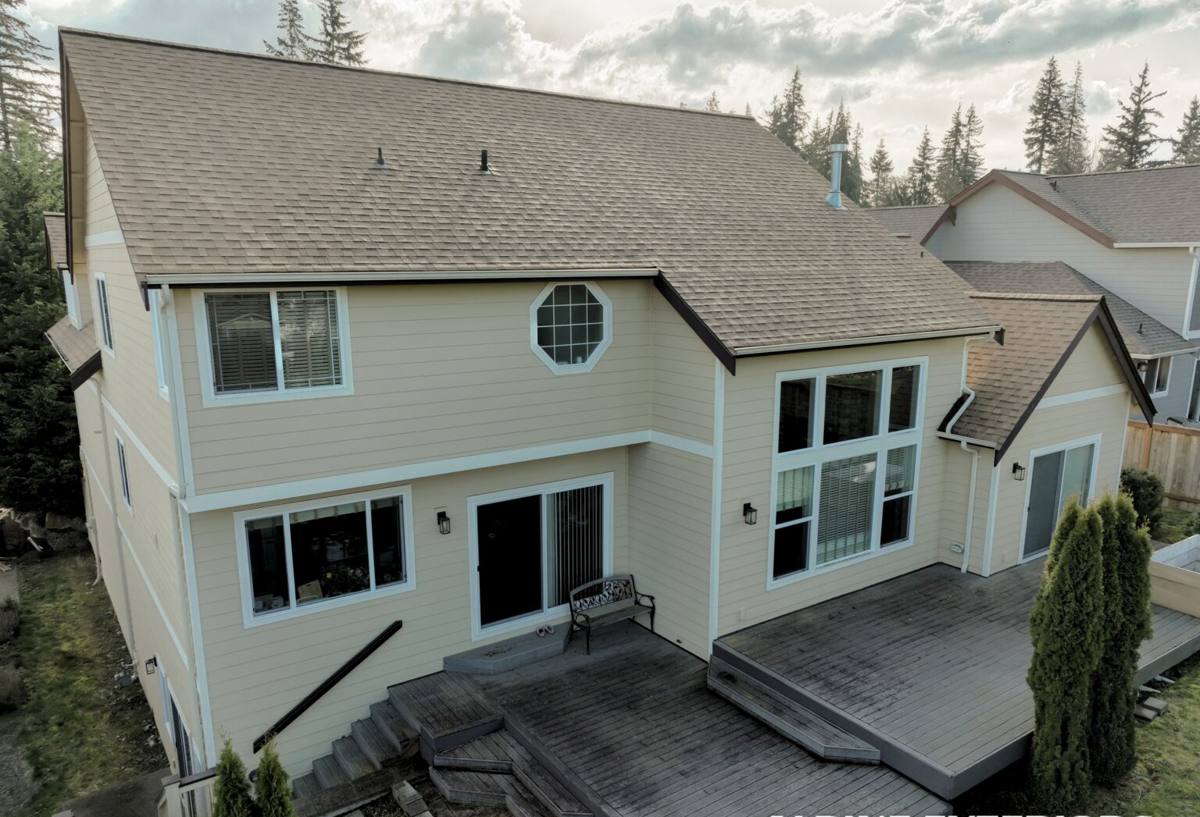
What This Climate Does to Window Energy Performance
Driving Rain and Air Infiltration
Wind-driven rain doesn't just threaten to leak through a window, it also finds every small gap in the seal and frame that lets conditioned air escape. A window with a mediocre air-infiltration rating loses heated indoor air steadily through those same weak points that let water in, so the two problems usually show up together. A tight, well-sealed frame keeps both wind and water out.
Long Moss Season and Shaded Glass
Mild, damp conditions across much of the year keep moss and mildew active on shaded walls and roof lines longer here than in a drier climate, and window frames on north-facing or tree-shaded walls are no exception. Moisture that sits against a frame or sill longer than it should degrades seals and finishes faster, and a degraded seal is an energy leak whether or not it's visibly leaking water yet.
Marine Air and Seal Longevity
Even this far from open water, Whatcom County gets a steady dose of salt-carrying marine air moving up the valley. Over years, that air is harder on lower-grade weatherstripping, gaskets, and hardware finishes than a dry inland climate would be, and a compromised seal is the single most common way an otherwise good window starts losing its energy performance.
Winter Wind and Cold Snaps
Sumas sits near the corridor that can funnel colder air down from the north during winter systems, and homes here can see sharper, windier cold snaps than towns farther south in the county. Wind load against a window amplifies any weakness in the seal or frame, which is exactly when a poorly performing window costs the most in lost heat.
What "Energy-Efficient" Actually Means on a Window Label
Every legitimate replacement window comes with an NFRC (National Fenestration Rating Council) label, and that label is where the real comparison happens, not the marketing copy next to it. The numbers that matter most for a Sumas home:
- U-Factor: Measures how much heat the window lets through. Lower is better; for this climate, we typically look for U-factor around 0.30 or lower.
- Solar Heat Gain Coefficient (SHGC): Measures how much solar heat passes through the glass. In a mild, cloudy climate like this one, moderate SHGC values are usually fine and don't need the aggressive solar blocking a hot, sunny climate would call for.
- Air Leakage (AL): Measures how much air passes through the window assembly itself. Lower ratings matter a great deal here given how much wind-driven weather this area sees.
- Condensation Resistance: Not always on the standard label, but relevant in a valley climate with significant humidity swings between seasons.
A window's U-factor and air-leakage numbers matter more for comfort and heating cost here than SHGC does, which is the opposite of what homeowners moving from a hot, dry climate sometimes expect.
Frame and Glass Options: What Performs Best Here
| Option | Energy Performance in This Climate | Trade-Offs |
|---|---|---|
| Vinyl, double-pane, low-E, argon-filled | Solid baseline performance; good value | Frame insulates less than fiberglass; seam quality depends on manufacturer |
| Fiberglass, double-pane, low-E, argon-filled | Stronger frame insulation and dimensional stability than vinyl | Higher upfront cost |
| Vinyl or fiberglass, triple-pane | Best air-leakage and U-factor numbers available | Added cost and weight; not always needed unless heating demand or comfort issues are significant |
| Wood or clad-wood, double-pane | Good performance when new and well-sealed | Seals and finishes need more upkeep in this much sustained moisture |
We'll walk you through which option actually makes sense for your home's exposure and budget rather than defaulting to whichever product is easiest to sell. A shaded, moss-prone wall and a wind-exposed south or west wall on the same Sumas house don't always call for the same window.
Low-E Coatings and Gas Fills
Low-emissivity (low-E) coatings and argon or krypton gas fills between panes both improve a window's insulating value without changing how it looks from the street. For most Sumas homes, a quality low-E coating paired with argon fill delivers most of the available efficiency gain at a reasonable cost; krypton adds a marginal improvement, usually reserved for narrower triple-pane assemblies where argon's benefit is limited by the smaller gas gap.
Installation Details We Don't Treat as Optional
A window's lab-tested efficiency numbers only hold up if the installation matches them. Most of the energy loss we find around older or poorly installed windows traces back to installation shortcuts, not the window product itself. On every job in Sumas, that means:
- A properly pitched sill pan and correctly lapped head, jamb, and sill flashing tied into the surrounding wall assembly
- Continuous, gap-free air sealing around the full perimeter of the frame using appropriate low-expansion foam or backer rod, not caulk alone
- Insulation packed evenly around the frame without voids or excessive compression, either of which creates a cold spot
- Weep holes and drainage paths left clear so bulk water can exit without pooling against the sill
- Corrosion-resistant fasteners and hardware suited to a consistently damp, salt-influenced climate
- A final air-seal check from the interior once trim is reinstalled, confirming there's no draft path left behind
None of these steps add meaningfully to the cost of a project relative to the window itself, but skipping any of them can turn a genuinely efficient window into one that performs like a much cheaper unit.
Signs a Sumas Home Is Losing Energy Through Its Windows
- Noticeably higher heating bills compared to similar-sized homes nearby
- A draft or cold spot near a closed window, especially during winter wind events
- Condensation or fogging between panes, which usually means a failed seal on an insulated glass unit
- Interior condensation on the glass or frame during cold, damp stretches
- Visible daylight, cracked caulk, or gaps around the frame from inside the home
- A room near a window that's noticeably harder to keep comfortable than the rest of the house
Any one of these is worth a professional look. Sometimes the fix is a reseal or minor repair; other times it points to a window, or an installation, that's past the point where a repair makes sense.
Our Process for an Energy-Efficient Window Project
We start with an on-site assessment of each window's condition, orientation, and how it's currently performing, not just a quick measure-and-quote. From there we talk through frame and glass options that fit your budget and your home's specific exposure, whether that's a shaded, moss-prone wall or one that takes the brunt of winter wind. Installation follows the flashing, sealing, and insulation details above on every unit, and we walk the finished job with you so you know exactly what was done and why. If a window replacement turns up moisture damage in the surrounding wall or siding, we'll tell you plainly rather than sealing a new window in over an existing problem.
Why a Local Whatcom County Crew Matters
A crew that installs and repairs windows across this county through every season sees how salt-tinged air, driving rain, and a long moss season actually affect real houses over years, not just how a product performs on a spec sheet. That shows up in practical decisions on a Sumas project: how much attention a wind-exposed wall needs compared to a sheltered one, which sill pan pitch actually clears the water this valley sees, and which sealing details are worth the extra time on install day so you're not troubleshooting a draft two winters from now. It also means understanding that a valley community like Sumas, near the border and away from the immediate coastline, doesn't face exactly the same conditions as our service areas right on the water, and building the project around that instead of a one-size-fits-all approach.
Beyond Windows: Siding, Roofing, and Decks
Windows are the focus of this page, but the same climate that wears on a window's seals and frame wears on the rest of a home's exterior too. We also handle siding, roofing, and deck construction in Sumas and across Whatcom County, and on siding specifically we install James Hardie fiber cement as our standard for how it holds up against sustained moisture and moss. If a window project uncovers moisture damage in the surrounding siding, trim, or wall framing, we can address it as part of the same conversation instead of sending you to find a second contractor.
Get a Free, No-Pressure Estimate
If your Sumas home has windows that are drafty, fogging, or driving up your heating bills, we're glad to take a look and give you a straightforward, honest read on what it actually needs. Reach out using the form below to schedule a free estimate, no pressure, no upsell script.