 Lynden Siding
 Storm Damage Roof Repair Built for Wiser Lake Conditions
Wiser Lake sits in a pocket of Whatcom County where big trees, open water, and Pacific storm systems all meet in one place. Homes around the lake take a different kind of beating than a roof in town might see. Wind gets a running start across the open water and hits rooflines from angles that don't show up on a standard inspection. Overhanging fir and cedar branches drop limbs during the same windstorms that drive rain sideways under shingle edges. And because the lake keeps the air around it a little wetter, longer, moss and moisture problems tend to show up here before they show up a few miles inland.
That combination means storm damage repair on a Wiser Lake home isn't just a shingle-and-nail job. It's diagnosing what the wind, water, and organic growth actually did to the roof system underneath, then fixing it in a way that holds up through the next storm season, not just until the next inspection.
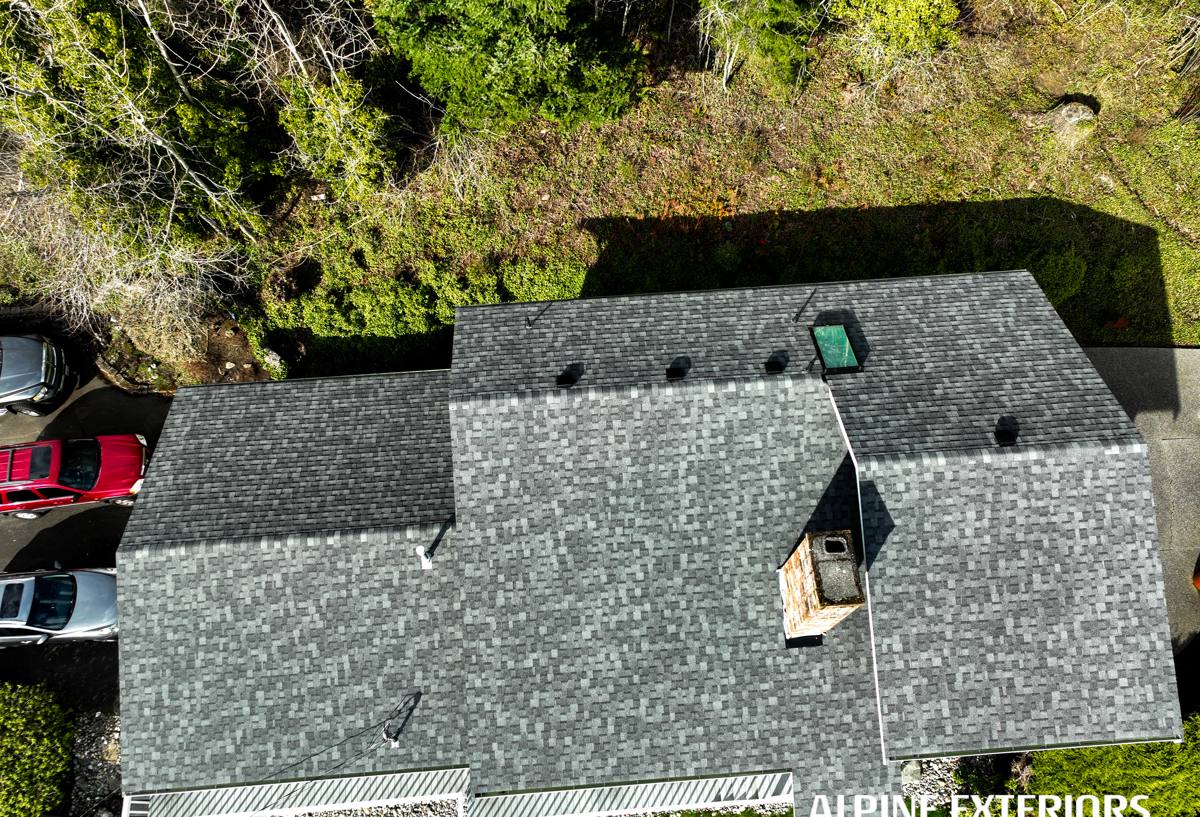
What Whatcom County Storms Actually Do to a Roof
Most storm damage isn't one dramatic event — it's a series of smaller hits that add up. In this part of Washington, that usually breaks down into a few repeatable patterns:
Wind-Driven Rain
Puget Sound and Salish Sea storm systems push rain in horizontally more often than they drop it straight down. On a Wiser Lake roof, that means water gets forced up under shingle tabs, around flashing edges, and into any gap that a calm-weather rain would never reach. Roofs that look fine from the ground can still be taking on water at every vulnerable seam.
Wind and Debris
Gusts off the lake can lift or crack shingles even when nothing visibly falls on the roof. Add in branches and cones from mature trees near the shoreline, and you get everything from a few cracked shingles to a punctured section of decking after a bigger storm.
Moss and Prolonged Moisture
The regional climate here — salt-tinged coastal air, driving rain, and a moss season that can run most of the year — is hard on roofing material even without a storm involved. Moss holds moisture against the shingle surface, works its way under tabs, and lifts them just enough for wind-driven rain to get underneath. A roof that's already carrying moss going into a storm is far more likely to leak from that storm.
Freeze-Thaw Cycling
Whatcom County doesn't get deep winters, but it gets enough freeze-thaw swings to widen small cracks in flashing sealant and shingle edges that storm winds then finish the job on. It's rarely one cause — it's usually moisture, wind, and a freeze cycle working on the same weak spot over several storms.
Signs Your Roof Took Storm Damage
Some storm damage is obvious. A lot of it isn't, and it's the damage you don't see from the driveway that causes the real problems — slow leaks that show up as a stain on a ceiling weeks later. After any significant wind or rain event, it's worth checking for:
- Shingles that are cracked, curled, creased, or missing entirely
- Granules collecting in gutters or at the base of downspouts
- Bent, lifted, or missing flashing around chimneys, vents, and roof valleys
- Dents or displaced material where a branch or debris made contact
- Soft spots or visible sagging when viewed from the attic or from the ground at an angle
- New or worsening moss growth in shaded, north-facing sections of the roof
- Water stains on ceilings or in the attic, even faint ones
- Debris buildup in valleys or gutters that's holding water against the roof surface
Any one of these on its own might be minor. Several together, especially right after a storm, usually mean it's time for a real inspection rather than a guess from the ground.
What a Correct Storm Damage Repair Actually Involves
A lot of "storm repair" jobs are really just a patch — a few shingles swapped out over a section that got hit. That can be the right call for isolated, minor damage. But a repair that's actually going to hold needs to look past the visible damage to what's underneath it.
Full Inspection Before Any Repair
That means checking the decking under damaged shingles for soft spots or rot, not just replacing what's visible on top. It means inspecting flashing at every penetration — chimneys, plumbing vents, skylights — since flashing failure is one of the most common causes of a leak that seems to come from "nowhere." And it means checking valleys and eaves, where wind-driven rain and debris both tend to concentrate.
Matching Materials and Method
Repairs also need to match the existing roof's material, exposure, and fastening pattern — not just visually, but functionally. A repair section installed with the wrong nailing pattern or the wrong underlayment overlap can fail again in the very next storm, even if it looks fine the day it's finished.
Documentation for Insurance
If the damage may be covered by a homeowner's insurance policy, documentation matters. Photos of the damage before repair, a written scope of what was found and what was fixed, and clear notes on cause (wind, impact, wear) all make an insurance claim go smoother. We can't guarantee how an adjuster or insurer will rule on a claim, but a well-documented repair gives a homeowner the strongest possible paper trail.
Repair or Replace? What Actually Drives That Decision
Not every storm-damaged roof needs full replacement, and not every roof that looks rough should be patched indefinitely. The right call depends on a few honest factors:
| Factor | Leans Toward Repair | Leans Toward Replacement |
|---|---|---|
| Extent of damage | Isolated area, single slope or section | Damage spread across multiple slopes |
| Roof age | Roof is under roughly 10-12 years old | Roof is near or past its expected service life |
| Decking condition | Decking is sound under the damaged area | Rot or soft decking found in multiple spots |
| Moss/moisture history | Minimal prior moss or leak history | Chronic moss, repeated past leaks or repairs |
| Material availability | Existing shingle line/color still available | Discontinued material, visible patch mismatch |
We'll walk through where a specific roof lands on these factors during the inspection — the honest goal is the option that actually solves the problem, not the bigger invoice.
Our Process for Wiser Lake Storm Repairs
- Initial contact and scheduling. We get details on when the storm hit and what symptoms you're seeing — active leak, visible damage, or just a request to check things over after a bad windstorm.
- On-site inspection. We walk the roof (weather permitting) and check the attic from inside where accessible, looking past the obvious damage to flashing, decking, and valleys.
- Written scope and estimate. You get a clear explanation of what we found, what needs to be done, and a straightforward cost range — no pressure to upgrade beyond what the roof actually needs.
- Temporary protection if needed. If there's active exposure — a hole, missing section, or compromised flashing — we can tarp or otherwise protect the area to stop further water intrusion while repair materials are sourced.
- Repair work. Damaged material comes off down to sound decking, underlayment and flashing are addressed as needed, and new material is installed matched to the existing roof.
- Final walkthrough. We go over the completed repair with you and provide documentation you can keep on file or forward to your insurer if you're pursuing a claim.
Why It Matters Working With a Crew Already in Wiser Lake
Storm damage repair rewards familiarity with an area, and Wiser Lake has its own quirks. A crew that's worked roofs around the lake already understands how the tree cover and open water interact with wind direction, which slopes tend to take the worst of a given storm system, and how fast moss reestablishes on the shaded sides of a roof in this microclimate. That local pattern recognition shortens the inspection and sharpens the diagnosis — it's the difference between patching a symptom and fixing the actual point of failure.
There's also a practical side to being local: after a widespread storm event, response time matters. A roof with active water intrusion doesn't benefit from a contractor driving in from well outside the area. Being established in and around Lynden and the Wiser Lake community means shorter response windows when a roof needs protection now, not next week.
Maintenance That Reduces Future Storm Damage
Storm damage repair fixes what already happened. A few ongoing habits reduce how much damage the next storm can do:
- Keep gutters and valleys clear of needles, leaves, and debris so water has a clean path off the roof
- Trim back branches that overhang the roofline, especially near mature trees close to the lake
- Address moss early — before it lifts shingle tabs and creates an entry point for wind-driven rain
- Have flashing checked periodically, since it's a common failure point that's easy to miss from the ground
- Get a post-storm check after any significant wind event, even without a visible leak
None of these prevent every possible storm hit, but they close off the weak points that turn a routine storm into an interior leak.
Get a Straightforward Look at Your Roof
If a recent storm has you wondering whether your Wiser Lake roof came through clean, we're happy to take a look and give you an honest answer — repair, monitor, or replace, based on what we actually find. The estimate is free, there's no pressure attached to it, and you'll get a clear explanation either way. Fill out the form below to get started.