 Lynden Siding
 Blaine's Coastal Exposure Is Harder on Siding Than Most of Whatcom County
Blaine sits right on the water, at the far northwest corner of Whatcom County, and that location changes how siding ages. Homes a few miles inland around Lynden deal with plenty of rain, but Blaine adds salt-laden air off the water, more sustained wind, and long stretches of damp, low-sun weather that never quite dries a wall out. Siding here doesn't fail because it's old. It fails because water and salt found a way in years before anyone noticed a problem on the surface.
That combination matters when you're deciding whether a section of siding needs a patch, a proper repair, or a full replacement. It also matters when you're choosing who does the work. A repair that would hold up fine on a sheltered inland wall can fail fast on an exposed Blaine elevation facing the water and prevailing wind.
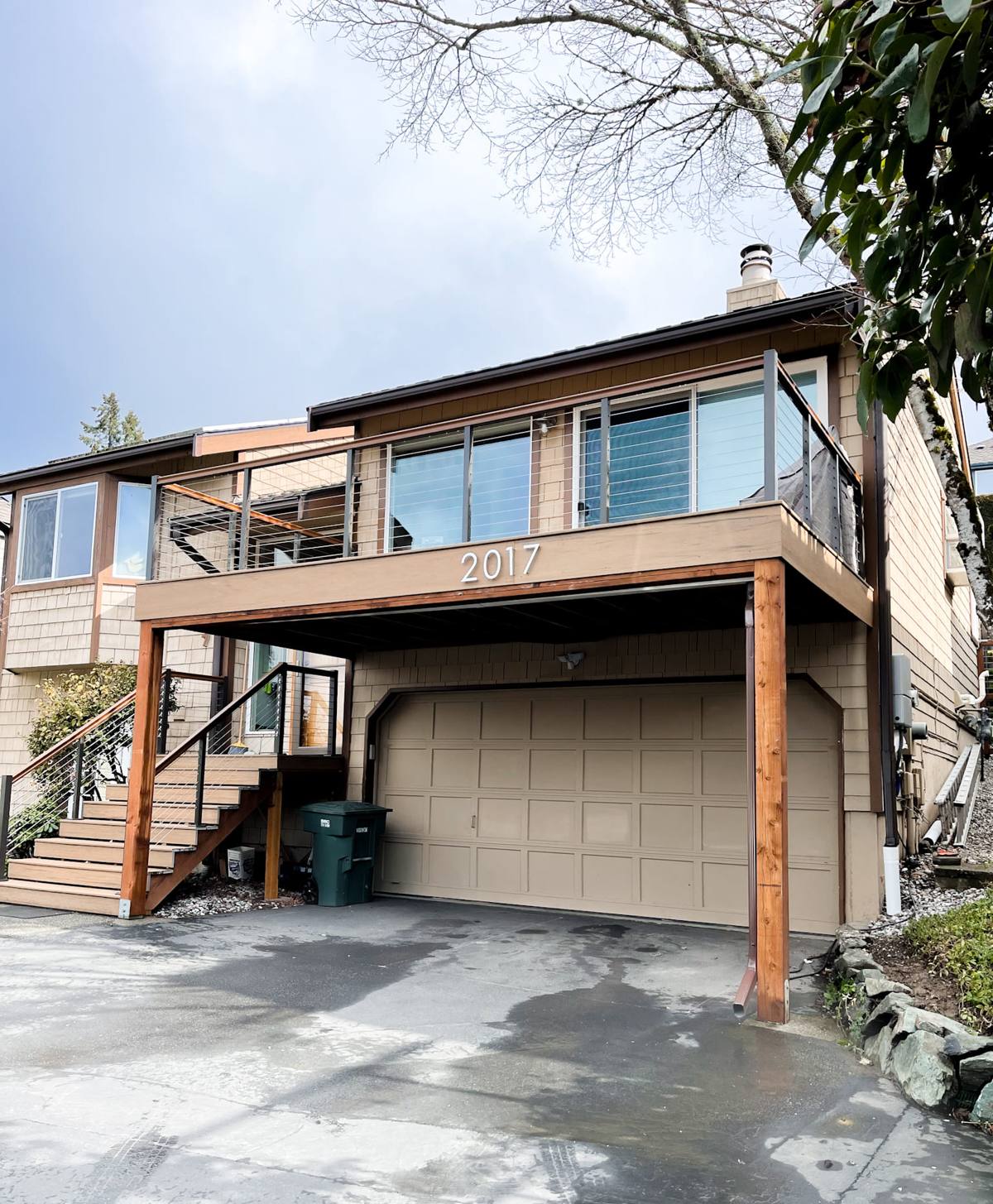
The Damage Patterns We See Most in Blaine
Salt Air and Fastener Corrosion
Airborne salt accelerates corrosion on anything metal — nail heads, trim flashing, hose bib penetrations, and the fasteners holding siding boards in place. Once a fastener starts to corrode, it can back out slightly, crack the surrounding material, or leave a pinhole that water follows straight into the wall assembly. This shows up first as small rust streaks or a board that's slightly loose, long before there's any visible rot.
Wind-Driven Rain at Joints and Penetrations
Blaine's wind doesn't just bring rain straight down, it pushes it sideways into butt joints, around window and door trim, and up under lap edges that would stay dry in calmer weather. Old or under-lapped joints, gapped caulk lines, and flashing that was never properly integrated with the water-resistive barrier are the most common entry points we find.
Moss, Algae, and Trapped Moisture
The long moss season here isn't just a roof problem. North-facing and shaded walls, especially near mature trees or close plantings, stay damp for extended periods, and moss and algae growth on siding surfaces holds moisture against the material rather than letting it shed. Over time that constant dampness breaks down caulk, softens wood trim, and can wick moisture behind panels at the lowest courses.
Repair vs. Replace: How We Actually Decide
Not every damaged section needs full replacement, but not every problem is a simple patch either. We inspect first, then recommend based on what we actually find — not a one-size answer.
| Factor | Repair Usually Makes Sense | Replacement Usually Makes Sense |
|---|---|---|
| Extent of damage | Isolated boards or a single wall section | Damage spread across multiple elevations |
| Underlying structure | Sheathing and framing test dry and sound | Moisture meter shows elevated readings behind siding |
| Age of existing siding | Siding is mid-life with a matchable finish | Siding is past its service life or discontinued profile |
| Cause of failure | One-time issue: a failed fastener, a cracked board, an impact | Systemic issue: bad original flashing detail, missing rainscreen gap |
| Coastal exposure | Sheltered wall, moderate wind exposure | Direct water-facing wall with heavy wind-driven rain history |
When the underlying wall assembly is compromised, patching the visible siding without fixing what's behind it is a short-term fix that costs more later. We'll always tell you honestly which situation you're in.
What a Correct Siding Repair Actually Involves
A repair that lasts in a coastal environment like Blaine has to go beyond swapping a damaged board for a new one. The steps that actually matter:
- Removing enough surrounding material to see the full extent of the problem, not just the visible damage
- Checking the water-resistive barrier and flashing behind the siding, and correcting any gaps or improper laps
- Confirming whether a drainage gap exists behind the siding, and adding one where it's missing and conditions call for it
- Using corrosion-resistant fasteners appropriate for a coastal environment, not standard interior-grade hardware
- Matching the replacement material's profile, exposure, and finish so the repair doesn't stand out or create a new water path at the transition
- Re-sealing and re-flashing penetrations correctly rather than relying on caulk alone to do a flashing detail's job
Skip any of these steps and you've covered up a problem instead of solving it. The siding will look fine for a season or two, then the same failure shows up again, usually worse.
Why We Repair Exclusively With James Hardie Fiber Cement
We install and repair with James Hardie fiber cement siding only. We don't work with vinyl, LP SmartSide, Cemplank, Allura, or primed wood siding, and we're upfront about why: those products each carry real trade-offs in moisture behavior, maintenance burden, or long-term durability that we're not willing to install our name behind, especially in an environment as demanding as Blaine's.
Fiber cement is non-combustible, doesn't swell or rot the way wood-based products can, and holds its shape and seal in high-moisture, high-salt conditions far better than vinyl, which becomes brittle and can warp or crack under sustained UV and temperature swings near the water. James Hardie's ColorPlus factory finish is also baked on under controlled conditions and backed by a real finish warranty, which matters when you're trying to match a repair to existing siding years down the road — a job-site painted repair rarely matches as cleanly or lasts as long.
When we repair a Hardie wall, we're working within a system we understand completely: the HZ5 product line used in this region is engineered for exactly this kind of climate, and our crews know how it should be fastened, flashed, and finished so a repair blends in and performs like the original installation.
Our Repair Process, Step by Step
1. On-Site Inspection
We look at the visible damage, but we also check the surrounding boards, trim, flashing, and caulk lines for early signs of the same issue. Coastal damage rarely stays isolated to one spot.
2. Moisture Testing
Where there's any sign of water intrusion, we use a moisture meter to check the sheathing behind the siding before deciding on scope. This is the step that separates a real assessment from a guess.
3. Honest Scope and Options
We explain what we found, what's causing it, and what a durable fix requires. If a simple repair will hold, we say so. If the damage points to a bigger underlying issue, we explain why and what the options are.
4. The Repair Itself
We remove and replace only what needs it, correct any flashing or drainage issues we find behind the siding, use coastal-appropriate fasteners, and match the James Hardie profile and ColorPlus finish as closely as the product line allows.
5. Final Check
We walk the repair with you, confirm the fix addresses the actual cause, and let you know what to watch for going forward given your home's specific exposure.
Signs Your Blaine Home May Need Siding Repair
- Rust streaking below nail heads or trim fasteners
- A board or section that flexes, feels soft, or sits slightly proud of the wall
- Persistent moss or dark algae staining that keeps returning after cleaning
- Cracked, gapped, or missing caulk at joints, corners, and window trim
- Peeling or bubbling paint on trim near a siding joint or penetration
- Visible daylight or drafts around old penetrations (vents, hose bibs, light fixtures)
- A musty smell or interior wall staining on the side of the house facing prevailing wind and rain
Any one of these on its own might be minor. Several together, especially on a water-facing wall, usually mean it's worth having someone look before the next wet season.
Why Hiring a Crew That Already Works Blaine Matters
Blaine isn't just "coastal Whatcom County" in the abstract — it has its own microclimate compared to inland towns like Lynden, with more direct wind exposure and more persistent salt air. A crew that regularly works this area knows which elevations tend to take the worst of it, understands how the local permitting process handles exterior repair work, and has already seen how James Hardie siding and trim perform here over time, not just in a manufacturer's general climate rating.
That local pattern recognition is what keeps a repair from becoming a repeat visit. It's the difference between patching what's visible and fixing what's actually causing the damage.
Keeping a Repaired Wall Healthy in Whatcom County's Climate
Once a repair is done right, a little seasonal attention keeps it that way. Rinse salt residue and grime off exposed walls periodically, keep gutters and downspouts clear so runoff isn't running down the siding face, trim back vegetation that's shading and dampening a wall, and take a walk around the exterior each fall to catch new caulk gaps or loose trim before winter storms arrive. None of this is complicated, but it's the kind of maintenance that extends the life of any repair, especially on the walls that face the water and the weather.
If you're noticing any of the signs above, or you'd just like an honest opinion on a section of siding that doesn't look right, we're happy to take a look. We offer free, no-pressure estimates for siding repair throughout Blaine and the rest of Whatcom County — there's no obligation, just a straight answer about what's going on and what it would take to fix it correctly.