 Lynden Siding
 Why Roofs in Aldergrove Wear Down Faster Than the Warranty Says
Aldergrove sits in the Fraser Valley just across the line from Lynden, and the two towns share almost identical weather. Wet Pacific systems roll in off the coast for months at a stretch, carrying salt-tinged marine air well inland, and that combination of near-constant moisture and mild temperatures is exactly what moss, algae, and slow shingle breakdown need to thrive. A roof rated for 25 years on paper can start showing real trouble at 15 or 18 here if it wasn't installed with this specific climate in mind. Driving rain doesn't just fall straight down — wind off the valley pushes it sideways under poorly lapped shingles and around flashing that was installed to a minimum standard instead of a correct one.
None of this means Aldergrove homes need exotic materials or gimmicks. It means the tear-off, the underlayment, the ventilation, and the flashing details all have to be done right the first time, because a roof here gets far more wet-dry cycles per year than one in a drier climate, and every shortcut gets tested constantly instead of occasionally.
Signs a Repair Won't Cut It Anymore
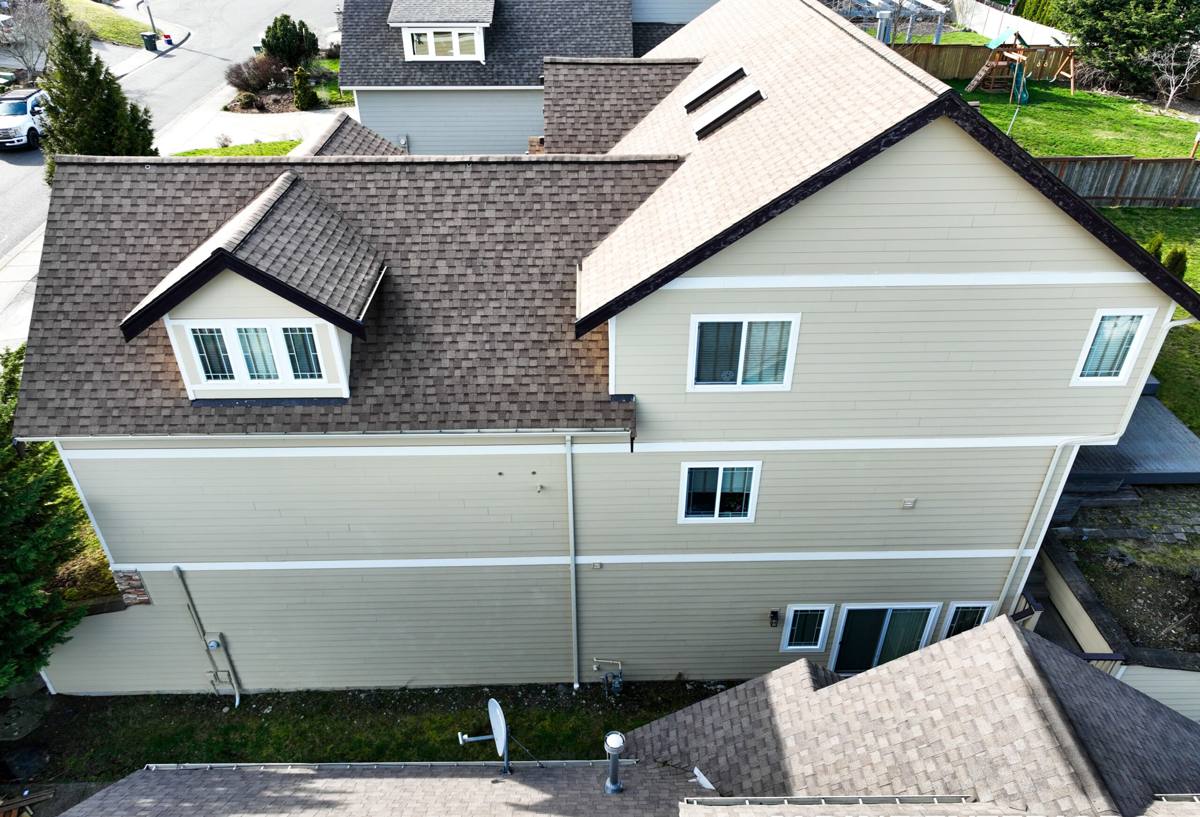
Most roofs give warning signs long before a leak shows up on the ceiling. The trick is catching them while a replacement is still a planned project instead of an emergency.
- Granules collecting in gutters or at downspout outlets, leaving shingles looking bald or patchy
- Shingle edges curling up or cupping down, especially on south- and west-facing slopes
- Moss established in mats rather than a light dusting, lifting tabs as it grows
- Soft or spongy spots when walking the roof, a sign the decking underneath has taken on moisture
- Daylight visible through the roof deck from inside the attic
- Three or more patch repairs in the last five years on the same roof
- Shingles original to a roof over 18-20 years old, even if they still look okay from the ground
One or two of these usually still means repair. Several at once, or any sign of soaked decking, is where replacement becomes the honest recommendation rather than the upsell.
What a Correct Roof Replacement Actually Involves
Full Tear-Off and Deck Inspection
We don't install new shingles over old ones, and we don't recommend it to anyone. A full tear-off is the only way to actually see the decking underneath — the plywood or planking that everything else attaches to. Any soft, delaminated, or water-stained sections get identified and replaced before anything new goes down. Skipping this step is how a roof looks fine for two years and then fails from the inside out.
Underlayment Built for Wet Climates
Synthetic underlayment goes down first as the roof's backup waterproofing layer, and in valleys, eaves, and around any roof penetration we use a self-adhering ice-and-water membrane. It's not just for freeze-thaw protection — in a climate with this much sustained rain, it's what keeps wind-driven water from finding a way in through the seams.
Ventilation Sized to the Attic
A roof that can't breathe traps moisture in the attic, and trapped moisture rots decking and rafters from underneath long before the shingles above show any wear. Intake at the eaves and exhaust at the ridge need to be balanced to the attic's actual size — not just whatever vents were there before.
Flashing and Penetration Details
Chimneys, skylights, plumbing stacks, and valleys are where the overwhelming majority of roof leaks actually start. Correct step flashing, counter-flashing, and sealed penetration boots matter more to a leak-free roof than the shingle brand on the box.
Choosing a Roofing Material for This Climate
There's no single "best" roofing material — there's the right tradeoff for your roof, your budget, and how much upkeep you want to do. Here's how the common options compare for a home in this part of the valley.
| Material | Typical Lifespan | Moss/Algae Resistance | Maintenance | Relative Cost |
|---|---|---|---|---|
| 3-tab asphalt shingle | 15-20 years | Low without treatment | Regular moss removal recommended | Lowest |
| Architectural (dimensional) shingle | 25-30 years | Better; algae-resistant granules available | Occasional moss/gutter maintenance | Moderate |
| Metal (standing seam or panel) | 40-50 years | Very good; sheds moisture fast | Low; periodic fastener/seam checks | Highest upfront |
| Cedar shake | 20-30 years with care | Poor without ongoing treatment | High; regular cleaning and treatment required | High, plus ongoing upkeep |
For most Aldergrove homes, an algae-resistant architectural shingle is the practical middle ground — meaningfully better moisture and moss performance than a basic 3-tab, without the upfront cost jump of metal. Homeowners planning to stay long-term, or with a lot of shade and moss pressure, often find metal pays for itself in reduced maintenance and repair calls over the decades. We'll walk through the real numbers for your specific roof rather than push one option across the board.
Moss and Algae: Building Prevention Into the Job Itself
Moss isn't just a cosmetic problem — established moss holds moisture against the shingle surface and works its rhizoids under the tabs, which is exactly how small leaks start. Rather than treating moss as a maintenance chore to deal with after the fact, we build prevention into the replacement itself: zinc or copper strips near the ridge let rain carry trace metal ions down the roof slope, which suppresses new moss growth for years. We'll also flag any overhanging branches or shaded areas during the estimate, since keeping a roof drier and getting more sun on it does more for moss prevention than any product applied after the fact.
Our Roof Replacement Process, Start to Finish
- Inspection and estimate — we get on the roof (not just a look from the ground), check the decking where we can, and give you a written scope and price
- Material selection — walk through the options above based on your budget, timeline, and how long you plan to stay in the home
- Scheduling around the weather — we plan tear-off days around dry windows and keep the roof protected if conditions turn mid-job
- Tear-off and disposal — old roofing removed down to the deck, hauled off, nothing left behind
- Deck repair — any compromised plywood or planking replaced before underlayment goes down
- Underlayment, flashing, and ventilation installed — the parts you won't see but that determine whether the roof actually holds up
- New roofing installed to manufacturer specs and local wind/exposure conditions
- Cleanup, including a magnetic nail sweep of the yard and driveway
- Final walkthrough and warranty paperwork handed over in writing
What Actually Affects the Price
Every estimate is different because every roof is different, but the main cost drivers are consistent: total roof area and pitch (steeper roofs take longer and require more safety setup), how many layers need to be torn off, how much decking turns out to need replacing once we're under the old roofing, the material you choose, and how many valleys, chimneys, skylights, or other penetrations need flashing work. A simple, accessible roof with sound decking will always cost less than a steep, cut-up roof with rot to address — we'll be specific about which of these apply to your home before any work starts, not after.
Why a Crew That Already Works the Aldergrove Corridor Matters
Aldergrove sits close enough to Lynden that we're regularly working roofs on both sides of the border, and that matters more than it might seem. We already know how this specific stretch of the valley behaves — which slopes take the worst of the driving rain, how fast moss establishes on shaded roofs in this pocket of the Fraser Valley, and how to schedule tear-off days around a wet season that doesn't always cooperate. That local pattern recognition is the difference between a generic install and a roof that's actually built for where it sits. It also means straightforward logistics: materials, crew scheduling, and follow-up service don't depend on a company that only shows up in the area once a year.
Before You Sign: A Contractor Checklist
- Get the scope in writing, including tear-off, deck repair terms, underlayment, and flashing — not just "new roof, [material]"
- Ask how deck repair is priced if rot is found — by the sheet, not a vague allowance
- Confirm what underlayment and ice-and-water shield will be used and where
- Ask about ventilation — will existing vents be reused or resized to the attic
- Get the warranty terms in writing: material warranty versus workmanship warranty are two different things
- Confirm cleanup includes a nail sweep, not just a visual once-over
- Check that the estimate is based on an actual roof inspection, not a satellite measurement alone
If you're weighing repair versus replacement, or just want a straight answer on what your roof actually needs, we're happy to take a look. The estimate is free, there's no pressure to sign anything on the spot, and you'll get a written scope you can compare against anyone else's — just fill out the form below to get started.