 Lynden Siding
 Why Acme Roofs Take More Punishment Than You'd Expect
Acme sits back in the wooded foothills east of Lynden, where Whatcom County's weather runs wet more than half the year. The same moisture-laden air that moves through the Salish Sea region settles into these tree-lined valleys and lingers — shaded yards, damp ground, and roofs that rarely get a full day of direct sun through the winter months. That combination is exactly what moss, algae, and slow-drying roof valleys thrive on, and it's why a roof that would coast to 25 years in a drier climate can show real wear here in far less time if it wasn't installed with this specific environment in mind.
Driving rain is the other half of the equation. Storms moving through this part of Whatcom County don't just fall straight down — wind pushes rain sideways under shingle tabs, into open valleys, and up under flashing that wasn't lapped correctly. A roof that looks fine from the ground can still be taking on water at every seam if the underlayment and flashing weren't done right the first time.
Moss, Shade, and Tree Cover
Homes tucked under fir and cedar cover — common throughout Acme — hold onto moisture longer than roofs on open, sun-exposed lots. Needles and debris collect in valleys and behind chimneys, holding water against the shingle surface and giving moss a foothold. Left unchecked, moss lifts shingle edges, traps water underneath, and accelerates granule loss.
Driving Rain and Wind-Driven Moisture
Wind-driven rain finds every gap a roof has. Improperly lapped underlayment, short flashing, and nail placement that's even slightly off can all let water in during a hard storm even though the shingles themselves look fine. This is a detail-work problem, not a materials problem — and it's solved by installation technique, not by buying a more expensive shingle.
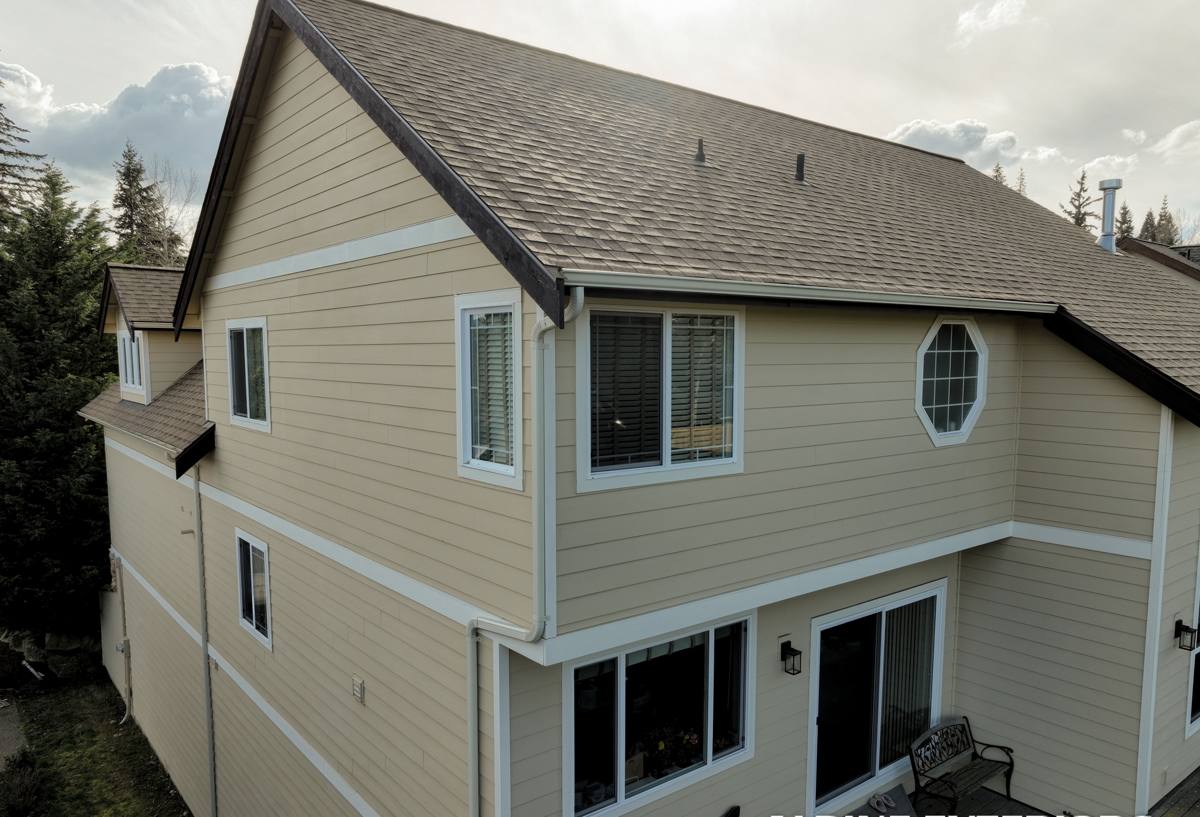
What a Correct New Roof Installation Actually Involves
A roof replacement isn't just stripping old shingles and nailing down new ones. Done right, it's a layered system where every component depends on the one underneath it being installed correctly.
Tear-Off and Deck Inspection
We remove the old roofing down to the deck rather than layering over it, because a second layer traps moisture and hides deck damage. Once exposed, we inspect the sheathing for soft spots, rot, or delamination — common on a roof that's been holding moisture for years — and replace any bad sections before anything new goes down.
Underlayment and Ice-and-Water Protection
Synthetic underlayment goes down first as the roof's real waterproof layer — the shingles are the weather-facing surface, but the underlayment is what actually keeps water out if wind or standing moisture pushes past them. In valleys, around chimneys, and along eaves, we add self-adhering ice-and-water membrane, because those are the spots where water backs up and sits longest in a shaded, high-rainfall setting like Acme.
Flashing Details
Flashing around chimneys, skylights, sidewalls, and roof-to-wall transitions is where most leaks on older roofs actually start. We replace flashing rather than reuse it, and every piece is lapped so water is always directed down and out — never sideways into a seam.
Ventilation
Balanced intake and exhaust ventilation keeps the attic dry and the roof deck at a consistent temperature. Without it, moisture from inside the home condenses on the underside of the deck, which rots sheathing from the inside out and can void a manufacturer's shingle warranty entirely.
Choosing a Roofing Material for Acme's Conditions
Every roofing material handles rain, shade, and moss differently. Here's how the common options compare for a heavily wooded, high-moisture property like the ones common around Acme.
| Material | How It Handles Moisture & Moss | Typical Lifespan Here | Trade-Offs |
|---|---|---|---|
| Architectural asphalt shingle | Algae-resistant granules slow moss and staining; performs well with proper ventilation | 25–30 years | Most economical, widest color range, straightforward to repair in sections |
| Standing seam metal | Sheds water quickly and gives moss little to grip onto; low maintenance | 40–50+ years | Higher upfront cost; needs an experienced installer for a clean, quiet result |
| Cedar shake | Traditional appearance, but wood is the material moss and moisture favor most | 20–25 years with upkeep | Requires ongoing cleaning and treatment to hold up in shaded, damp conditions |
We install architectural asphalt shingle and metal roofing as our primary systems because both give Acme homeowners a realistic, lower-maintenance path through this climate. We'll talk through cedar shake honestly if the look matters to you, but we want you to understand the upkeep it demands here before you commit to it.
Our New Roof Installation Process
- On-site assessment — we walk the roof, check the attic for ventilation and moisture signs, and identify any deck or structural concerns before quoting.
- Written estimate — a clear breakdown of material, labor, and any deck repair allowance, without surprise add-ons buried in fine print.
- Property protection — landscaping, siding, and gutters are covered before tear-off begins, with magnetic sweeps for nails run through the site daily.
- Tear-off and deck repair — old roofing comes off down to the sheathing, and any soft or damaged decking is replaced before we continue.
- Underlayment, flashing, and ventilation — installed in the sequence and overlap pattern the manufacturer requires to keep the warranty valid.
- Shingle or panel installation — laid to manufacturer specification for nail pattern, exposure, and fastening, the details that determine whether a roof holds up to wind-driven rain.
- Final walkthrough — we review the finished roof with you, confirm ventilation and flashing details, and answer any questions before calling the job done.
Timeline and What to Expect During the Job
Most single-family roof replacements in the Acme area take one to three days once work begins, weather permitting. Whatcom County's wet season narrows the installation window, so we plan tear-off around forecasted dry stretches and never leave a deck exposed overnight without protection. Expect noise, some vibration inside the house, and a crew on-site for the full workday. We keep the property as clean and organized as we can throughout, with a final cleanup and magnetic nail sweep before we leave.
Cost Factors to Understand Before You Get Quotes
Roofing costs vary by home, but the same handful of factors drive most of the difference between bids.
| Factor | Why It Matters |
|---|---|
| Roof size and pitch | More surface area and steeper pitches mean more labor and material |
| Layers to remove | Tear-off of multiple old layers adds disposal and labor cost |
| Deck condition | Rotted or soft sheathing found during tear-off needs replacing before installation continues |
| Roof complexity | Valleys, dormers, chimneys, and skylights each add flashing work and labor time |
| Material choice | Asphalt shingle, metal, and cedar carry different material and installation costs |
| Ventilation upgrades | Adding or correcting intake and exhaust venting is worth the modest added cost given how much moisture this climate holds |
We walk through these factors on-site so your estimate reflects your actual roof — not a generic per-square number that ignores tree cover, pitch, or deck condition.
Why Local Experience in Acme Matters
A crew that already works this part of Whatcom County knows what a wooded, shaded lot does to a roof before they climb the ladder. We check for moss-related granule loss even on a roof that looks fine from the driveway, and we know which flashing details tend to fail first on homes tucked under heavy tree cover versus homes more exposed to open fields and driving rain. That familiarity means fewer surprises during tear-off and a roof built for the conditions it will actually face, not a generic install pulled from a catalog.
We're also close enough to respond quickly if something needs a second look after the job is done, and we handle the required permits and inspections as part of the project rather than leaving that on you.
Keeping Your New Roof Performing for Its Full Lifespan
A correctly installed roof still needs basic upkeep in this climate. A short list of habits goes a long way toward protecting the investment:
- Clear needles, leaves, and debris from valleys and behind chimneys at least twice a year
- Keep gutters clear so water isn't backing up under the roof edge
- Trim back overhanging branches to cut down on shade and debris buildup
- Have moss growth treated early, before it lifts shingle edges, rather than waiting for it to spread
- Check that attic ventilation isn't blocked by insulation or stored items
- Schedule a roof inspection after any major windstorm
If your Acme home needs a new roof, or you just want an honest read on how much life is left in the one you have, we're happy to take a look. Reach out for a free, no-pressure estimate using the form below.