 Lynden Siding
 Maple Falls Puts Real Stress on a Roof
Maple Falls sits in the wooded, higher-elevation country east of Lynden, closer to the Cascade foothills than to open water — and that setting shapes what a roof out here has to deal with. Heavy tree canopy keeps roof surfaces shaded and damp long after a storm has passed. Rain doesn't just fall straight down; wind funneling through the valley drives it sideways into laps, valleys, and fastener points that a flatter, more open site would never see. Add in the marine-influenced air that moves through Whatcom County off Puget Sound, and you get a climate where roofing materials rarely get a long stretch of true dry-out time.
That combination — persistent moisture, shade, and wind-driven rain — is exactly what accelerates moss growth, rot, and premature wear on roofing that wasn't built with this specific site in mind. A roof spec that works fine in a dry, open subdivision closer to town can underperform on a shaded, tree-lined Maple Falls lot within a few years.
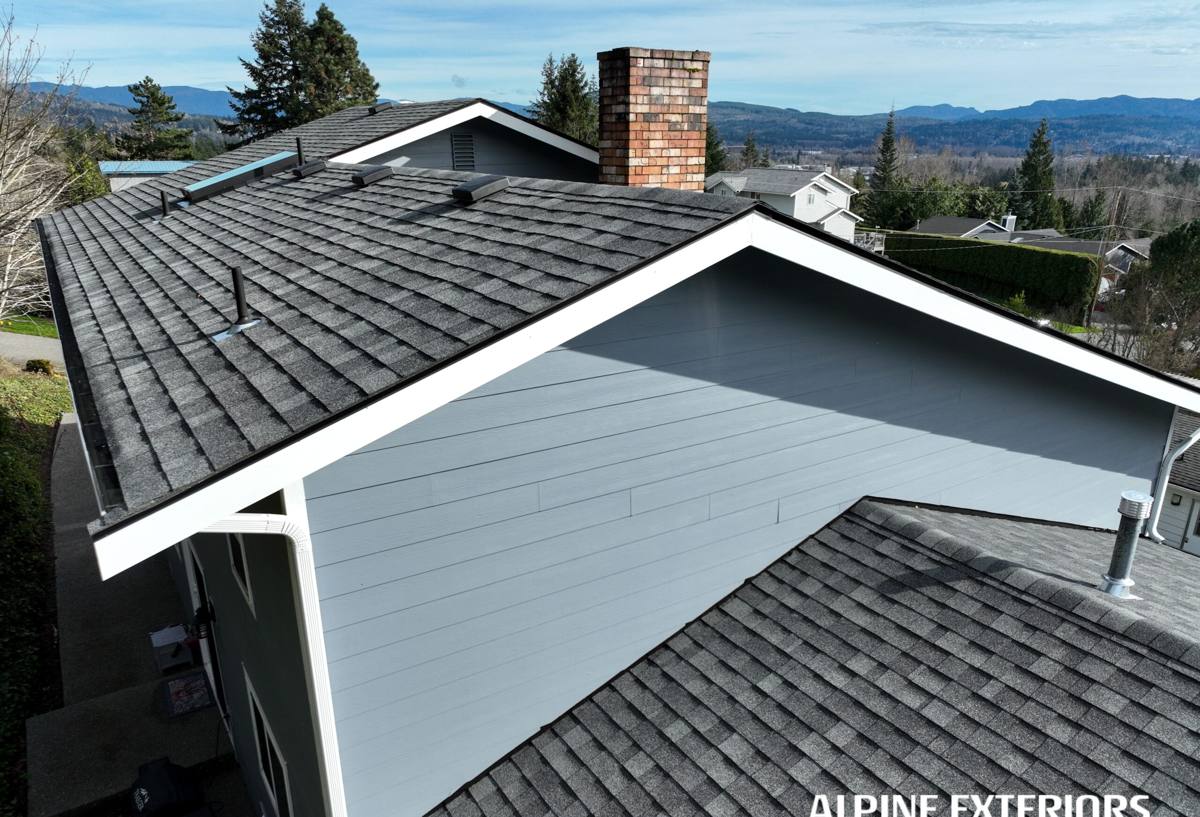
Why Metal Holds Up Better on Sites Like This
Metal roofing has a real, practical advantage in a climate like this: it doesn't give moss anything to hold onto. Asphalt shingles have a granulated, slightly porous surface that traps organic debris and moisture — ideal conditions for moss and algae to root in. A smooth, painted metal panel sheds water fast and dries quickly, so spores and needles have a much harder time establishing themselves, especially on the steeper pitches common on Whatcom County homes.
Metal also doesn't absorb water the way wood or asphalt does. On a lot with heavy tree cover, where the roof deck stays cool and shaded for long stretches of the day, that matters — less absorbed moisture means less freeze-cycle stress and less slow decay of the roofing material itself. Properly installed metal roofing is also rated for decades of service, which on a shaded, moss-prone lot can mean far fewer maintenance headaches over the life of the roof compared to a material that needs periodic moss treatment and granule replacement.
Choosing the Right Metal System for This Site
"Metal roofing" isn't one product — the panel style, metal type, and finish all affect how well a roof performs on a wooded, rain-heavy lot. We walk every Maple Falls homeowner through these choices honestly, including the trade-offs, rather than defaulting to whatever is easiest to install.
Standing Seam vs. Exposed Fastener
Standing seam panels use concealed clips instead of exposed screws, so the fasteners aren't sitting out in the weather. That matters here: exposed-fastener panels rely on rubber washers at every screw to stay watertight, and those washers degrade faster under constant moisture and UV cycling, which means periodic re-torquing or replacement down the road. Our standard recommendation for heavily shaded, high-moisture lots is standing seam, specifically because it removes that recurring maintenance point. Exposed-fastener panels still have a place — they cost less up front and work fine on outbuildings, shops, or budget-driven projects — but we're upfront that they ask more of the homeowner over time.
Steel vs. Aluminum
Steel panels are the more common choice and hold up well when properly coated. Aluminum resists corrosion inherently, which can be a smart call in areas where marine-influenced air is part of the picture, since it doesn't depend on the coating staying intact to resist rust. Steel is generally the stiffer, more economical option and is what we recommend for most Maple Falls homes unless there's a specific reason to go with aluminum.
Finish and Coating
We favor PVDF (often sold as Kynar 500) paint systems over lower-grade SMP coatings. PVDF finishes hold their color and resist chalking far longer under the low winter sun angles and extended damp seasons typical of this part of Whatcom County. It costs a bit more up front, but on a roof meant to last decades, it's not a place to cut corners.
| Feature | Standing Seam | Exposed Fastener |
|---|---|---|
| Upfront cost | Higher | Lower |
| Fastener exposure | Concealed clips | Screws with rubber washers |
| Long-term maintenance | Minimal | Washer/gasket checks over time |
| Best fit | Main homes, shaded/high-moisture lots | Shops, outbuildings, budget projects |
What a Correct Installation Actually Involves
A metal roof is only as good as what's underneath it and how the details are handled. On a lot like Maple Falls, a few steps matter more than they would on a drier, more open site.
- Deck inspection for rot or soft spots before any new material goes down — trapped moisture from years of shade and moss can quietly damage sheathing that isn't visible from the ground
- Ice-and-water shield membrane at eaves, valleys, and every penetration, not just the minimum code-required areas, given how long this climate keeps a roof damp
- A full synthetic underlayment across the whole field rather than felt, since felt breaks down faster under sustained moisture exposure
- Careful valley detailing — tree-heavy lots funnel more runoff and debris than open ones, and a poorly formed valley is where most leaks eventually start
- Correct fastener or clip spacing per the manufacturer's wind rating, since valley wind can drive rain and gusts harder than homes closer to open, low ground
- Balanced ridge and soffit ventilation, sized to move the persistent humid air out of the attic before it condenses and encourages mold or wood decay
How We Approach a Maple Falls Project
Every job starts with an on-site look at the specific conditions of that roof — pitch, tree cover, shade pattern through the day, and the condition of the existing deck. That assessment drives the material conversation, not the other way around. We'll walk through standing seam versus exposed fastener, steel versus aluminum, and finish options in plain terms, including what each choice costs and what it asks of you as the homeowner over the years.
From there we handle the tear-off or overlay decision based on what we find underneath the existing roofing, schedule the work around realistic rain windows rather than rushing it, and pay close attention to flashing and valley work during installation — the details that determine whether a metal roof performs for thirty years or develops problems in five. When the job is done, we do a full site cleanup, including a magnetic sweep for stray fasteners and metal shavings, since those are easy to lose track of on a lot with grass, mulch beds, or gravel under tree cover. We finish with a walkthrough covering warranty coverage and what maintenance to expect going forward.
Maintenance to Expect in a Wooded, Rain-Heavy Area
Metal roofing is low-maintenance compared to most alternatives, but "low" isn't "none" — especially with heavy tree cover overhead. A little seasonal attention keeps a good installation performing the way it's supposed to.
- Clear needles, leaves, and debris from valleys and gutters each fall, before winter rains arrive in force
- If an exposed-fastener system is in use, check fastener heads and washers annually for wear or early corrosion
- Inspect ridge and soffit vents for blockage from moss, debris, or nesting, since a blocked vent undercuts the ventilation the roof was designed with
- Watch for early moss or algae staining in shaded, low-slope trouble spots and clean it gently rather than pressure-washing painted panels, which can damage the finish
- Trim back overhanging limbs where practical so needles and leaves aren't dropping directly onto the roof plane year-round
Why Hiring a Crew That Already Works in Maple Falls Matters
A lot of what makes a metal roof succeed or fail on this kind of lot isn't in the product spec sheet — it's local knowledge. Crews who already work in and around Maple Falls understand how Whatcom County's permitting process applies outside city limits, know how to plan material delivery and staging on rural driveways with limited access, and have a feel for which properties sit in enough shade and tree cover to need extra attention to ventilation and valley detailing. That familiarity shows up in fewer surprises during the job and a roof that's actually specified for the site it's going on, not a generic install.
If you're weighing metal roofing for a home in Maple Falls, we're happy to take a look and talk through what makes sense for your specific roof, your budget, and how much shade and tree cover your lot actually gets. There's a free, no-pressure estimate form below — reach out and we'll get you a straight answer.