 Lynden Siding
 Why Composite Decking Fits Maple Falls Properties
Maple Falls sits up in the wooded foothills east of Lynden, in the part of Whatcom County where the terrain climbs toward the Mount Baker foothills and the tree cover thickens. That setting is beautiful, but it's tough on outdoor wood surfaces. Homes and cabins out here typically sit on larger, tree-shaded lots that hold moisture longer than open valley properties, and the marine-influenced weather that moves through this whole corner of Washington — carrying salt-tinged air even well inland — combines with driving rain and a long moss season to put real, sustained stress on any deck.
Composite decking exists to handle that kind of punishment better than solid wood does, but "composite" covers a wide range of products, and not all of them are built or installed the same way. This page focuses specifically on what a composite deck needs to hold up on a shaded, higher-elevation Maple Falls lot — not a generic overview of the material.
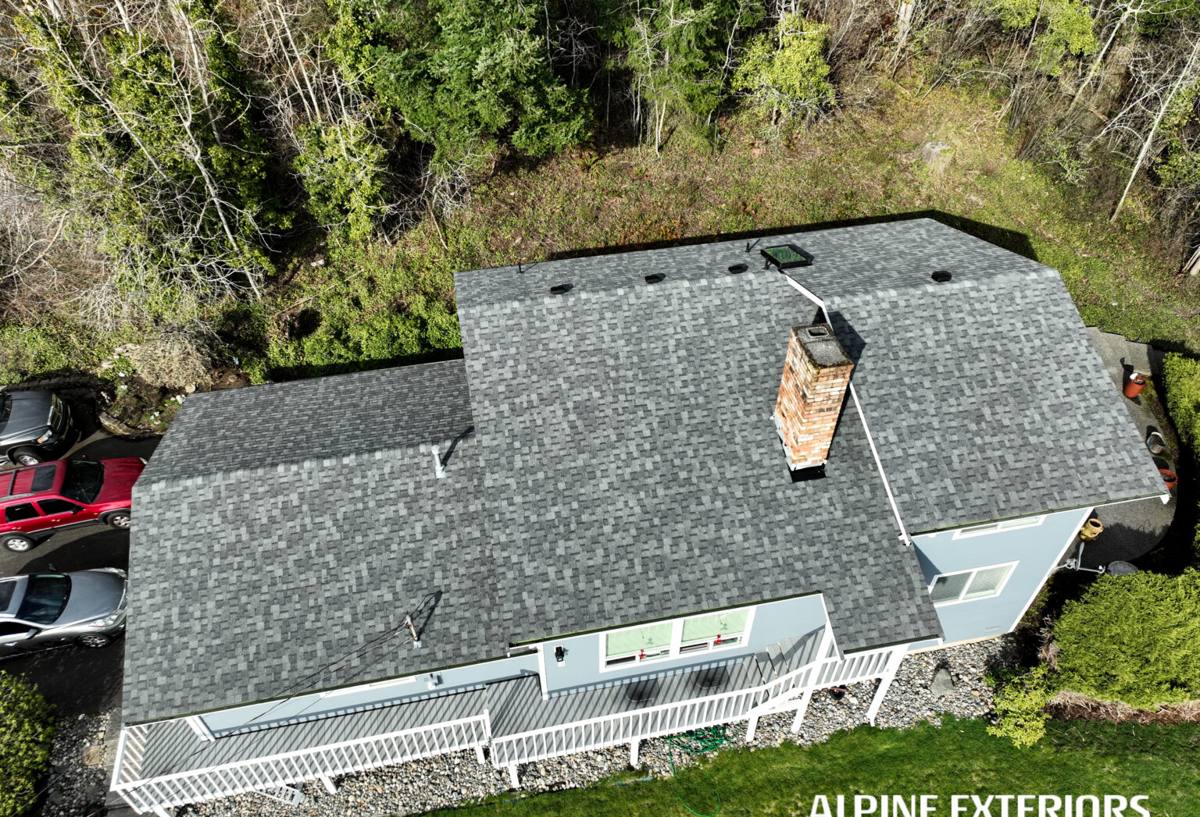
What This Climate Does to a Deck
A Long Moss Season Under Heavy Tree Cover
Mature evergreen cover is part of what makes this area what it is, but shade and moisture together create ideal conditions for moss, algae, and organic growth on any horizontal surface. A deck under a tree canopy dries out slower after every rain than one sitting in open sun, which means moss gets a longer window to establish itself on boards, in fastener heads, and in the gaps between deck sections.
Driving Rain and Higher Rainfall at Elevation
Rain in the Whatcom County foothills tends to run heavier and more sustained than in the valley below, and wind can drive it sideways into railings, stair stringers, and the underside of a deck rather than letting it simply fall straight down and drain off. That sideways moisture load is part of why framing and fastener choices matter as much as the visible decking material.
Salt Air's Reach Into the Foothills
Even this far from open water, the marine air pattern that defines Whatcom County weather still reaches inland through the valleys, carrying enough salt to matter for exposed metal over time. It's a lighter dose than a waterfront property gets, but it's not zero, and it's one more reason fastener grade and hardware quality aren't a place to economize on a deck meant to last.
What "Composite Decking" Actually Means
Composite decking is a broad category, not a single product, and the differences between tiers matter more in a shaded, wet climate than they would somewhere drier. The table below breaks down how the main options compare for a property like this.
| Decking Type | Moisture & Moss Resistance | Maintenance | Typical Lifespan Here |
|---|---|---|---|
| Capped composite | Strong — cap layer resists moisture absorption and staining | Periodic washing to knock back moss and mildew | Long-term, backed by manufacturer warranty |
| Cellular PVC | Excellent — no wood fiber to hold moisture at all | Periodic washing; no sealing or staining | Long-term, at a higher upfront cost |
| Uncapped composite | Moderate — more porous, holds moisture and stains longer under shade | More frequent cleaning to manage mold in shaded areas | Shorter than capped products under heavy tree cover |
| Pressure-treated wood | Weak — absorbs moisture, grows moss quickly in shade, fasteners corrode faster | Regular sealing or staining, plus moss treatment | Shortest, with the most ongoing upkeep |
Under heavy shade specifically, the gap between a well-built capped composite board and a lower-tier uncapped one shows up faster than it would on a sunny, open lot — the moisture just doesn't leave as quickly, so any weakness in the material gets more time to do damage.
What a Correct Installation Involves
A composite deck is only as good as the framing underneath it, and that matters even more on a shaded, damp lot. A correct install starts with pressure-treated or corrosion-resistant framing, properly flashed ledger attachment where the deck meets the house, and joist spacing sized to the specific composite product's span rating rather than a generic wood-framing standard — composite boards flex differently than lumber, and installing over the wrong spacing shows up as sag within a few seasons.
Fastener choice matters just as much. Hidden fastener systems and stainless or coated screws resist the corrosion that comes from both moisture and the salt-influenced air moving through this region. On sloped or uneven wooded lots, which are common in this area, footings also need to be set to account for grade changes and root systems from nearby trees rather than assuming a flat, cleared building pad.
Layout and Airflow on Wooded, Shaded Lots
Deck placement and orientation carry more weight on a tree-covered lot than people usually expect. Boards laid tight against a shaded wall or under a dense canopy dry out slower than the same product in an open, sun-exposed layout, so board spacing, gapping, and ventilation underneath the deck all need to account for that reduced drying time. A deck built with proper airflow beneath the surface — rather than boxed in tight to grade — sheds moisture faster and gives moss less time to take hold between cleanings.
Where trees sit close to the build site, we also look at root protection during construction and long-term clearance for branches and needle drop, since a deck that's constantly covered in falling debris holds moisture and organic material against the boards no matter how good the material is.
Our Process, Start to Finish
Every Maple Falls deck project follows the same basic sequence, adjusted for the specific lot:
- A site visit to assess grade, tree cover, drainage, and existing structure condition before recommending a product or layout
- Product selection based on your budget, sun/shade exposure, and how much upkeep you want to take on long-term
- Permitting through the appropriate Whatcom County process for the scope of work
- Framing and structural work, built to the specific composite product's span and fastening requirements
- Decking installation with attention to gapping, airflow, and drainage given the shaded conditions
- Final walkthrough and site cleanup, including debris removal from wooded lots
We walk you through each stage so there's no guessing about what's happening on your property or why.
Cost Factors for a Maple Falls Deck
| Factor | What Drives Cost | Foothill-Specific Note |
|---|---|---|
| Site access | Distance from the road, driveway length, and grade for material delivery | Larger wooded lots and gravel driveways are common and can affect delivery logistics |
| Framing complexity | Sloped or uneven ground requires more footings and structural adjustment | Foothill terrain is rarely perfectly flat |
| Product tier | Capped composite and PVC cost more upfront than uncapped composite or wood | Shade and moisture make the higher tiers pay off faster here than in a drier climate |
| Size and layout | Square footage, stairs, railing style, and multiple levels | No regional difference, but tree placement can influence layout options |
| Tree and site clearing | Removing or working around vegetation near the build site | More relevant here than on an open valley lot |
Maintaining Composite Decking in a Moss-Prone Climate
Composite decking needs far less upkeep than wood, but "low-maintenance" doesn't mean "no maintenance," especially under tree cover. A simple seasonal routine keeps a deck performing the way it should:
- Sweep or blow off needle drop, leaves, and organic debris regularly so it doesn't sit and hold moisture against the boards
- Wash the surface periodically to remove early moss and mildew growth before it sets into the texture of the board
- Keep gaps between boards clear of debris so water and air can move through as designed
- Check railing posts, stair connections, and hardware annually for early signs of corrosion or loosening
- Trim back overhanging branches or brush that keep the deck surface shaded and wet longer than necessary
- Address any soft or damp framing underneath right away — that's a structural issue, not a cosmetic one
Why It Matters That We Already Work in Maple Falls
A crew that mostly builds decks on flat, open valley lots can still install composite decking competently, but a wooded, higher-elevation property brings variables that don't come up as often elsewhere — grading around trees and root systems, longer drying times under shade, site access down long or gravel driveways, and Whatcom County permitting that accounts for the specifics of a rural building site. Working this area regularly means we're not learning those requirements for the first time on your project.
That familiarity also shows up in the smaller decisions — which composite lines actually resist moss under heavy shade rather than just in a manufacturer's marketing photos, how to frame around uneven ground without cutting corners, and being straightforward with you about what your specific lot realistically needs.
If you're weighing a new deck, replacing an aging wood one, or just want a straight read on what composite decking would take on your Maple Falls property, we're glad to walk the site with you and talk through it plainly. Reach out below for a free, no-pressure estimate.