 Lynden Siding
 Deck Repair Built for Kendall's Climate
Kendall sits in the part of Whatcom County where marine air off the Salish Sea meets the foothills leading up toward Mount Baker. That combination means decks here take on more moisture, over more months of the year, than decks in drier parts of the state. Rain doesn't just fall in Kendall — it drives sideways during winter storms, soaks into end grain, and settles into every joint and fastener hole a builder didn't seal correctly the first time. Add a moss season that can stretch from late fall through spring, and you have a structure that's fighting to stay dry almost half the year.
None of that means a deck is doomed. It means deck repair here has to account for wood movement, trapped moisture, and organic growth in a way that repair work in a dry climate simply doesn't. We've built our process around those realities, not around a generic checklist.
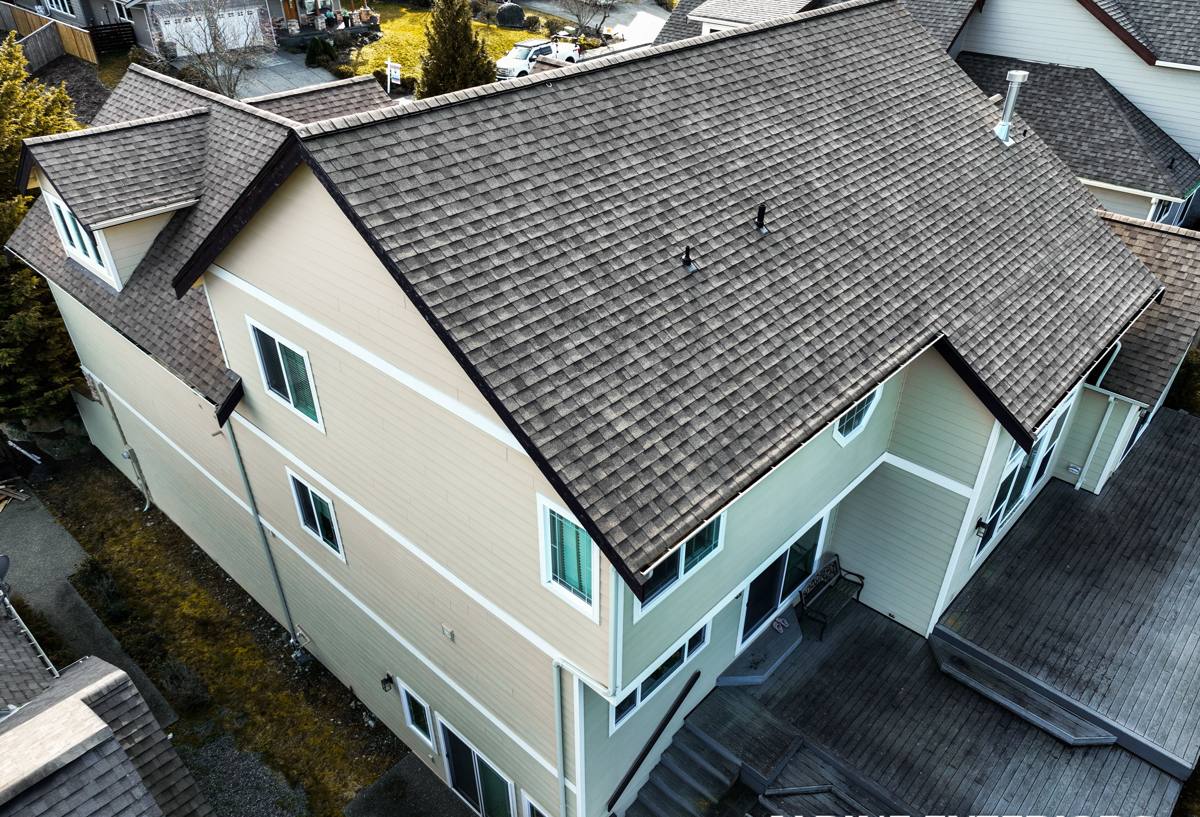
Why Kendall Decks Wear the Way They Do
Most of the deck damage we see in this area falls into a few predictable categories, and almost all of them trace back to moisture management:
- Ledger board rot — where the deck attaches to the house, flashing failures let water track behind the band board for years before anyone notices.
- Moss and algae buildup on decking boards, which holds moisture against the wood surface and accelerates decay even on treated lumber.
- Fastener failure — older nails or mismatched screws that corrode and loosen as the wood around them swells and shrinks through repeated wet-dry cycles.
- Soft or spongy joists and beams, usually where debris has collected and held water against structural framing that was never meant to stay wet.
- Railing post rot at the base, where end grain sits closest to standing water or splashback.
Driving rain makes all of these worse because it doesn't just wet the top of a deck — it pushes water into gaps, under flashing, and along horizontal surfaces that a straight-down rain would never reach.
Signs Your Deck Needs Repair, Not a Full Rebuild
Homeowners often assume a deck with problems needs to be torn out entirely. That's rarely true if the issues are caught before they spread to the main structural members. Here's what typically points to a repair rather than a replacement:
Good candidates for repair
- Isolated soft spots in decking boards while joists underneath are still solid
- Surface moss, graying, or checking on boards that are otherwise structurally sound
- Loose or wobbly railings with intact posts
- A single rotted stair stringer or a few damaged boards near a downspout or planter
- Flashing that's failed at the ledger but hasn't yet caused framing rot
Signs the damage has gone further
- Multiple joists or beams that flex, feel spongy, or show visible decay
- Ledger board separation from the house or visible rot along the rim joist
- Posts that have shifted or footings that have settled unevenly
- Widespread rot across most of the decking surface rather than isolated spots
The only way to know for certain is a hands-on inspection — probing suspect wood with an awl, checking behind flashing, and looking at the framing from underneath. We tell homeowners honestly when a repair will hold and when it's throwing money at a structure that needs to come down.
What a Correct Deck Repair Actually Involves
A repair that just swaps out the obviously rotted board and stops there tends to fail again within a couple of seasons, because it doesn't address why that board failed. A repair done right in this climate includes:
- Diagnosis of the moisture source — a bad gutter, missing flashing, poor drainage, or standing debris that's keeping wood wet longer than it should be.
- Removal of all compromised material, not just what's visibly failing, since rot spreads along the grain further than it shows on the surface.
- Correcting the underlying cause — reflashing a ledger, redirecting water away from a post base, or improving airflow under low-clearance sections.
- Matching or upgrading fasteners to hardware rated for treated lumber and coastal-influenced moisture, since mismatched metals corrode faster here.
- Reassembly to current structural practice, even on an older deck, so the repaired section performs at least as well as the rest of the structure.
Skipping the diagnosis step is the most common shortcut in cheap deck repair — and it's the one that guarantees a callback.
Repair vs. Replacement: How We Help You Decide
| Factor | Repair Usually Makes Sense | Replacement Usually Makes Sense |
|---|---|---|
| Structural framing (joists, beams, posts) | Solid, with isolated soft spots | Widespread rot or repeated failures |
| Age of the deck | Under 15-20 years, built to a reasonable standard | Older, undersized framing or outdated fastening methods |
| Ledger connection | Flashing failed but framing behind it is dry | Rot has spread into the house rim joist |
| Scope of visible damage | A few boards, one stair run, or the railing | Most of the decking surface and multiple structural members |
| Budget priority | Extend the life of a sound structure affordably | Reset the maintenance clock with new materials |
We walk this decision with you rather than defaulting to whichever job is bigger. A well-targeted repair on a structurally sound Kendall deck can add many years of use for a fraction of replacement cost.
Our Deck Repair Process
Every repair starts the same way, regardless of size:
- On-site inspection — we probe suspect areas, check the ledger and flashing, and look at framing from below when access allows.
- Written scope and estimate — what we're replacing, why, and what it will cost, before any work begins.
- Demolition of compromised material only — we don't tear out more than necessary, but we don't leave hidden rot behind either.
- Repair of the root cause — flashing, drainage, or fastening issues get fixed alongside the visible damage.
- Rebuild with appropriately rated materials — matched to what the rest of the deck can support and to Whatcom County's moisture exposure.
- Final walkthrough — we show you what was found, what was done, and what to watch going forward.
Materials: What We Use and Why
For structural repairs, we use pressure-treated lumber rated for ground contact where it's in contact with soil or persistent moisture, and standard treated lumber for framing that stays dry between rain events. For decking surfaces, homeowners generally choose between:
- Pressure-treated wood — lowest upfront cost, requires periodic sealing or staining to perform well through repeated wet seasons.
- Cedar — naturally rot-resistant and a good match for the region's building character, but still benefits from regular maintenance in a climate this wet.
- Composite decking — higher upfront cost, minimal surface maintenance, but installation has to be done correctly the first time since composite doesn't forgive poor drainage or ventilation the way wood sometimes does.
We don't push one material over another as a default. Each has real trade-offs in maintenance burden, cost, and how it handles the wet-dry cycling common in this area — we lay those out plainly so you can pick what fits your budget and how much upkeep you want to do.
Maintenance That Actually Extends Repair Life
A repaired deck lasts longer with a small amount of seasonal attention. This is the checklist we give homeowners after finishing a repair:
- Sweep leaves and debris off the deck surface before fall rains set in — trapped debris holds moisture against boards.
- Clean visible moss off decking and stairs as it appears rather than waiting for a heavy buildup.
- Check that gutters and downspouts near the deck are directing water away, not onto the structure.
- Look under the deck once a year for standing water, blocked drainage, or new soft spots.
- Reseal or restain wood decking on the manufacturer's recommended schedule, not just when it looks faded.
- Tighten or replace any loose railing hardware as soon as it's noticed.
Why a Kendall-Familiar Crew Matters
Deck problems in Kendall follow patterns that repeat from property to property — the same flashing shortcuts, the same drainage issues, the same spots where moss takes hold first. A crew that already works in this part of Whatcom County recognizes those patterns quickly instead of treating every job as a blank slate. That means a faster, more accurate diagnosis, and a repair scoped to what your deck actually needs rather than a generic template pulled from a drier climate.
If your deck has soft spots, loose railings, or areas that just don't look right anymore, we're happy to take a look and give you a straight answer about what it needs. Reach out for a free, no-pressure estimate using the form below.