 Lynden Siding
 Windows That Have to Earn Their Keep in Kendall
Kendall sits far enough out from town that homes here see a different pace of weather than a subdivision closer to the city center — more tree cover, more standing shade, more time spent soaked after a storm rolls through. Whatcom County's marine-influenced climate means moisture-laden air, driving rain that comes in sideways more often than straight down, and a moss season that seems to stretch longer every year. Windows are one of the few building components that have to seal out all of that while still opening and closing smoothly for years. When they're installed correctly for this specific climate, they do exactly that. When they're not, homeowners find out the hard way — usually with a soft spot in the sill or a foggy pane a few winters later.
This page is about one thing: custom window work for homes in and around Kendall. Not a general "windows" overview, and not a sales pitch for a single brand — an honest look at what this climate does to windows, what a correctly done job actually involves, and why the details matter more out here than they do in a more sheltered part of the county.
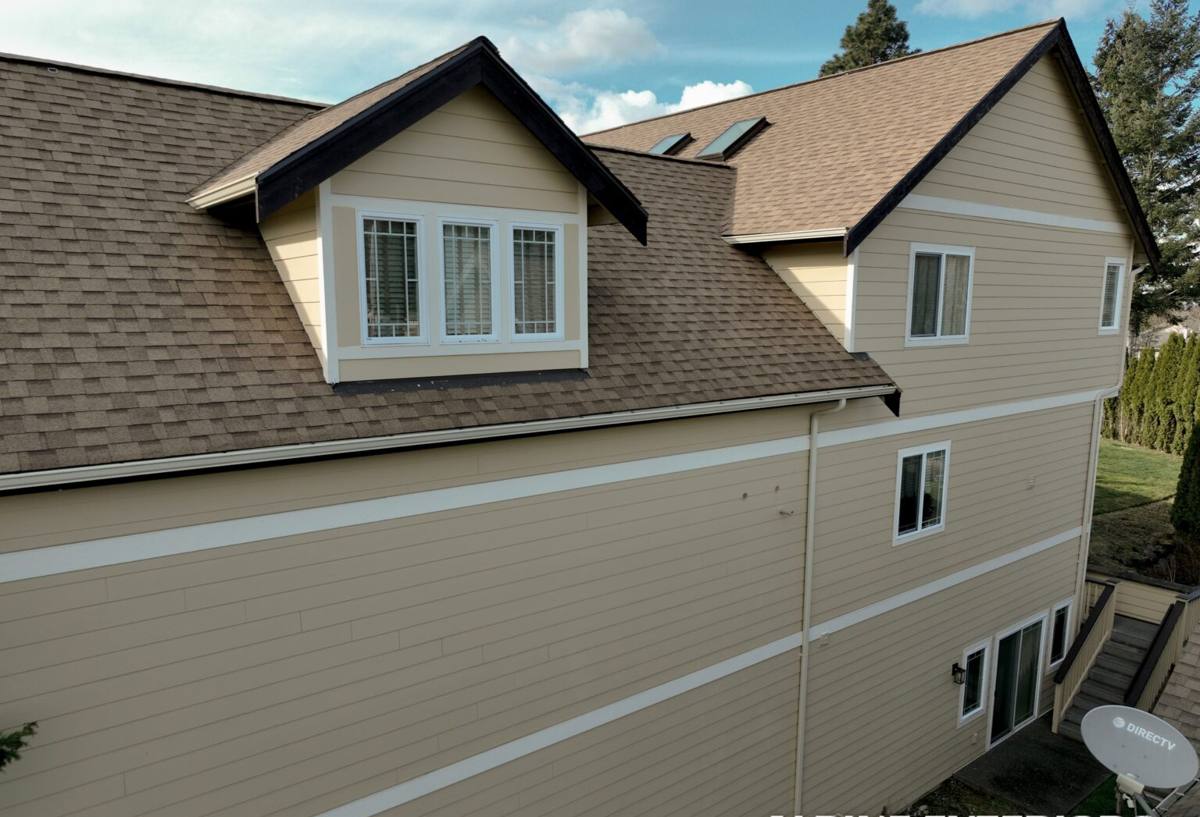
What Rain, Salt Air, and Moss Actually Do to a Window
Every window failure we get called out for traces back to one of a handful of causes, and almost all of them are climate-driven.
Driving Rain and Wind-Driven Moisture
Standard window installations assume rain falls more or less straight down. In Kendall, storms frequently push rain at an angle, which means water gets tested against every seam, corner, and flange on a window unit — not just the top. A window that would perform fine in a drier, calmer climate can still leak here if the flashing and sealant details weren't built for wind-driven moisture specifically.
Salt-Laden Marine Air
Air moving inland off the Salish Sea carries salt content that settles on exterior surfaces over time. On windows, that shows up as accelerated corrosion on hardware — hinges, locks, and cranks — and premature breakdown of unprotected metal components. It's a slow process, but it's constant, and it's one reason hardware quality matters more here than in an inland climate.
Moss and Sustained Damp
A long moss season isn't just a roof problem. Moss and algae thrive anywhere shaded surfaces stay damp for extended stretches, including window sills, frames, and the wood trim around them. Left alone, that sustained moisture load breaks down paint and caulking faster than it would in a drier climate, and once water finds a gap, it doesn't dry out quickly under tree cover.
Signs a Kendall Home Needs Window Attention
Most window problems don't announce themselves right away. Here's what we tell homeowners to actually watch for:
- Condensation or fog trapped between panes of double-pane glass — a sign the seal has failed
- Soft or spongy wood at the sill or bottom corners of the frame
- Visible moss, algae, or dark staining on the frame or trim
- Windows that stick, won't stay open, or are hard to latch — a sign the frame has shifted or swollen
- A noticeable draft near the frame even when the window is fully closed
- Paint that's peeling or bubbling specifically around the window opening, not the wider wall
- Rising heating bills without any other obvious cause
Any one of these on its own isn't necessarily an emergency, but two or three together usually means moisture has been getting past the window for a while.
What "Custom" Means for a Kendall Property
Custom windows aren't a marketing term for us — they're a practical necessity on a lot of the homes we work on out here. Older farmhouses, additions built over different decades, and properties with non-standard framing all mean the opening in the wall rarely matches a stock size exactly. Custom work covers:
Precise sizing: measuring the actual rough opening rather than forcing a stock size to fit, which is one of the most common sources of gaps and future leaks.
Architectural matching: keeping grille patterns, trim profiles, and proportions consistent with the rest of the home, especially on older or farmhouse-style properties where mismatched windows stand out immediately.
Non-standard openings: arched tops, oversized picture windows, or odd-shaped openings left over from a past remodel — all things that require a made-to-fit unit rather than an off-the-shelf one.
Performance matched to exposure: a window on the weather-facing side of a house that catches the brunt of driving rain and wind should be specified differently than one on a sheltered, protected wall — even on the same building.
Material and Glass Options for This Climate
There's no single "best" window material — the right choice depends on exposure, budget, and how much upkeep a homeowner wants to take on. Here's how the common options actually perform under Kendall's conditions:
| Material | Moisture Performance | Maintenance | Notes for This Climate |
|---|---|---|---|
| Vinyl | Very good — won't rot or corrode | Low | Solid all-around choice for damp, shaded lots; frame color and hardware quality vary widely |
| Fiberglass | Excellent — dimensionally stable in wet/dry swings | Low | Holds up well to repeated wetting and drying without warping |
| Wood-clad | Good if detailed correctly | Moderate to high | Attractive interior wood look, but the exterior cladding and seals need to be right or moisture gets trapped |
| Aluminum | Fair — prone to corrosion near salt air | Low to moderate | Thermal performance and corrosion resistance are the main trade-offs to weigh here |
Glass matters as much as frame material. We generally recommend double-pane units with a low-E coating and argon fill for this region — they cut down on condensation risk and help even out the temperature swings between damp mornings and clear afternoons. On walls that take the worst of the wind-driven rain, impact-rated or heavier-gauge glass packages are worth discussing, particularly if the home has a history of storm exposure.
How We Handle a Window Installation Here
The window unit itself is only part of the job. Most of the leaks we get called to fix trace back to installation details, not the window product. Our process on Kendall homes includes:
Opening Prep and Inspection
Before anything goes in, we check the rough opening for hidden rot or moisture damage from the old window — a common find on older homes out here — and address it before installing anything new.
Flashing and Moisture Barrier
Correct flashing sequence — sill pan, side flashing, and head flashing installed in the right order with proper overlap — is what actually stops wind-driven rain from getting behind the window. This is the single most important step for a climate like ours, and it's also the step that's most often rushed or skipped on lower-end installs.
Sealing and Insulation
We seal the perimeter with weather-appropriate sealants rated for sustained damp exposure, and insulate the gap between the frame and the rough opening so there's no cold spot or air path left behind trim.
Hardware and Finish
We use corrosion-resistant hardware given the marine air exposure, and finish trim work so water sheds away from the frame rather than pooling against it.
What Affects the Cost
Every custom window job is different, but the same handful of factors drive most of the price difference between jobs:
| Factor | Why It Matters |
|---|---|
| Number and size of windows | Larger openings and picture windows cost more in both material and labor |
| Frame material | Vinyl is generally the most budget-friendly; fiberglass and wood-clad cost more upfront |
| Glass package | Low-E coatings, argon fill, and impact-rated glass all add cost but improve performance |
| Custom sizing or shape | Non-standard or arched openings require made-to-order units, which cost more than stock sizes |
| Condition of the existing opening | Hidden rot or moisture damage found during removal adds repair time before the new window goes in |
| Exposure and wall location | Weather-facing walls may call for higher-performance units than sheltered ones |
We walk every homeowner through these factors during the estimate so there aren't surprises once work starts — and we'll always tell you honestly if a lower-cost option is a reasonable fit for a given wall, rather than upselling every opening to the top-tier package.
Why It Matters That We Already Work in Kendall
A crew that mainly works closer to town, or comes from outside the county entirely, doesn't necessarily know how differently Kendall's tree cover, drainage, and exposure behave compared to a more open lot. We've seen what happens when moss gets a foothold in a shaded sill, and we know which walls on a typical Kendall property take the worst of the driving rain versus which ones stay relatively sheltered. That local pattern recognition shapes real decisions — which flashing detail to prioritize, which glass package actually earns its cost on a given wall, and where corrosion-resistant hardware is worth the upgrade and where it isn't.
It also means we're not learning on your house. We show up already understanding what Whatcom County's climate does to a window installation over five, ten, twenty years, not just what it looks like on install day.
Get a Straight Answer on Your Windows
If you're dealing with foggy panes, drafts, sticking sashes, or you're just planning ahead for a home in Kendall, we're glad to take a look and give you an honest read on what's going on and what it would take to fix it right. Fill out the form below for a free, no-pressure estimate — no obligation, just a clear answer.