 Lynden Siding
 James Hardie Siding for Birch Bay Homes
Birch Bay sits directly on the water in northern Whatcom County, and that waterfront position puts more stress on a home's exterior than most inland siding jobs ever see. Salt-laden air rolls in off the bay almost constantly, wind-driven rain gets pushed sideways into wall assemblies during fall and winter storms, and mild, shaded conditions keep a moss and mildew season going for much of the year on north-facing walls. Siding that would hold up fine a few miles inland can start showing problems here within a handful of years if it isn't built and installed for this specific exposure.
This page covers James Hardie fiber cement siding specifically for Birch Bay properties — what the local climate demands from a siding system, which Hardie products fit this exposure, what correct installation actually involves, and how our process works from first walkthrough to final punch list. We install James Hardie exclusively. That's a professional standard, not a sales pitch, and it's worth explaining why.
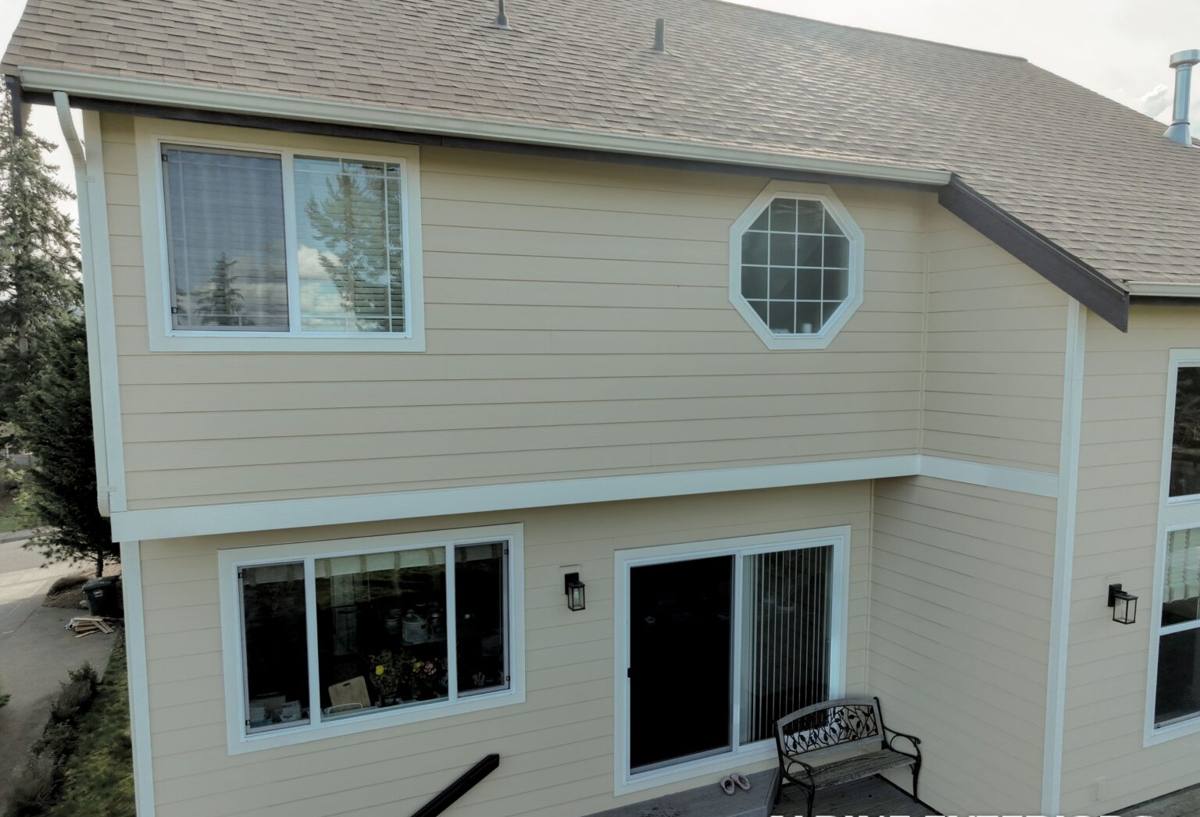
What Birch Bay's Climate Actually Does to Siding
Salt Air and Fastener Corrosion
Homes directly on the water deal with more airborne salt than properties set back even a short distance inland. Salt accelerates corrosion on fasteners, flashing, and any hardware that isn't specifically rated for marine exposure, and it can break down lower-grade finishes faster than a drier climate would. On a siding job, that means fastener selection and finish quality matter more here than they do on a typical inland Whatcom County home.
Wind-Driven Rain
Waterfront exposure brings more wind, and wind-driven rain doesn't behave like a straight-down soaking — it gets forced sideways into laps, seams, and any gap in the siding's drainage plane. That's a heavier and more sustained moisture load than a simple annual rainfall total suggests. Siding and flashing details that perform fine in a sheltered location can fail here specifically because water is being pushed in from the side, not just falling from above.
A Long Moss and Mildew Season
Cool temperatures, shade, and near-constant moisture add up to a moss and mildew season that runs long across this stretch of coastline. Shaded and north-facing walls are usually the first place it shows up, and any siding material that's even slightly porous, or that holds moisture against the substrate, becomes a growth surface over time. A siding job in Birch Bay needs to account for which walls will stay damp longest, not just treat every elevation the same.
Why We Install Only James Hardie
We used to install a wider range of siding brands. We don't anymore. That change came out of what we kept finding on service calls and tear-offs in this kind of marine climate, not from a supplier relationship. On a shoreline exposure like Birch Bay, we'd rather stand fully behind one system than offer a cheaper option that quietly shifts long-term maintenance risk onto the homeowner.
- Non-combustible core: Fiber cement doesn't feed a fire the way wood-based siding can, which matters for safety and can matter for insurance.
- Factory-applied ColorPlus finish: Color is baked on in a controlled factory process rather than brushed on in the field, which holds up longer against fading, chalking, and salt residue than site-applied paint.
- Climate-engineered HZ5 formulation: Hardie products sold for our region are built to the HZ5 specification, engineered for high-moisture, high-humidity climates — which describes waterfront Whatcom County well.
- Dimensional stability: Fiber cement doesn't swell, warp, or cup the way wood-based or engineered wood siding can after repeated wet-dry cycles.
- Strong transferable warranty: Hardie backs the product with a robust warranty, provided the installation follows their published specifications.
We don't install LP SmartSide, vinyl siding, Cemplank, Allura, primed spruce, or cedar. Each of those has a legitimate place in the market, and plenty of homeowners are satisfied with them in less demanding settings. But we've made a professional call that on this stretch of coastline, the moisture behavior and finish durability tradeoffs of those alternatives aren't ones we're willing to put our name behind.
Choosing the Right Hardie Product for a Birch Bay Home
James Hardie makes several siding profiles, and picking the right one is part of doing this job correctly rather than just picking whatever's cheapest or most familiar.
HardiePlank Lap Siding
The most common choice for full-house applications. It gives a traditional horizontal lap look and is available in a range of textures and ColorPlus finishes. For most Birch Bay homes, this is the baseline product for primary wall surfaces.
HardiePanel Vertical Siding and Board and Batten
Used for a more modern vertical look or as an accent on gables, dormers, and entry features. It has more seams and fastener penetrations per square foot than lap siding, which makes correct gapping and flashing even more important in a wind-driven-rain climate like this one.
HardieTrim and HardieShingle
Trim boards finish out corners, window and door surrounds, and fascia, while HardieShingle gives a shingle-style look for homes going for that aesthetic. Both are engineered to the same HZ5 standard as the field siding, so the whole exterior envelope performs consistently rather than mixing a durable field material with a weaker trim package.
What Correct Installation Involves
Fiber cement only performs the way it's designed to when it's installed to Hardie's published specifications. A Hardie product installed loosely will still develop moisture problems in a climate like this one — the material is only as good as the installation behind it. On a Birch Bay project specifically, we pay close attention to:
- Correct fastener type, length, and spacing, using hardware rated for corrosive, salt-air exposure
- Proper clearance from grade, roof lines, and decking so siding isn't sitting close enough to trap moisture
- A properly lapped weather-resistant barrier and drainage plane behind the panels, not just house wrap stapled up and left alone
- Correct panel and joint gapping per Hardie's fastening specifications, especially on vertical and board and batten applications
- Flashing detailed at every window, door, and roof-to-wall transition, built to handle wind-driven rain coming in sideways
- Factory-mitered or properly caulked joints, with caulk used only where Hardie specifies it — not as a substitute for proper flashing elsewhere
None of these details are unique to us — they're the difference between a Hardie installation that holds up through decades of coastal weather and one that starts showing problems at the seams within a few wet seasons, regardless of the material behind them.
Our Process for a Birch Bay Siding Project
We start with an on-site assessment of the existing siding and wall assembly, looking specifically at how the current exterior has handled salt exposure and moisture over time — where moss has taken hold, where fasteners or flashing show corrosion, and which elevations are drying out slowest. From there we put together a clear, written scope covering the product lines, colors, and trim details before any work begins.
During installation, the flashing, drainage, and fastener details covered above are handled as standard practice on every project, not as optional upgrades priced separately. We walk the finished exterior with the homeowner at the end of the job and cover realistic maintenance expectations for this specific location before we consider the project complete.
Comparing Siding Materials in a Marine Climate
| Material | Moisture Behavior | Performance in Salt Air | Typical Longevity in Birch Bay |
|---|---|---|---|
| James Hardie fiber cement | Dimensionally stable, resists swelling and cupping | Factory ColorPlus finish resists fading and chalking; HZ5 formulation built for wet climates | 30+ years with correct installation |
| Vinyl siding | Can warp or distort with heat and settle over time | Low upfront cost, but seams and fasteners are exposure points in high wind | Variable; shorter in direct waterfront exposure |
| LP SmartSide / engineered wood | Wood-based core is moisture-sensitive at cut edges and joints | Requires consistent edge sealing and caulk upkeep | Depends heavily on installation quality and maintenance |
| Cedar / primed wood | Absorbs and releases moisture readily; prone to swelling | Needs regular refinishing to hold up against salt and mildew | Shorter without consistent, disciplined maintenance |
Maintenance Expectations After Installation
A correctly installed Hardie system in Birch Bay still needs some basic upkeep — no exterior material is entirely maintenance-free in this climate — but it's a lighter list than most alternatives:
- An occasional rinse to clear salt residue and general grime, especially on walls facing the water
- A visual check after major windstorms for any lifted flashing or loosened trim
- Keeping shrubs, trees, and sprinklers from holding moisture against the base of the wall
- Prompt moss removal on shaded, north-facing sections before it spreads across a wider area
- Touch-up limited to actual physical damage, not routine repainting
A Quick Checklist Before Hiring Anyone for Siding Work in Birch Bay
- Ask what siding material they install and why, and whether they'll put a written warranty behind it
- Confirm current Washington contractor licensing and active liability insurance
- Ask how they detail flashing at windows, doors, and roof-to-wall transitions for wind-driven rain specifically
- Ask about fastener and hardware corrosion resistance for a direct-waterfront property
- Get a clear, written scope of work, including which Hardie product lines and trim are being used, before signing anything
Why Hiring a Crew That Already Works Birch Bay Matters
A crew that regularly works this stretch of coastline already knows how salt air, wind exposure, and a long moss season behave differently here than they do even a few miles inland in Whatcom County. That familiarity shows up in the specifics — which fastener grade gets used, how much drainage detailing a shaded north wall gets, where extra flashing is worth the added time — and those specifics are what actually determine whether a siding job lasts one or two wet seasons before problems show up, or holds for decades.
If you're weighing siding options for a Birch Bay home, we're happy to walk the exterior with you and give an honest read on what it needs. Reach out below for a free, no-pressure estimate.