 Lynden Siding
 Fiber Cement Siding for Custer's Coastal Exposure
Custer sits in the northwest corner of Whatcom County, close enough to Drayton Harbor, Semiahmoo Bay, and the Strait of Georgia that salt-laden air is a normal part of the weather here, not an occasional coastal quirk. Add the driving, wind-pushed rain that comes through this part of Washington most of the year and a moss season that runs long because the ground rarely dries out, and you have three separate stresses hitting the same exterior wall at the same time. Fiber cement siding, installed correctly, is built to take that combination better than most alternatives. This page is about what that actually means for a Custer home specifically — not fiber cement in the abstract, but what it needs to do here and how we handle the job from estimate to finish.
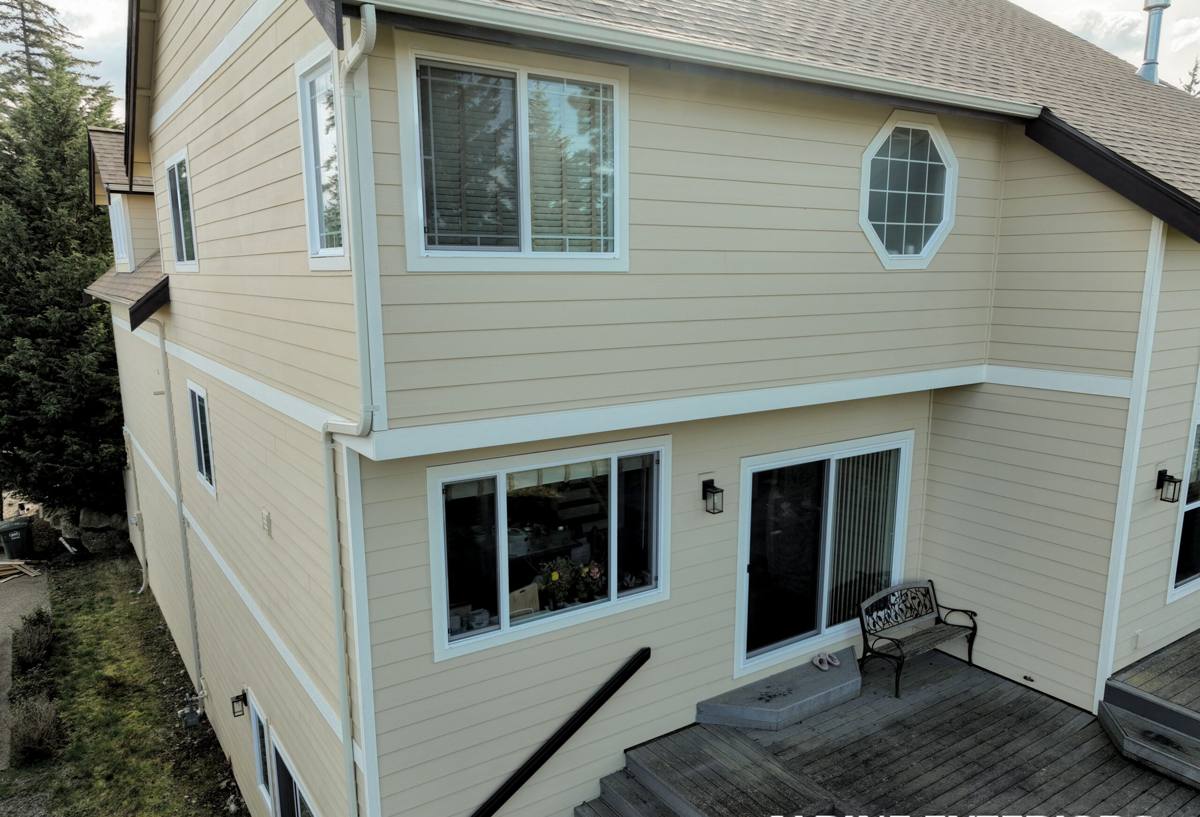
What Custer's Climate Actually Puts Siding Through
None of the three conditions below is unusual on its own. What makes Custer a tougher test than a lot of siding products were designed for is that all three run at once, for most of the year, on most properties.
Salt Air Off the Water
Airborne salt accelerates the breakdown of factory finishes and speeds up corrosion on exposed fasteners and trim hardware. It doesn't take a beachfront lot to feel this — properties a mile or more inland still see it, just more slowly. A finish that's rated fine in a drier, inland market doesn't automatically hold up the same number of years out here.
Wind-Driven Rain
Rain that comes in sideways rather than straight down finds its way into lap joints, behind trim, and into any seam where the water-management detailing is even slightly off. That's a harder test for caulked joints and painted surfaces than annual rainfall totals suggest, because it's about how the water arrives, not just how much of it falls.
A Long Moss and Mildew Season
Mild temperatures combined with steady moisture keep moss and mildew active across most of the calendar on shaded, tree-lined lots — a common setup around Custer. Organic growth on a siding surface holds moisture against the wall behind it, and that trapped moisture is where a lot of long-term siding problems actually start, regardless of what material is on the wall.
Why Fiber Cement Handles This Combination Better
Fiber cement is a cured blend of Portland cement, sand, and cellulose fiber — an inorganic material with no wood-based or petroleum-based core to absorb water, swell, or feed rot and insects. That matters directly for the three stresses above: it doesn't warp or buckle from repeated wetting the way some engineered wood products can if a seal fails, it doesn't expand and contract with temperature the way vinyl does at its seams, and it's non-combustible, which is a real consideration even in a wet coastal county. We install James Hardie specifically, in the HZ5 product line engineered for regions with sustained moisture exposure and freeze-thaw cycling, which fits Whatcom County's winters better than a product built primarily for a hot, dry climate. The factory-applied ColorPlus finish is baked on in a controlled environment before the boards ever reach a job site, and it's backed by its own finish warranty separate from the substrate — a meaningful distinction in an area where salt air and UV both work on a painted surface over time.
What a Correct Installation Involves
Fiber cement's real-world performance depends heavily on installation quality. A rushed or out-of-spec job can undercut a good material, and we treat the details below as non-negotiable on every Custer job, not optional extras.
| Installation Detail | Why It Matters in Custer |
|---|---|
| Manufacturer-specified clearances at grade, roofline, and decks | Keeps splash-back and standing moisture off the board edge during heavy, sustained rain |
| Correct fastener type, spacing, and depth | Prevents cracking at fastener points and keeps the weather-resistive barrier behind the siding intact |
| Proper flashing at windows, doors, and every penetration | Directs wind-driven rain away from seams instead of letting it collect there |
| Factory-cut edges used wherever possible; field cuts sealed to spec | Preserves the factory finish's protection at every cut edge, which is where failures usually start |
| Rain screen or drainage gap behind the siding | Lets any moisture that does get past the surface drain and dry instead of sitting against the sheathing |
Every one of these details is aimed at the same goal: keeping water moving away from the wall assembly instead of pausing anywhere it can sit. On a Custer property with regular wind-driven rain, that drainage path is doing as much work as the siding material itself.
How Our Process Works
The process is the same whether the home is a mile from the water or further inland, but what we're checking for at each step is shaped by what Custer's climate does to a wall over time.
- Walkthrough and assessment — we look at existing siding condition, moisture staining, moss growth patterns, and any past water intrusion around windows, doors, and trim before quoting anything.
- Measurement and material plan — board profile, trim package, and color are specified against the actual elevations of the home, not a generic package.
- Tear-off and sheathing check — old siding comes off and the sheathing underneath gets inspected for hidden rot or soft spots before anything new goes up, since covering a moisture problem is worse than not addressing it at all.
- Weather barrier and drainage plane installation — the water-resistive barrier and rain screen go in per spec, since this layer matters as much as the visible siding in a wet climate.
- Fiber cement installation — boards, panels, and trim installed to manufacturer clearances and fastening specs, with flashing detailed at every window, door, and penetration.
- Final inspection and walkthrough — we go over the finished job with the homeowner before calling it done, including where caulk joints and touch-up paint were used and what maintenance, if any, they'll need to keep an eye on.
Choosing Boards, Trim, and Colors for a Custer Home
James Hardie's lineup gives real options without straying from the ColorPlus finish and HZ5 engineering that make the system work here. HardiePlank lap siding is the most common choice for full re-sides and covers the classic horizontal look most Custer homes already have. HardieShingle gives a cedar-shake appearance without the maintenance a real shake roof or wall demands in this climate, and HardiePanel with matching trim suits board-and-batten or more modern elevations. Trim choices matter more than homeowners often expect: wider trim boards and correctly detailed corners shed water better than thin, decorative trim that looks fine on a sunny day but gives wind-driven rain more edges to work into.
On color, darker ColorPlus tones show less staining from airborne salt and organic growth than very light colors do over time, though the finish itself is engineered to resist fading regardless of shade. We walk through the actual color and profile options during the estimate rather than steering everyone toward one look — a lot of it comes down to the home's age, roofline, and what the homeowner actually wants to see every day.
Cost Factors Specific to This Job
Every fiber cement quote is specific to the home, but a few factors move the number more than others on a Custer project. We won't put a number on the page — every home is different — but this is what we're actually pricing when we walk a property here.
| Factor | How It Affects the Job |
|---|---|
| Existing siding removal and disposal | Full tear-off costs more than a straightforward re-side but lets us check sheathing condition, which matters more in a wet climate |
| Sheathing or framing repair | Hidden moisture damage found during tear-off adds scope, but skipping the repair means the new siding fails early anyway |
| Trim and detail complexity | Homes with more corners, windows, and roofline transitions need more flashing and cut work |
| Board profile and trim selection | Shingle-style and board-and-batten looks generally run higher than standard lap siding |
| Access and site conditions | Tree cover, tight lot lines, and multi-story sections affect crew time and equipment needs |
Maintenance That Actually Matters Here
Fiber cement is genuinely low-maintenance compared to wood or engineered wood siding, but "low-maintenance" isn't "no-maintenance," especially with moss season running long around Custer. A short annual routine keeps a correctly installed job performing the way it's supposed to for decades.
- Rinse siding annually to clear salt residue and organic buildup before it has a chance to establish, especially on shaded or north-facing walls.
- Trim back vegetation and tree limbs that keep sections of the wall shaded and damp longer than the rest of the house.
- Check caulk joints at trim, windows, and doors yearly and have any cracked or missing caulk redone before winter rains set in.
- Watch for moss or mildew establishing in shaded corners and address it early rather than letting it spread across a full elevation.
- Keep gutters clear so overflow doesn't run down the siding face repeatedly during heavy rain events.
Why a Crew That Already Works Custer Matters
A lot of siding problems in this area trace back to installation details that make sense in a drier climate but don't hold up here — clearances that are close enough on paper but too tight once wind-driven rain is added, or flashing sequences that work until the wall actually gets tested by a real winter storm off the water. A crew that installs fiber cement across Whatcom County regularly sees how these details actually play out over years on comparable homes, not just how they're supposed to work on a spec sheet. That's the difference between a siding job that looks right at handoff and one that's still performing correctly after a decade of Custer winters.
If you're weighing a re-side or new fiber cement installation on a Custer property, we're glad to walk the exterior with you, point out anything we're seeing already, and put together a straightforward, no-pressure estimate. There's no obligation attached to having someone look at the house — fill out the form below and we'll get in touch.