 Lynden Siding
 Roofing in Ferndale Isn't the Same as Roofing Inland
Ferndale sits close enough to Bellingham Bay and the Strait of Georgia that salt-laden air is a real factor in how roofing materials age here, not just a talking point. Add in Whatcom County's long stretch of driving rain off the water and the shaded, damp conditions that let moss take hold for much of the year, and you get a roofing environment that's noticeably harder on materials and fasteners than what you'd see on the dry side of the state. A roof replacement done right in Ferndale accounts for all three of these factors from the start, not as an afterthought.
That's the core difference between a generic reroof and one built for this specific area: material selection, fastener choice, ventilation design, and moss prevention all get adjusted for what actually happens to a roof here over 20-30 years, not what happens to a roof in a catalog photo.
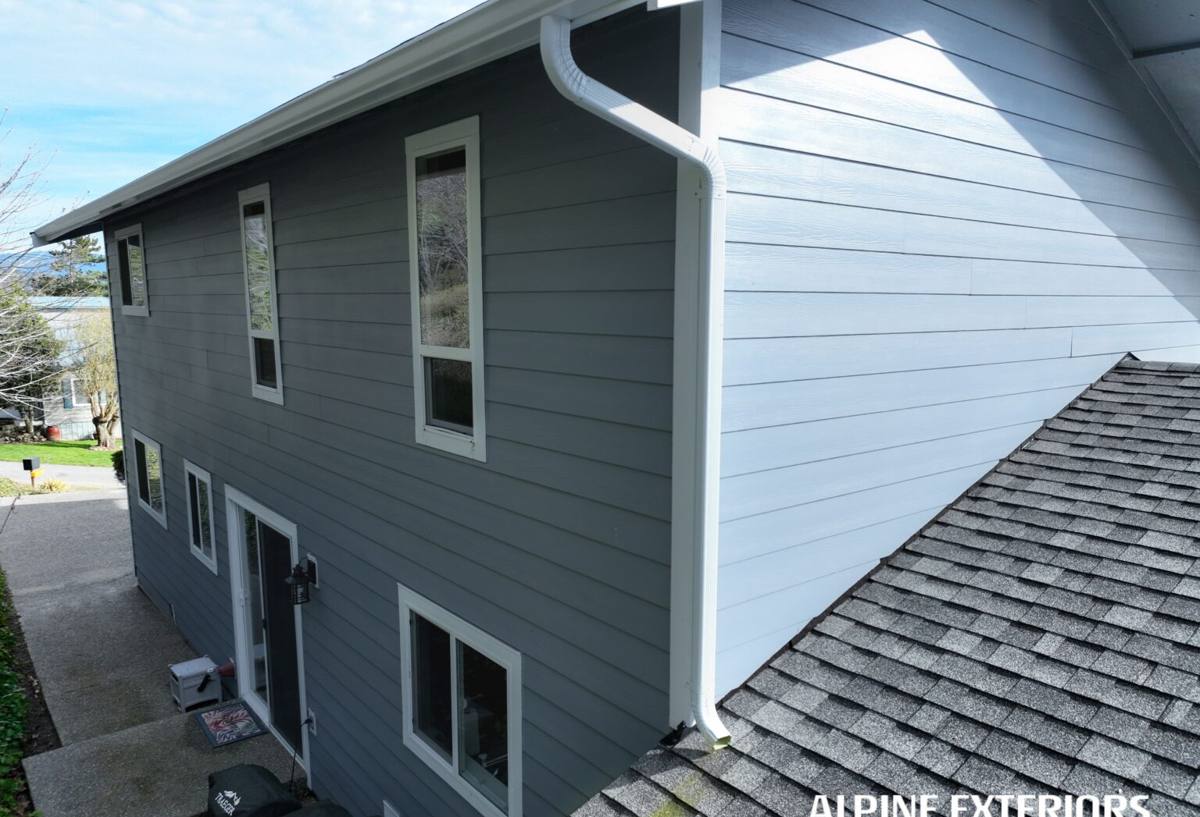
How Salt Air, Rain, and Moss Actually Damage a Roof
Salt Air
Airborne salt accelerates corrosion on any exposed metal — nail heads, flashing, drip edge, and roof vents. Once corrosion starts on a fastener, it loses holding power well before it looks obviously rusted, which is part of why coastal-adjacent homes see premature nail pops and flashing failures that inland homes of the same age don't.
Driving Rain
Wind-driven rain doesn't just fall straight down onto a roof — it gets pushed sideways and upward under shingle edges, around penetrations, and into any gap in the underlayment or flashing. A roof system that only handles vertical rainfall will eventually leak here, even if every shingle is intact, because the failure point is usually the underlayment and flashing detail work, not the shingles themselves.
Moss
Whatcom County's damp, often-shaded conditions give moss and algae a long growing season. Moss doesn't just look bad — its root structure works into shingle granules and seams, holding moisture against the roof surface long after the rest of the roof has dried out. Over years, that constant moisture exposure breaks down shingles faster than sun and weather alone would.
Signs a Ferndale Roof Needs Replacement, Not Another Repair
Not every roof problem calls for a full replacement, and a straightforward repair is always the cheaper answer when it will genuinely hold. But there's a point where patching starts costing more than it saves. Signs it's time to talk replacement instead of another repair:
- Granule loss heavy enough that you can see bare asphalt in multiple spots, not just one worn patch
- Moss or algae staining that keeps coming back within a season or two of cleaning
- Soft spots or sagging in the decking when walked, which usually means water has been getting into the sheathing
- Multiple past repairs in different areas of the same roof, suggesting the whole system is aging out together
- Shingles curling, cupping, or cracking across large sections rather than in one isolated area
- Daylight visible through the attic roof deck, or consistent moisture/staining on attic rafters
What a Correct Roof Replacement Actually Involves
A roof replacement is more than swapping old shingles for new ones. Done properly, it's a full system rebuild, and every layer matters more here because of the rain and salt exposure:
Full Tear-Off and Deck Inspection
We remove existing roofing down to the deck rather than layering over old material. That's the only way to actually see the sheathing underneath — soft, delaminated, or water-stained decking gets replaced before anything new goes down. Roofing over a compromised deck just hides a problem that will resurface as a leak.
Underlayment Built for Wet Climates
In an area with this much driving rain, underlayment isn't a minor line item. A quality synthetic or self-adhered underlayment at eaves, valleys, and penetrations gives the roof a backup barrier when wind-driven rain gets past the primary roofing surface — which it eventually will, on any roof, during a strong enough storm.
Flashing and Fastener Selection
Given the salt air exposure, fastener and flashing material matters. Corrosion-resistant nails and properly formed metal flashing at valleys, chimneys, skylights, and wall intersections hold up longer than standard-grade hardware, and these are the details that actually determine whether a roof leaks at year eight instead of year twenty.
Ventilation
Balanced intake and exhaust ventilation keeps the underside of the roof deck dry and at a stable temperature. Poor ventilation traps moisture in the attic, which contributes to premature deck rot and can actually accelerate moss growth by keeping the roof surface cooler and damper than it should be.
Moss and Algae Resistance
Copper or zinc strips near the ridge, and shingles with built-in algae-resistant granules, both reduce how aggressively moss and algae take hold. Neither one eliminates moss entirely — regular roof cleaning is still part of ownership here — but both meaningfully extend the time between cleanings.
Material Options and Honest Trade-Offs
There's no single "best" roofing material for every Ferndale home — it depends on budget, roof pitch, home style, and how much long-term maintenance you want to take on. Here's how the common options compare for this specific climate:
| Material | Salt Air Performance | Moss Resistance | Maintenance |
|---|---|---|---|
| Architectural asphalt shingle | Good with corrosion-resistant fasteners | Good with algae-resistant granules | Periodic cleaning, moderate |
| Metal (standing seam) | Excellent with proper coating/fastener spec | Very good — sheds moisture fast | Low, but seams need correct install |
| Cedar shake | Requires careful fastener/flashing selection | Needs regular treatment in this climate | Higher — most maintenance-intensive option here |
We're generally cautious about cedar shake specifically in this climate. It can look excellent, but the combination of near-constant dampness and long moss seasons means it needs more consistent upkeep here than in a drier region — that's a maintenance and moisture-behavior trade-off worth knowing up front, not a knock on the material itself. For most Ferndale homes, a well-installed architectural asphalt shingle or a standing seam metal roof gives the best balance of upfront cost, longevity, and reasonable upkeep.
What Drives Cost on a Ferndale Roof Replacement
Every roof is priced individually after an on-site look, but the factors below are what actually move the number up or down:
| Factor | Why It Matters |
|---|---|
| Roof size and pitch | Steeper roofs take longer and require more safety setup |
| Number of layers to tear off | Multiple old layers add labor and disposal cost |
| Deck condition | Rotted or soft sheathing needs replacement before roofing goes on |
| Material choice | Asphalt, metal, and cedar carry different material and labor costs |
| Ventilation upgrades | Adding or correcting intake/exhaust vents adds scope but improves longevity |
| Flashing complexity | Roofs with many valleys, chimneys, or skylights need more detail work |
| Access and site conditions | Steep lots or limited equipment access affect labor time |
We'll walk through which of these apply to your roof specifically during the estimate, so you know exactly what's driving your price rather than getting a number with no explanation behind it.
Our Process, Start to Finish
- On-site inspection — we get on the roof, check the deck where accessible, and look at ventilation, flashing, and any moss or moisture damage before quoting anything.
- Written estimate — a clear breakdown of material, labor, and any deck repair allowance, with the trade-offs of your material options explained plainly.
- Scheduling around weather — we plan tear-off days around dry weather windows, since an open roof deck in Whatcom County rain is exactly what you don't want.
- Tear-off and deck repair — full removal of old roofing, deck inspection, and replacement of any compromised sheathing.
- Underlayment, flashing, and roofing installation — installed to spec with attention to the details that matter most in wet, salt-exposed conditions.
- Ventilation check — confirming intake and exhaust are balanced before we close the job out.
- Site cleanup — magnetic sweep for nails and full debris removal before we call it done.
- Final walkthrough — we go over the finished roof with you and answer any questions before wrapping up.
Why It Matters That Your Crew Already Works Ferndale
A roofing crew that regularly works in Ferndale and the surrounding Lynden area already knows how local weather patterns affect scheduling, which fastener and flashing specs hold up to the salt air here, and how aggressively moss takes hold on north-facing and shaded roof sections in this part of Whatcom County. That local pattern recognition shows up in fewer callbacks and a roof that's built for the conditions it will actually face, rather than a generic install that happens to be located here.
It also matters for permitting and scheduling — a crew familiar with the area knows how to plan tear-off timing around the region's rain patterns so your home isn't left exposed longer than necessary.
After Your Roof Is Replaced: A Simple Maintenance Checklist
A new roof still needs basic upkeep to hit its full lifespan in this climate. A short list worth keeping around:
- Clear gutters and downspouts at least twice a year so water isn't backing up under the roof edge
- Keep overhanging branches trimmed back to reduce shade, debris, and moss growth
- Have moss or algae growth addressed early rather than left to spread across a full season
- Check attic ventilation isn't blocked by insulation or storage after any attic work
- Schedule a visual roof check every year or two, especially after major storms
If you're weighing a roof replacement in Ferndale or want a straight answer on whether a repair will actually hold, we're glad to take a look. Use the form below to request a free, no-pressure estimate — we'll walk the roof, explain what we find, and give you options rather than a one-size-fits-all pitch.