 Lynden Siding
 What Ferndale's Coastal Air Does to a Deck
Ferndale sits close enough to Bellingham Bay and the Strait of Georgia that homes here deal with a version of Whatcom County weather that's a step harsher than what you'd see further inland toward Lynden. Salt-laden air moves through on the wind, driving rain comes in sideways off the water during fall and winter storms, and the shoulder seasons stay damp long enough that moss and algae get a real foothold on any horizontal wood surface. A deck built to a generic spec sheet — the kind that works fine in a drier climate — tends to show its age here faster than homeowners expect: corroded fasteners, soft ledger boards, slick green film on the walking surface by the second or third winter.
None of that means a deck can't hold up in Ferndale. It means the build has to account for the environment from the ground up — footings, framing, fastener spec, and decking material all chosen with this specific climate in mind, not just whatever's cheapest or fastest to install.
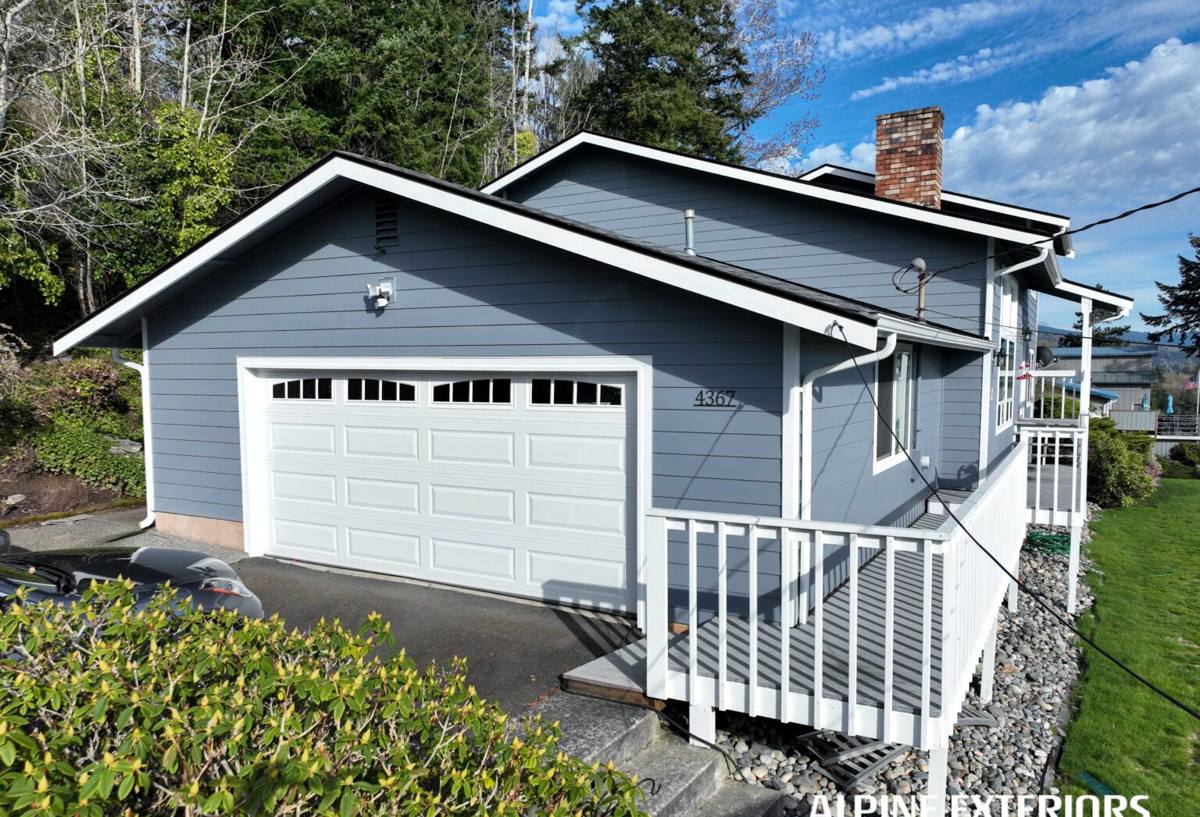
Signs Your Deck Needs Replacing, Not Just Repairing
Plenty of decks can be patched — a board here, a post there. But once the damage reaches certain points, repair stops being cost-effective and starts being a way to delay a problem that's only getting more expensive underneath the surface.
- Soft or spongy spots in the decking, especially near the house or under planters where water sits
- Rust streaks running down from screws, joist hangers, or railing posts
- A ledger board (where the deck attaches to the house) that's dark, swollen, or separating from the siding
- Posts or footings that have shifted, leaving the deck slightly out of level
- Persistent moss or black staining that comes back within weeks of cleaning
- Railings that flex or feel loose when you lean on them
- A deck older than 15-20 years that's never had the substructure inspected
If you're only seeing one or two of these on a deck that's otherwise sound, a repair may still make sense. Multiple items on this list, especially anything involving the ledger board or footings, usually means the structure itself has been compromised and a full replacement is the more honest answer.
What a Correct Deck Replacement Actually Involves
Footings and Framing
Everything above ground is only as good as what's below it. Footings need to be sized and set to the depth your local code requires, and posts need to bear on solid, undisturbed soil — not just dropped into a hole and backfilled. Joist spacing and beam sizing depend on the decking material you choose and the span you're covering, which is one reason a generic "deck kit" approach often under-builds for the actual load and spacing composite or heavier boards require.
Ledger Board and Flashing
This is the single most common failure point on decks in wet coastal climates, and it's also the part that's easiest to get wrong because it's mostly hidden once the deck is finished. The ledger board — the framing member bolted to your house — needs a properly installed flashing detail: self-adhering waterproof membrane behind and over the ledger, correct fastener spacing into solid framing (not just siding), and a slight gap or flashing cap that keeps water from wicking behind the board. Done wrong, this is where driving rain finds its way into the wall assembly and causes rot you won't see until it's extensive.
Fasteners and Hardware
In a salt-air environment, standard fasteners corrode faster than they would twenty miles inland. Joist hangers, structural screws, and post hardware should be hot-dip galvanized or stainless steel rated for exterior and, where budget allows, coastal exposure — not the mill-galvanized hardware that's fine in a dry inland climate but starts rusting within a couple seasons here. This is a small percentage of total project cost and one of the most consequential decisions in the whole build.
Choosing a Decking Material for This Climate
There's no single "best" decking material — the right choice depends on how much upkeep you want to do, your budget, and how much shade and moisture the deck's location deals with. Here's how the common options actually perform in Ferndale's climate specifically.
| Material | How it handles moss and moisture | Maintenance | Typical lifespan here |
|---|---|---|---|
| Pressure-treated wood | Absorbs moisture; needs gaps and airflow to dry between rain events or moss takes hold | Annual cleaning, re-stain/seal every 2-3 years | 15-20 years with upkeep |
| Cedar | Naturally rot-resistant but still needs to dry out; shaded, damp spots grow moss faster | Cleaning and sealing every 1-2 years to hold color and resist moisture | 15-25 years with consistent maintenance |
| Capped composite | Non-absorbent surface resists moss staining better; still needs periodic washing in shaded areas | Occasional washing, no staining or sealing | 25-30+ years, manufacturer-warrantied |
| PVC decking | Fully non-absorbent; best resistance to moss and moisture in shaded, low-airflow spots | Lowest maintenance of the group | 25-30+ years, manufacturer-warrantied |
For a deck that gets a lot of shade from surrounding trees or the house itself — common on Ferndale lots close to the water or tucked among mature trees — a capped composite or PVC product earns its higher upfront cost by not needing the yearly cleaning and sealing wood requires to stay ahead of moss. For a deck in full sun with good airflow, well-maintained cedar or pressure-treated wood can still be a perfectly reasonable, lower-cost choice. We'll walk your specific site with you rather than push one material across the board.
Our Deck Replacement Process
- On-site assessment. We look at the existing deck, ledger connection, footings, and surrounding drainage, and we're honest about what's repairable versus what needs full replacement.
- Design and material selection. We go over decking, railing, and fastener options against your budget and how much maintenance you actually want to do long-term.
- Permitting. Deck replacements typically require a permit through Whatcom County or the City of Ferndale depending on your property; we handle that paperwork so it doesn't fall on you.
- Demolition and disposal. The old deck comes out, including footings and ledger flashing if they're compromised, and we haul it away.
- Framing and flashing. New footings, framing, and a properly detailed ledger flashing assembly go in first — this is the part that determines how the deck performs in ten years, not just how it looks on day one.
- Decking and railing installation. Boards and railings go in to code, with attention to board spacing for drainage and airflow underneath.
- Final walkthrough. We go over the finished deck with you, including what maintenance (if any) your chosen material needs going forward.
Why a Lynden Crew That Already Works Ferndale Matters
Whatcom County covers a lot of ground, and the conditions a deck faces change noticeably between Lynden's more inland setting and Ferndale's closer proximity to the water. A crew that regularly works both knows to spec coastal-rated hardware and flashing details for Ferndale jobs without being told, understands which local yards stock the materials that hold up here, and isn't learning the permitting process for the county or the city on your project. That familiarity shows up less in what the deck looks like when it's finished and more in how it's still performing five, ten, and fifteen years down the road.
It also means someone local who knows the area is easy to reach if a question comes up after the job is done — not a call center or a crew that drove in from out of the region for the one job and won't be back.
What Deck Replacement Costs Depend On
Every deck project is different, but the same handful of factors drive most of the cost variation we see. Broad ranges only — your estimate will reflect your actual site and choices.
| Factor | Why it matters |
|---|---|
| Size and footprint | More square footage means more framing, footings, and decking material |
| Decking material | Pressure-treated wood costs less upfront; composite and PVC cost more but need far less long-term maintenance |
| Height and stairs | Taller decks need more substantial railings and support; stairs add framing and labor |
| Ledger and flashing condition | If the wall assembly behind the old ledger has water damage, that repair adds scope beyond the deck itself |
| Railing style | Basic wood or metal balusters cost less than cable rail or glass panel systems |
| Site access | A deck that's hard to reach with equipment or materials takes more labor to build |
Most residential deck replacements in this region run from the mid four figures for a smaller, simpler wood deck up to the high five figures for a large composite deck with stairs and upgraded railing. We'll give you a firm number based on your actual project, not a rough guess pulled from a national average.
Keeping Your New Deck in Shape
Whatever material you choose, a little regular attention goes a long way in this climate — especially through the wetter months when moss and algae have the most opportunity to take hold.
- Sweep debris off the deck regularly, especially fallen leaves and needles that trap moisture against the surface
- Rinse or wash the deck at least once a year to remove early moss and algae growth before it stains
- Keep gutters and downspouts clear so runoff isn't landing directly on or under the deck
- Check the gap where the deck meets the house periodically for signs of water intrusion
- For wood decks, re-seal or stain on the schedule your product calls for — don't wait until it's visibly gray and dry
- Trim back overhanging branches to improve airflow and sun exposure on shaded sections
- Check railing posts and fasteners annually for looseness or corrosion
If your deck in Ferndale is showing its age or you're planning ahead for one that'll actually hold up to the salt air and driving rain this area sees every winter, we're happy to come take a look. Fill out the form below for a free, no-pressure estimate — we'll tell you honestly what your deck needs, whether that's a full replacement or something short of it.