 Lynden Siding
 Everson is a small farming community just northeast of Lynden, in the flatter, wetter part of Whatcom County. Homes out here take a specific, unglamorous kind of beating: marine air moving in off the Sound that still carries a faint edge of salt this far inland, driving rain that comes in sideways rather than straight down, and a moss season that can run most of the year on a shaded north or east wall. None of that is dramatic by itself. It just never really stops, and siding that isn't holding up shows it first at the seams, the corners, and the bottom few feet closest to the ground.
The Climate Problem Behind Every Repair Call in Everson
Most of the siding repairs we're called out for in this area trace back to the same handful of causes, repeated in different combinations. Salt-bearing air accelerates corrosion on fasteners and metal trim over time, which is part of why a repair that looks cosmetic on the surface sometimes turns out to be a loose nail or a rusted flashing piece underneath. Wind-driven rain finds its way into anything less than a tight, correctly lapped joint, and once water gets behind a piece of siding it doesn't dry out quickly in this climate — the same humidity that keeps the farmland green keeps damp wall cavities damp. And moss doesn't just sit on top of siding; it holds moisture against the surface for weeks after a storm has passed, which is exactly the kind of prolonged dampness that breaks down caulk, paint, and in some cases the substrate underneath.
A repair that ignores any one of these factors tends to fail again within a season or two. A repair that accounts for all three tends to hold.
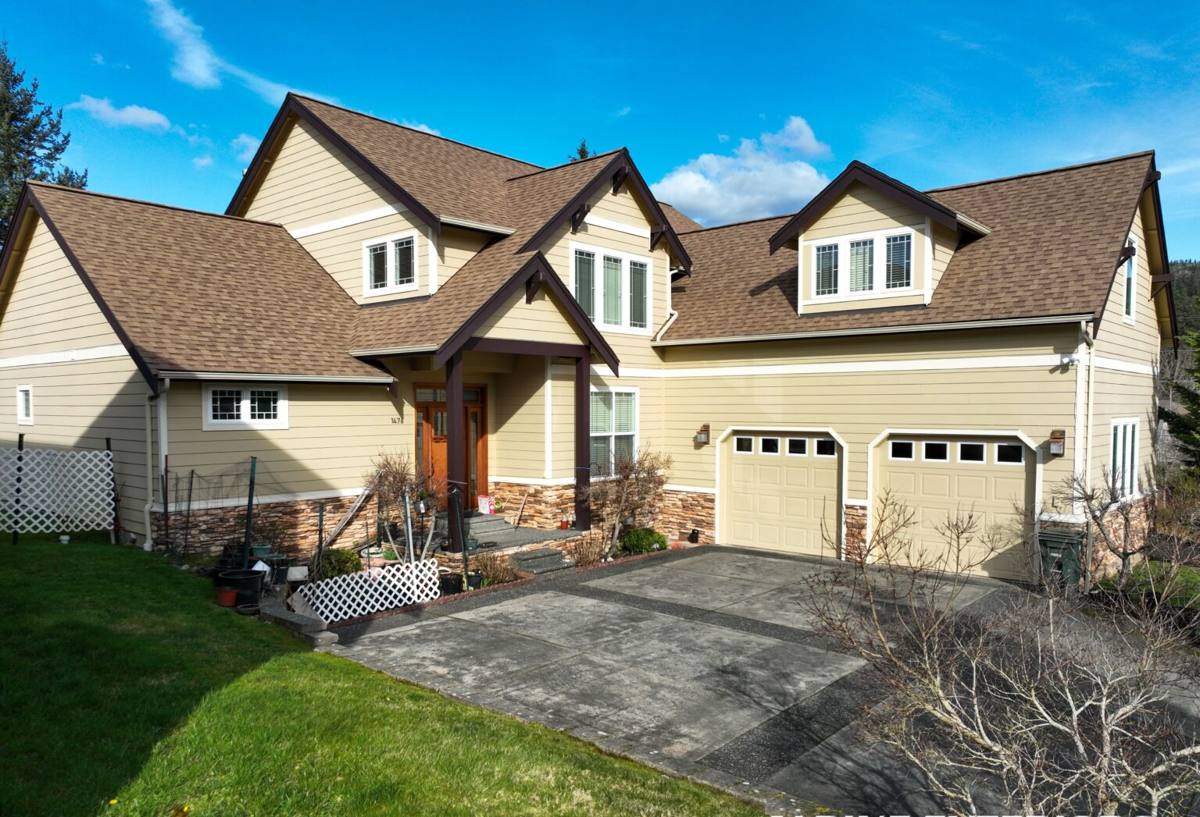
How This Shows Up on Everson Homes
Homeowners usually call us about one visible problem, but a proper inspection almost always turns up a short list of related issues nearby. Common signs include:
- Peeling or bubbling paint, especially on north- and west-facing walls that stay shaded and damp longest
- Soft or slightly spongy siding near the bottom two or three courses, close to grade
- Dark staining below window sills or under trim, which usually points to a caulk or flashing failure above
- Moss or dark algae creeping upward from the ground line or spreading across an entire shaded elevation
- Visible gaps at butt joints, corner boards, or trim where caulk has cracked, shrunk, or pulled away
- Nail heads popping slightly proud of the surface, or fastener rust bleeding through paint
None of these are emergencies on their own. But left alone through another wet season, most of them get worse rather than better.
Why a Patch Isn't Always a Repair
There's a difference between covering a problem and fixing it, and it matters more with siding than with almost any other part of a house because the damage is usually driven by moisture that keeps moving even after the visible spot is addressed.
Fixing the Cause, Not Just the Symptom
If a section of siding has gone soft or discolored, the honest first question isn't "how do we patch this," it's "where is the water actually getting in." Sometimes it's a caulk joint that opened up. Sometimes it's a flashing detail above a window or at a roofline transition that was never quite right. Sometimes it's simply moss holding water against a wall long enough for it to work its way behind a lap joint. A repair that swaps out the damaged board but doesn't correct the entry point is a repair that will need to happen again.
Matching Color and Texture
This is where the type of siding on the house matters a lot. James Hardie's ColorPlus finish is baked on at the factory and formulated to weather evenly, which means a replacement board from the same product line, in the same color, tends to blend in cleanly even years later. Field-painted siding, older vinyl that's faded unevenly, or discontinued colors on hardboard products are a different story — an exact match often isn't possible, and the repaired section can end up more visible than the damage it replaced. We'll always tell you honestly which situation you're in before we start.
What a Correct Fiber Cement Repair Involves
When we repair or replace a section of fiber cement siding, the work generally follows the same sequence regardless of how small the visible damage looks:
- Remove the damaged board and enough of the surrounding material to see what's happening behind it — house wrap condition, fastener pattern, any sheathing discoloration
- Identify and correct the actual water entry point, whether that's a caulk joint, a flashing detail, or a gap that shouldn't be there
- Replace with matching-profile fiber cement board, properly primed on any cut edges before installation
- Reinstall with correct fastener spacing and type, accounting for the corrosion resistance this climate calls for
- Seal and finish with matched caulk and, where needed, coordinate touch-up so the repair reads as part of the wall rather than a patch on it
Skipping any one of these steps is how a repair turns into a callback a year later.
Our Process for an Everson Repair Call
We keep the process straightforward because most homeowners just want a clear answer and a fair price, not a sales pitch:
- Inspection and diagnosis. We look at the damage you called about, plus the surrounding area and any elevation with similar exposure, since problems in this climate rarely show up in only one spot.
- A clear, written scope. We tell you plainly whether this is a patch, a board replacement, or something larger, and why — not the vaguest fix that gets us out the door fastest.
- Scheduling around the weather. Repair work needs a reasonably dry window to do properly, so we plan around it rather than rushing a fix into wet conditions.
- The repair itself. Matching materials, correct fastening, and attention to the underlying cause, not just the visible symptom.
- A look around before we leave. If we spot an early-stage version of the same problem starting nearby, we'll point it out so you can decide whether to address it now or keep an eye on it.
Repair or Replace? A Quick Reference
| What You're Seeing | What It Usually Means | Typical Fix |
|---|---|---|
| Isolated crack or hole from impact | Localized damage; sheathing usually undamaged | Cut out and replace the single board |
| Soft or spongy siding near the ground | Trapped moisture, possible sheathing damage | Remove a larger section, inspect the wrap and sheathing, replace as needed |
| Heavy moss on one shaded wall only | Persistent dampness; mostly cosmetic so far | Clean and treat, then check nearby caulk and laps closely |
| Gaps opening at nearly every seam | Original caulk or installation reaching end of life | Full-elevation recaulk and refastening, or plan for replacement |
| Old siding with no available color match | Discontinued color or mismatched material | Replace that elevation with Hardie ColorPlus for a clean, lasting match |
Why It's Worth Hiring a Crew That Already Works in Everson and Lynden
Siding damage in this part of Whatcom County follows recognizable patterns once you've seen enough of it — which walls take the worst of the driving rain, which shaded corners grow moss fastest, which older siding types age well here and which don't. A crew that already works this area day to day isn't guessing at any of that. That familiarity shows up in small but real ways: knowing to check a specific flashing detail before assuming a caulk failure is the whole story, being upfront when a repair is genuinely minor instead of upselling a full replacement, and being close enough to respond without a long wait when storm damage needs a quick assessment.
Keeping Repaired Siding From Needing Repair Again
A good repair buys you years, not months — but a little upkeep afterward makes a real difference in a climate like this one:
- Keep gutters and downspouts clear so water isn't overflowing onto the siding below
- Trim back vegetation and tree cover so shaded walls get some airflow and sun exposure
- Rinse moss- or algae-prone walls once a year before growth gets established
- Recaulk small gaps as soon as you notice them, rather than waiting for a full season of rain to work them open
- Check flashing and caulk lines after any major windstorm
- Keep sprinklers and irrigation from spraying directly onto siding
- Watch for soil, mulch, or debris building up against the bottom edge of the siding, and keep it clear
If you're seeing any of the signs above on a home in Everson or Lynden, it's worth getting a straight answer about what's actually going on before it turns into a bigger job. We're happy to take a look and give you a free, no-pressure estimate — using the form below is the easiest way to get started.