 Lynden Siding
 Why Everson Roofs Take a Different Kind of Beating
Everson sits in a part of Whatcom County where the roof over your head works harder than it does in most of the country. Moisture-laden air moves in off the water and settles into the valleys here, carrying a faint salt content that speeds up corrosion on exposed metal — nail heads, flashing, gutter fasteners, and vent caps all take the hit over time. Layer on driving rain that comes in sideways during winter storms, and you've got water finding its way into gaps that would stay dry in a calmer climate. Then there's the moss. Whatcom County's moss season isn't a few weeks in spring — it's most of the year, thanks to mild temperatures and shade from mature trees that never fully dry out a north-facing roof plane.
None of this means a roof here is doomed. It means repairs have to account for what's actually causing the damage, not just patch the symptom. A shingle that's lifting because of wind is a different fix than a shingle that's rotted from sitting under wet moss for two winters. Getting that diagnosis right is most of the job.
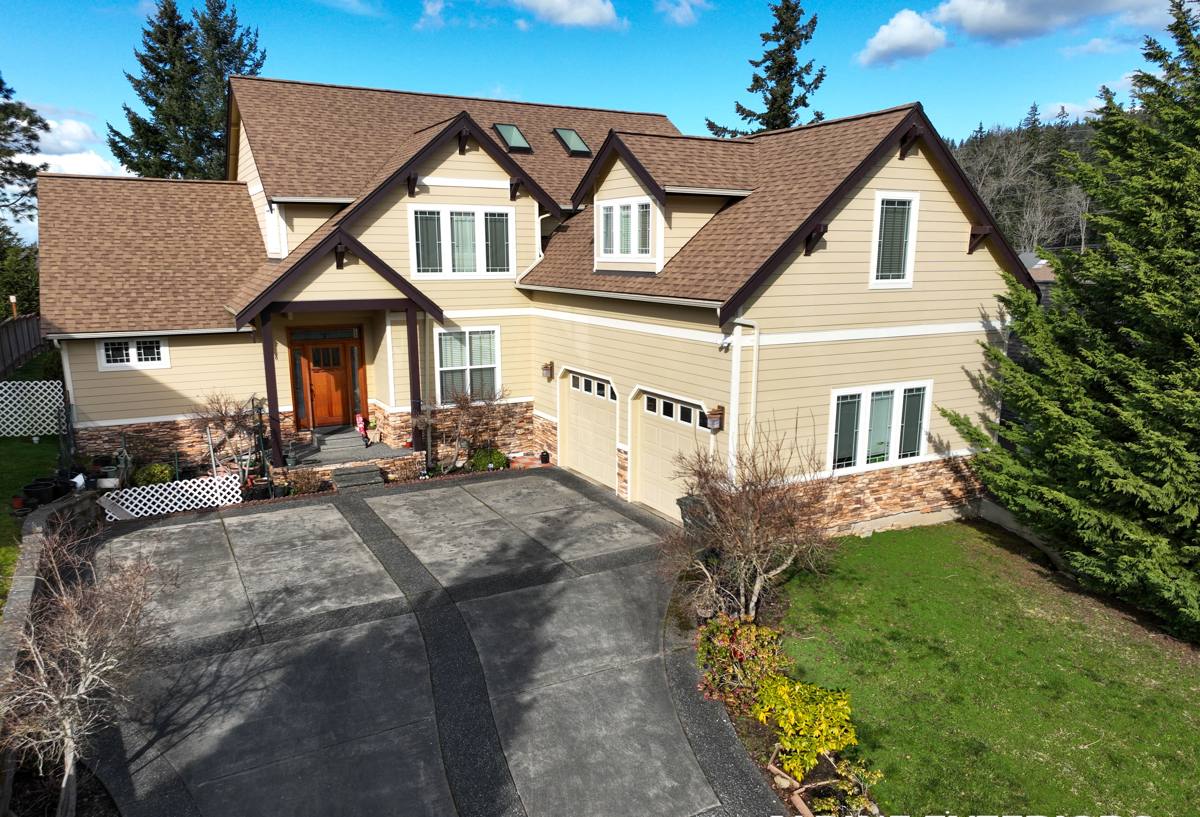
Signs an Everson Roof Needs Repair — Not a Full Replacement
Most roofs don't fail all at once. They fail in sections, usually starting at the most exposed or shaded part of the roof. Catching problems at the repair stage, before they spread, is the difference between a few hundred dollars and a full tear-off.
- Granule loss showing up in gutters or at downspout outlets, especially after a heavy rain
- Shingles that are curling, cracking, or lifting at the edges, particularly on south and west-facing slopes
- Dark streaking or thick moss growth concentrated on shaded sections of the roof
- Soft or discolored spots on interior ceilings, especially near chimneys, skylights, or where two roof planes meet
- Flashing that's visibly rusted, pulled away from the surface it seals, or caulked over instead of properly installed
- Gutters that overflow during normal rain, which points to debris or moss holding water against the roof edge
- Daylight visible through the attic sheathing, or damp insulation near the roof deck
If you're seeing one or two of these and the roof deck underneath is still sound, a targeted repair is usually the right call. If moss and moisture have been sitting for years, the damage can go deeper than the surface — that's something we'll tell you honestly during the inspection rather than after the fact.
What a Correct Roof Repair Actually Involves
Matching materials instead of just covering a hole
A repair that just nails a new shingle over a damaged area without addressing the underlayment or deck underneath usually fails again within a season or two. Doing it right means pulling back the surrounding shingles far enough to inspect the underlayment and decking, replacing anything that's soft or delaminated, and using materials that match the existing roof's weight, profile, and color as closely as possible. A repair that stands out like a patch isn't just a cosmetic issue — mismatched shingles can shed water differently than the surrounding field, which creates a new weak point.
Flashing and transitions come first
The majority of leaks we find in this area don't start in the open field of the roof — they start at a transition: a chimney, a skylight curb, a sidewall, a valley, or a vent pipe boot. These are the spots where two materials meet, and where driving rain finds its way in if the flashing is undersized, corroded, or was never properly stepped and counter-flashed to begin with. Any repair we do treats these transitions as the priority, not an afterthought.
Ventilation matters more than people expect
A roof that's failing prematurely in one section, while the rest looks fine, sometimes points to poor attic ventilation rather than a material defect. Trapped moisture from inadequate soffit or ridge venting condenses on the underside of the deck and rots it from below — which shows up on the surface as an unexplained soft spot. We check ventilation as part of any repair inspection, because fixing the shingle without fixing the airflow behind it just delays the same problem.
Common Roof Types Around Everson and How We Approach Repairs
| Roof Type | Typical Repair Needs Here | Moss & Moisture Risk |
|---|---|---|
| Asphalt composition shingle | Granule loss, wind-lifted tabs, nail pop-through, flashing corrosion | Moderate — depends heavily on shade and slope pitch |
| Architectural / laminate shingle | Edge lifting at exposed corners, sealant strip failure over time | Moderate to low on steeper pitches, higher on shaded low-slope sections |
| Standing seam or exposed-fastener metal | Fastener backing out, sealant washer failure, seam separation | Low, but salt-air corrosion on fasteners and flashing is the main concern |
| Cedar shake | Split or cupped shakes, moss lifting individual courses, exposed nails | High — cedar retains moisture longer and is the most moss-prone material we see |
Whatever is on your roof now, the repair approach should match how that specific material fails — a technique that works on architectural shingles can damage cedar shakes, and vice versa.
Our Roof Repair Process
- Inspection and honest diagnosis. We get on the roof (not just a look from the ground), check the attic side when accessible, and identify the actual source of the problem — not just where the water showed up inside.
- Written scope and estimate. You get a clear explanation of what's damaged, what we're proposing to fix, and why — including whether a repair is genuinely the right call or if you're better served by replacement.
- Repair work. Damaged materials come off, the deck and underlayment underneath get inspected and replaced as needed, and new materials go in matched to your existing roof.
- Flashing and sealant check. Every transition point touched during the repair gets verified, not just caulked and left.
- Cleanup and walkthrough. Debris and old materials are hauled off, and we walk you through what was done and what to keep an eye on going forward.
Moss, Algae, and Debris: The Ongoing Maintenance Reality
Even a well-repaired roof in this part of Whatcom County will grow moss again if nothing changes about the conditions causing it — shade, moisture, and organic debris sitting on the surface. A one-time repair addresses the current damage; keeping moss from causing the next round of damage takes some ongoing attention.
- Keep gutters and valleys clear of needles and leaf litter, especially through fall
- Have moss physically removed rather than left to be power-washed aggressively, which can strip granules and shorten shingle life
- Trim back overhanging branches where practical to reduce shade and let sections dry out between storms
- Check zinc or copper strips near the ridge if your roof has them — they help slow regrowth but don't eliminate the need for periodic cleaning
We're upfront that moss control is maintenance, not a one-time fix. Anyone who tells you otherwise is setting you up for disappointment.
Repair or Replace? Weighing the Cost Factors
This is the question we get asked most, and the honest answer depends on a handful of factors rather than a single rule of thumb.
| Factor | Leans Toward Repair | Leans Toward Replacement |
|---|---|---|
| Age of roof | Under 15 years, or well-maintained older roof | Near or past the material's expected service life |
| Extent of damage | Isolated to one section or a few penetrations | Multiple areas failing independently across the roof |
| Deck condition | Sheathing is sound where inspected | Soft, delaminated, or water-stained decking in several areas |
| History of leaks | First occurrence, clear single cause | Recurring leaks in different spots over recent years |
| Cost over time | Repair cost is a small fraction of full replacement | Repair costs are stacking up close to replacement value |
We won't push a full replacement when a repair will genuinely hold — and we won't recommend a repair that's just delaying a replacement you'll need in a year anyway. You'll get our honest read either way.
Why Hire a Crew That Already Works in Everson
Roofing crews who work regularly in this part of Whatcom County know what to expect before they get on the roof — where moss tends to build up fastest, how much the driving rain in winter storms tests flashing details, and which materials hold up to the salt air moving through the valley versus which ones corrode faster than their warranty suggests. That familiarity shows up in fewer surprises during the job and repairs that are built for the conditions your roof actually faces, not generic conditions from a manufacturer's spec sheet written for a different climate. It also means a company that can respond quickly if a repair needs a follow-up visit, rather than one that's an hour-plus away with a full schedule elsewhere.
Questions to Ask Before You Hire a Roof Repair Contractor
- Are you licensed and insured to work in Washington, and can you provide proof?
- Will you inspect the attic side, not just the exterior, before diagnosing the problem?
- Is the estimate in writing, with the scope of work spelled out — not just a total price?
- Do you match materials to what's already on the roof, or install whatever is on the truck?
- What's your plan if you find additional damage once the old materials come off?
- Do you offer a workmanship warranty separate from the manufacturer's material warranty?
A contractor who answers these plainly, without dodging or padding the pitch, is usually one worth hiring.
If you're dealing with a leak, missing shingles, or a roof that's been carrying moss longer than it should, we're happy to take a look and give you a straight answer — no pressure, no upsell. Fill out the form below for a free estimate on your Everson roof repair.