 Lynden Siding
 Deck Building for Everson Homes
Everson sits just up the road from Lynden in Whatcom County, and homes out here deal with the same wet-weather realities as the rest of the region: long stretches of driving rain, marine-influenced humidity that never really dries out the air, and a moss season that can stretch from fall clear into spring. A deck built without those conditions in mind doesn't fail because the lumber was bad — it fails because of how it was framed, flashed, and fastened. We build decks for this specific climate, not a generic one, and that shows up in the details most contractors skip.
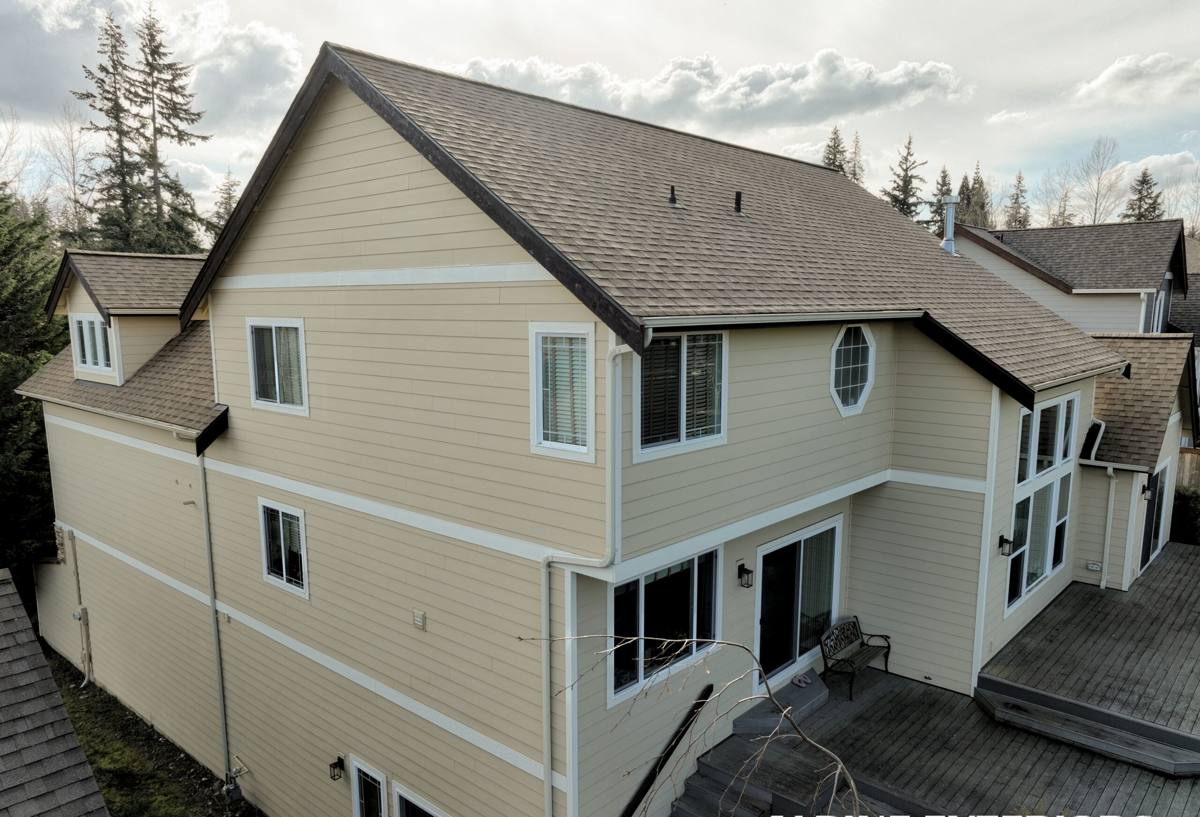
What This Climate Actually Does to a Deck
Before talking about materials or design, it helps to understand what a deck in this area is actually up against year after year.
Driving rain finds every gap
Wind-driven rain doesn't just fall straight down — it gets pushed sideways into ledger connections, stair stringers, and any spot where two pieces of framing meet. Over enough winters, water that isn't properly shed or flashed will work its way into end grain and fastener holes, which is where rot actually starts.
Moss and algae aren't cosmetic problems
A deck surface that stays damp and shaded builds up moss and algae film faster than most homeowners expect, especially on the north side of a house or under tree cover. Beyond looking bad, that film holds moisture against the decking and turns boards slick and dangerous underfoot — a real concern on stairs and ramps.
Freeze-thaw cycles stress footings
Whatcom County doesn't get deep, sustained freezes like the Midwest, but it does get enough freeze-thaw swings each winter to move footings that weren't set correctly. A footing poured too shallow or in disturbed soil can shift slightly year over year, and that movement eventually shows up as a deck that feels less solid or a railing that's gone slightly out of plumb.
Getting the Foundation Right
The framing and footings are the part of a deck nobody sees once it's finished, which is exactly why it's the part worth getting right the first time. In this soil and climate, that means:
- Footings set below the local frost line, in undisturbed soil — not backfill from the original excavation
- Post bases that hold the post above the concrete, so wood never sits in standing water
- Proper drainage grading under and around the deck so water has somewhere to go besides pooling at the footings
- Framing sized and spaced to the actual load the deck will carry, including hot tubs or heavy furniture if that's part of the plan
Whatcom County and the City of Lynden both require permits for most attached decks, and Everson properties fall under the county's building requirements. Skipping that step might save a little time up front, but it also means no inspection ever confirmed the footings and ledger connection were done correctly — and that's exactly the part of the deck you can't check once the boards are down.
Choosing Decking Material for This Climate
There's no single "best" decking material — there's a best material for your budget, your maintenance appetite, and how much sun or shade the deck actually gets. Here's how the common options hold up in a wet, moss-prone climate like Everson's.
| Material | Moisture behavior | Moss/algae resistance | Maintenance | Typical lifespan |
|---|---|---|---|---|
| Pressure-treated lumber | Resists rot when properly sealed; end cuts need field treatment | Moderate — needs regular cleaning | Reseal every 1–2 years | 15–20+ years with upkeep |
| Cedar | Naturally rot-resistant, but softer and more prone to surface checking in constant wet/dry cycles | Moderate — greys and needs cleaning without finish | Reseal or refinish every 1–2 years | 15–20 years with upkeep |
| Composite decking | Doesn't absorb water or rot | Better resistance, but still needs periodic cleaning | Occasional washing, no sealing/staining | 25–30+ years, warranty-backed |
Composite has become popular in this region specifically because it removes the sealing cycle that wood demands — in a climate where the deck barely gets a chance to fully dry out between rain events, that's a real advantage, not just a marketing point. That said, real wood still has its place for homeowners who prefer the look and are willing to keep up with maintenance. We'll talk through the honest trade-offs for your specific site — sun exposure, tree cover, and how much upkeep you actually want to do — rather than pushing one product for every job.
Fasteners, Flashing, and the Details That Decide How Long a Deck Lasts
Most deck failures we get called out to inspect trace back to two things: the ledger board connection and the fasteners used throughout the build.
Ledger flashing
Where a deck attaches to the house, the ledger board needs proper flashing that directs water out and away from the house's wall assembly — not just caulk and good intentions. This is the single most common point of hidden rot on attached decks in wet climates, because the damage happens behind the ledger where nobody looks until there's a problem.
Corrosion-resistant fasteners
In a climate with this much sustained moisture, standard fasteners corrode faster than they should, which weakens connections over time and can stain decking around every screw head. We use hot-dip galvanized or stainless hardware rated for ground contact and coastal-influenced moisture, matched to whatever decking material is being installed.
Board spacing and airflow
Decking boards need consistent gaps for drainage and airflow underneath — too tight and water sits on the surface longer than it should, feeding moss growth; too wide and the deck feels unfinished and can be uncomfortable underfoot.
Our Process for an Everson Deck Project
- Site visit and assessment — we look at drainage, sun/shade exposure, soil conditions, and how the deck will tie into the existing structure.
- Design and material selection — sized to how you'll actually use the space, with an honest conversation about material trade-offs for your site.
- Permitting — we handle the permit application and coordinate the required inspections with the county.
- Framing and footings — built to the loads and drainage needs discussed above, inspected before decking goes down.
- Decking, railing, and finish work — installed with corrosion-resistant fasteners and proper ledger flashing throughout.
- Final walkthrough — we go over the finished deck with you, including basic maintenance expectations for the material you chose.
Why a Crew That Already Works This Area Matters
A deck contractor who works Lynden and the surrounding Whatcom County communities regularly — including Everson — has already dealt with the local permit process, understands how the frost line and drainage patterns behave in this specific soil, and has seen firsthand how decks in this climate age over 5, 10, and 15 years. That's different from a crew building the same deck plan they'd use in a dry climate and hoping the details translate. Local experience shows up in the small decisions: how deep to set a footing, where extra flashing is worth the cost, and which materials actually hold up through a Whatcom County winter versus which ones just look good on install day.
Keeping a Deck in Good Shape Once It's Built
Even a well-built deck needs some seasonal attention in this climate. A few habits go a long way toward protecting the investment:
- Sweep leaves and debris off the deck surface regularly, especially in fall — trapped organic material feeds moss and holds moisture against the boards
- Clean the surface with a deck-safe cleaner once or twice a year to knock back algae and moss before it builds up
- Check and reseal wood decking on the schedule appropriate for the product — don't wait until it's visibly graying and cracking
- Keep gutters and downspouts near the deck clear so runoff isn't dumping extra water onto or under the structure
- Walk the deck each spring and check for soft spots, loose fasteners, or railing movement — small issues are cheap to fix early and expensive to ignore
Ready to Talk Through Your Deck Project
If you're planning a new deck or replacing an old one in Everson, we're happy to take a look at your site and walk through what makes sense for your budget, your yard, and this climate. There's no pressure and no obligation — just an honest assessment from a crew that already knows what a deck in this region needs to hold up. Fill out the form below to schedule a free estimate.