 Lynden Siding
 Deming's Climate Is Harder on Siding Than It Looks
Deming sits in the Nooksack River valley, tucked against forested foothills in Whatcom County. It doesn't get the constant coastal wind that hits waterfront towns, but it gets something arguably tougher on a house: shade, humidity, and standing moisture that never really dries out between storms. Add the driving rain that rolls off the Cascades and the long stretch of gray, damp months every year, and you have a climate that's quietly brutal on exterior materials — even when it doesn't feel dramatic day to day.
Homes here are often surrounded by trees, which means less direct sun to dry siding after rain and more organic debris (needles, pollen, leaf litter) collecting in seams and butt joints. That combination — moisture plus shade plus debris — is exactly the recipe for moss, algae, and slow water intrusion. Whatcom County's broader marine-influenced weather pattern still reaches inland communities like Deming; storms pull in wet, salt-tinged air off the Sound and dump it here as rain, so siding doesn't need to be right on the water to feel the effects of a coastal climate.
None of this is unusual for the area. It just means siding decisions in Deming should be made with this specific set of conditions in mind, not a generic "Pacific Northwest" assumption.
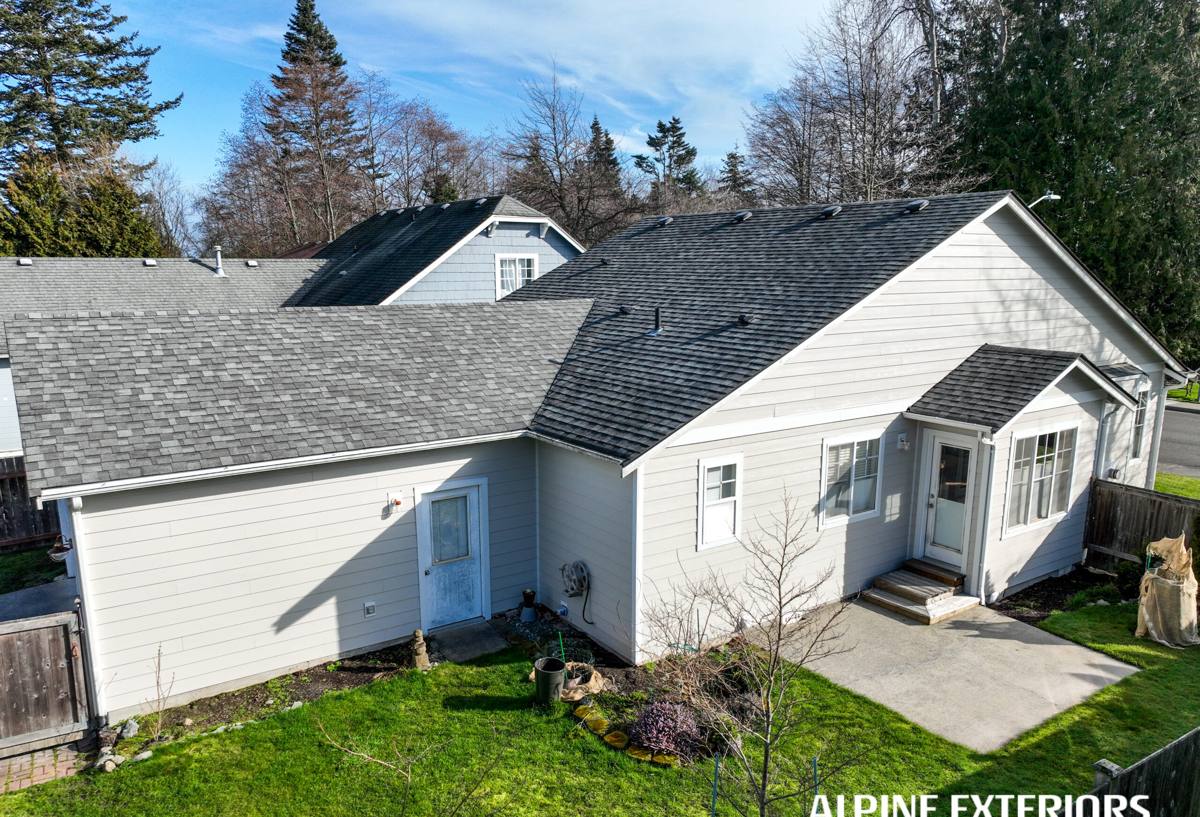
What Local Homes Actually Need From Their Siding
Given that climate, a few things matter more here than they would in a drier region:
- Resistance to moisture absorption — the material shouldn't swell, warp, or hold water at the joints
- A finish that resists moss and algae growth, especially on shaded north- and east-facing walls
- Dimensional stability through repeated wet-dry cycles across fall, winter, and spring
- A factory finish that doesn't rely on the homeowner repainting every few years to stay protected
- Correct flashing and gapping so water sheds away from the wall assembly instead of getting trapped behind it
This is where the choice of material and the quality of installation start to matter as much as each other. A great product installed poorly will still trap water. An average product installed perfectly will still degrade faster than it should in this climate.
Why We Install James Hardie and Nothing Else
We standardized on James Hardie fiber cement years ago and we don't install vinyl, LP SmartSide, cedar, primed spruce, or other fiber cement brands. That's not a marketing line — it's a decision based on what holds up in exactly the conditions Deming deals with.
Fiber cement doesn't absorb and swell the way wood-based products can when they take on repeated moisture. James Hardie's HZ5 product line is specifically engineered for climates with significant moisture exposure, which fits Whatcom County. The ColorPlus factory finish is baked on under controlled conditions rather than site-applied, which means better adhesion and color retention through the wet months than a field-painted finish typically achieves. And because it's non-combustible, it adds a layer of fire resistance that vinyl and wood-based sidings simply can't offer.
We're not saying other products are junk — they have real uses and real fans. We're saying that after years of doing this work in Whatcom County's climate, Hardie is what we're willing to put our name behind and back with a proper installation.
What a Correct James Hardie Installation Actually Involves
The material is only half the equation. Most siding failures we get called out to inspect — on any brand — trace back to installation shortcuts, not the product itself. A correct Hardie install in a moisture-heavy area like Deming includes:
| Step | Why it matters here |
|---|---|
| Weather-resistant barrier installed and lapped correctly | Second line of defense if any water gets past the siding face |
| Proper flashing at windows, doors, and roof-wall intersections | These are the most common points where driving rain finds a way in |
| Correct fastener type, spacing, and depth per Hardie's install specs | Overdriven or wrong-gauge fasteners crack the board and create entry points for water |
| 1/4-inch clearance gaps at trim, corners, and butt joints | Lets the board expand and contract without buckling; keeps water from wicking |
| Siding kept clear of roofline, deck, and grade per manufacturer minimums | Prevents constant splashback and standing moisture at the bottom edge |
| Factory-cut edges used where possible; field cuts sealed correctly | Unsealed cut edges are one of the most common places moisture gets in |
Skip any one of these and you can still end up with moisture problems behind Hardie siding — which is why we treat installation quality as inseparable from the product itself.
Our Process on a Deming Job
- On-site assessment of the existing siding, sheathing, and any moisture or rot found during tear-off
- Removal of old siding and inspection of the wall assembly before anything new goes up
- Repair of any damaged sheathing or framing — this gets flagged and discussed before we cover it back up
- Installation of a proper weather-resistant barrier and flashing at every penetration
- Hardie board and trim installed to manufacturer spec, with attention to clearances and fastening
- Final walkthrough covering caulking, touch-up, and site cleanup
We don't skip the tear-off inspection step even when it slows the job down. In a shaded, damp property, hidden rot behind old siding is common enough that finding it early — instead of after the new siding is up — matters.
Why a Crew That Already Works This Area Matters
Deming isn't a downtown grid — lots vary a lot in exposure, tree cover, and how much sun a wall actually sees through the year. A crew that regularly works Lynden and the surrounding Whatcom County communities has already seen how differently a south-facing wall on an open lot ages compared to a north wall tucked under fir trees a few properties over. That shapes small but real decisions: where extra attention to flashing pays off, which walls are most prone to moss buildup, and how to sequence a job around the wetter stretches of the year so materials aren't exposed to rain mid-install.
It also means a crew that isn't guessing at permitting norms or driving in from far outside the area for a callback. Local familiarity doesn't replace good technique, but paired with it, it removes a lot of the guesswork that leads to problems down the line.
Moss, Algae, and the Maintenance Reality
Even the right product installed correctly still lives in a wet, shaded climate, and no siding is entirely maintenance-free. James Hardie's factory finish resists moss and algae far better than bare wood or unfinished materials, but Deming's tree cover means some buildup over time is realistic to expect, especially on north-facing and heavily shaded walls.
- Rinse siding gently once or twice a year — a garden hose is usually enough; avoid high-pressure washing directly at seams and joints
- Keep gutters clear so overflow doesn't run down and pool against the siding
- Trim back branches and foliage that keep a wall in constant shade and slow drying
- Check caulking at trim and penetrations annually; recaulk if it's cracked or pulling away
- Address any soft spots, staining, or discoloration promptly rather than waiting for a full inspection cycle
None of this is heavy maintenance — it's closer to the kind of upkeep any exterior surface needs in a wet climate. The point is that correct material and installation reduce how much maintenance is needed, not eliminate it.
What Affects Cost on a Deming Siding Job
| Factor | Why it changes the price |
|---|---|
| Condition of existing sheathing | Hidden rot or water damage found at tear-off adds repair scope |
| Home size and wall complexity | More corners, gables, and trim detail means more labor and cut waste |
| Product line and profile chosen | Lap siding, shingle-style panels, and trim boards vary in material cost |
| Access and lot conditions | Tree cover, slope, and staging space affect how efficiently a crew can work |
| Site prep needs | Removing old siding, disposal, and any minor grading or clearance fixes |
We won't quote a number without seeing the house — anyone who does that before walking the property is guessing. What we can say honestly is that fixing hidden moisture damage discovered during tear-off is the single biggest source of surprise cost on older homes in this area, which is exactly why we inspect before we cover anything back up.
Get a Straight Answer for Your Home
If you're weighing siding options for a home in Deming or elsewhere around Lynden, we're glad to come take a look, tell you honestly what condition your current siding and sheathing are in, and walk through what a correct James Hardie installation would involve for your specific property. No pressure, no inflated urgency — just a straightforward assessment and a written estimate you can take your time with. Use the form below to request a free estimate.