 Lynden Siding
 Deck Repair Built for Deming's Weather
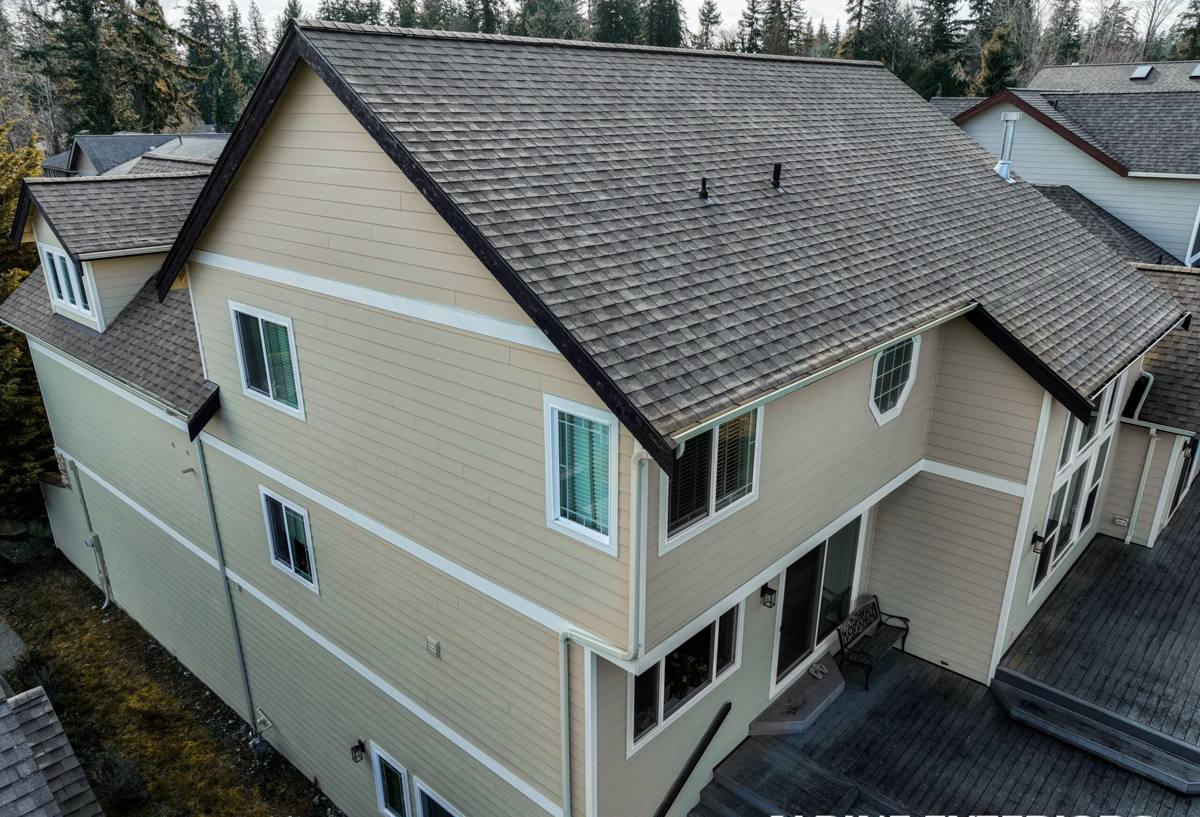
Deming sits in the shadow of the foothills, tucked in among tall trees and close to the Nooksack River, which means decks here deal with conditions that flatter, more open lots don't see nearly as often. Heavy tree cover keeps a lot of decks in partial shade most of the day, and shade plus moisture is exactly the combination that lets moss take hold and never let go. Add in Whatcom County's long stretch of driving rain each fall and winter, plus the salt-tinged air that moves inland off the Sound during storms, and you've got a recipe for decks that look fine on the surface while quietly rotting underneath.
We repair decks all over Whatcom County, and Deming properties tend to show a specific pattern of wear: green-black staining on the boards, soft spots near the house where runoff collects, and fasteners that have started to bleed rust into the wood. None of that is unusual for the area. It's also not something you should ignore, because deck problems here rarely stay cosmetic for long.
Why Deming Decks Wear Differently Than Decks Elsewhere
Shade and Moss Season
A deck under tree cover dries out slower after every rain. Whatcom County already gets a long wet season, and on a shaded Deming lot that wet season effectively never fully ends — the boards stay damp longer, moss gets a foothold in the grain, and moss holds even more moisture against the wood. Left alone, that cycle breaks down the surface of the decking and works its way into the structure underneath.
Driving Rain and Wind-Driven Moisture
It's not just how much rain falls, it's the angle it falls at. Driving rain gets pushed sideways into ledger connections, stair stringers, and any spot where the deck meets the house — areas that a lot of original installations weren't flashed or sealed well enough to handle over the long run.
Salt Air and Fastener Corrosion
Even away from the immediate coastline, the salt-influenced air that moves through this part of Washington accelerates corrosion on screws, joist hangers, and other hardware. Once a fastener starts rusting, it loses grip strength long before it looks obviously bad, which is why so many "surface level" deck problems turn out to be structural once we start looking closely.
Warning Signs Worth Taking Seriously
Some of these are obvious once you know to look for them. Others hide in plain sight for years.
- Boards that feel spongy, springy, or noticeably softer underfoot than the rest of the deck
- Persistent moss or algae staining that comes back within weeks of cleaning
- Gaps opening up between decking boards, or boards that have visibly cupped or warped
- Rust streaks running down from screw heads or around joist hangers
- A ledger board (where the deck attaches to the house) that looks darker, swollen, or separated from the siding
- Railings or stair posts that wiggle more than they used to
- Standing water that doesn't drain off the surface within an hour or two after rain stops
Any one of these on its own might be minor. Two or three together usually mean the deck has moisture getting into places it shouldn't, and that's worth a real inspection rather than a guess.
What an Honest Deck Repair Actually Involves
A proper repair isn't just swapping out the board that looks the worst. It starts with figuring out why that board failed in the first place, because if the underlying cause is still there, the replacement board will fail the same way.
Inspecting the Structure First
Before we touch decking, we check the framing underneath — joists, beams, the ledger connection to the house, and the footings or posts holding everything up. This is where the real problems usually are, even when the visible decking looks reasonably okay.
Fixing Water Management, Not Just Symptoms
If flashing is missing or damaged at the ledger, we address that as part of the repair. Replacing rotten boards without correcting the water path just means the new boards start the same slow failure the old ones went through.
Matching Fasteners to the Environment
Given how hard local air and moisture are on hardware, we use fasteners and connectors rated for exterior, corrosion-prone conditions rather than whatever happens to be cheapest. It's a small cost difference upfront that matters a great deal over the life of the deck.
Replacing Only What Actually Needs It
Good structural boards and framing members that test sound get left alone. There's no reason to rebuild a whole deck when the actual damage is contained to a section — unless that damage has spread further than it first appears, which the inspection is meant to catch.
Repair or Replace? How We Help You Decide
This is the question almost every homeowner asks, and the honest answer is that it depends on how far the damage has spread and how the deck was originally built. Here's the general framework we use when we walk a Deming property.
| Factor | Leans Toward Repair | Leans Toward Replacement |
|---|---|---|
| Framing condition | Joists and beams are solid when probed | Multiple joists are soft or delaminating |
| Extent of damage | Isolated to a few boards or one section | Spread across most of the deck surface |
| Ledger connection | Sound, properly flashed once repaired | Significant rot where deck meets house |
| Age of the deck | Newer construction, one localized issue | Original build is decades old with recurring problems |
| Code compliance | Meets current railing and attachment standards | Outdated attachment methods present a safety concern |
We'll walk you through where your deck falls on that spectrum with plain, straightforward reasoning — not a push toward the bigger job.
Decking Material Trade-Offs Worth Understanding
Part of a repair is deciding what to replace damaged boards with, and that choice matters more in a climate like this one than it might elsewhere.
Wood Decking
Pressure-treated lumber and cedar both look great and cost less upfront, but they demand real upkeep — cleaning, sealing, and periodic re-staining — to hold up against moss and driving rain. Skip that maintenance in a shaded, damp spot like Deming and the clock on rot starts running faster than most homeowners expect.
Composite Decking
Composite resists moisture absorption and won't feed moss the way bare wood grain can, which makes it a strong fit for shaded, wet lots. It costs more upfront and installation is less forgiving of mistakes — improper spacing or fastening can cause its own problems down the road — so it's only as good as the crew installing it.
Our Standard
We don't push one material over the other as a blanket rule. We'll tell you honestly what fits your specific deck, your budget, and how much upkeep you actually want to sign up for going forward.
Keeping a Repaired Deck From Needing Repair Again
A repair is only worth doing well if it's followed by basic upkeep. None of this is complicated, but it matters more here than in drier climates.
- Sweep off leaves and needles regularly — trapped debris holds moisture right against the boards
- Clean visible moss or algae as soon as it appears rather than waiting for it to spread
- Check the ledger area and any spot where the deck meets the house once or twice a year
- Keep gutters and downspouts clear so runoff isn't dumping directly onto the deck
- Re-seal or re-stain wood decking on the schedule the product actually calls for, not "whenever it starts looking rough"
- Trim back overhanging branches where practical to cut down on shade and debris
Our Repair Process
We keep this straightforward because deck repair doesn't need to be complicated to be done right.
- A full inspection of the decking, framing, ledger, and fasteners — not just the section you called about
- A clear, written explanation of what's actually wrong and what it will take to fix it
- An honest repair-versus-replace recommendation based on what we find, not on which job pays more
- The repair itself, with attention to the water management and hardware choices that caused the original problem
- A walkthrough when we're done, so you understand what was fixed and what to watch going forward
Why a Crew That Already Works Deming Matters
Deck problems in this part of Whatcom County follow patterns that a crew unfamiliar with the area can miss — where moss tends to establish itself, how driving rain finds its way into ledger connections, which fastener choices actually hold up against the salt-influenced air moving in off the Sound. That's not knowledge you get from a general checklist; it's knowledge you get from repairing decks in Deming and the surrounding area repeatedly and paying attention to what fails and why.
We'd rather tell you a repair will hold for years than sell you a bigger job you don't need, and we'd rather tell you honestly when replacement really is the better value than patch a deck that's past the point of a good repair.
If you've got a deck in Deming showing any of the signs above — or you just want a second opinion before winter rain sets in again — we're happy to come take a look. The estimate is free, there's no pressure attached to it, and you'll walk away with a clear, honest picture of where your deck actually stands.