 Lynden Siding
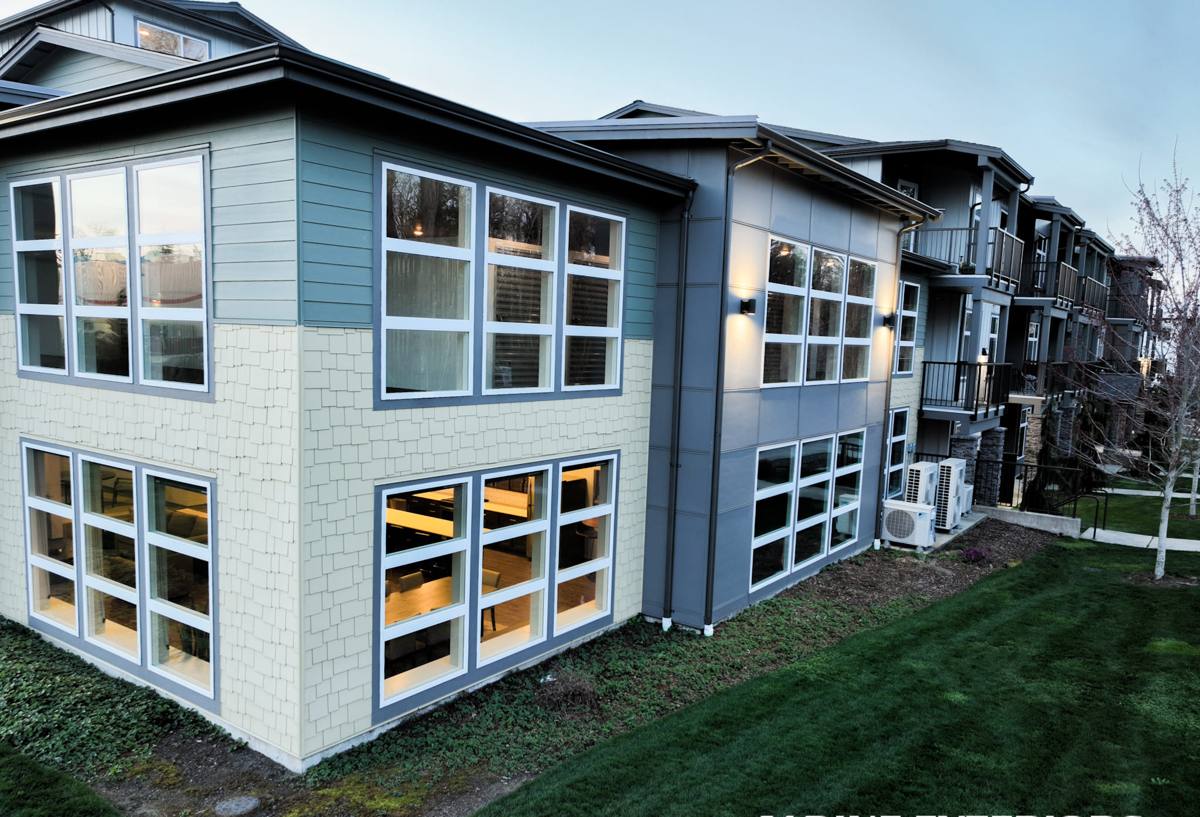
 New-Construction Windows for Blaine Homes
Building new in Blaine is different from replacing windows in a house that's already standing. There's no old frame to reference, no existing flashing to work around, and no chance to "see how it was done before" once the walls are framed. Every rough opening, every layer of weather-resistive barrier, and every strip of flashing tape has to be right the first time, because within a few weeks it will be buried behind siding, trim, and paint. Get it wrong during the build and you don't find out until years later, when water shows up somewhere it shouldn't.
Lynden Siding Companies works new-construction window jobs throughout Whatcom County, including Blaine, and we treat this phase of a build as the point where a home's long-term dryness is decided. The window unit itself matters, but the installation sequence around it matters more.
Why Blaine's Climate Puts New Windows to the Test
Blaine sits close to the water, and that proximity shapes what a new home's window openings have to deal with over the decades. It's not a single hazard — it's three overlapping ones that show up in different seasons.
Salt Air and Metal Components
Marine air carries fine salt, and it works on anything metal over time — fasteners, cladding, hardware, and unprotected flashing. On a new build, this is easiest to plan for before anything is closed in, by choosing corrosion-resistant fasteners and flashing metals at the framing stage rather than trying to compensate later.
Wind-Driven Rain and Water Management
Rain in this part of Whatcom County rarely falls straight down. Wind pushes it sideways and up under trim, sills, and laps, which means a window's water management has to work in more directions than "down and out." This is a flashing-sequence problem, not a caulk problem — sealant is a backup, not the primary defense.
Moss Season and Sustained Moisture
Long, damp stretches of the year mean any surface that stays wet for extended periods will grow moss and algae, and any assembly that traps moisture behind it will stay wet longer than it should. New windows need a drainage path built in from day one so trapped water has somewhere to go besides the framing.
What Correct New-Construction Window Installation Involves
On a new build, the window installer isn't retrofitting around existing conditions — they're setting the standard the rest of the wall assembly follows. That includes:
- Verifying rough openings are plumb, level, square, and correctly sized before the unit ever shows up on site
- Installing a sloped sill pan so any water that gets past the window drains outward, not into the wall
- Lapping the weather-resistive barrier and flashing tape in proper shingle order — top layer over the one below, always — so water sheds down and out
- Setting the window unit plumb and square in the opening, shimmed correctly so the frame isn't stressed and hardware operates smoothly for years
- Sealing and flashing the head, jambs, and sill in the correct order, with the sill draining and the head fully lapped over the housewrap above
- Confirming the window's nailing or attachment method matches how the wall assembly is built, not just how the window was designed in a catalog
Nail-Fin vs. Block-Frame Installation
Most new construction in this region uses one of two basic approaches, and the right one depends on the wall assembly and cladding plan, not personal preference.
| Method | Best For | Water Management | Notes |
|---|---|---|---|
| Nail-fin (flush-fin) | Standard wood-framed new construction with siding cladding | Fin integrates directly with WRB and flashing tape in a shingle-lap sequence | Most common approach for the siding-clad homes we build windows into |
| Block-frame (site-built frame) | Masonry, stucco, or specific architectural details | Relies on a separate site-built sill pan and perimeter flashing system | More labor to detail correctly, but sometimes required by the wall design |
Our Process for New-Construction Window Jobs in Blaine
New-construction window work runs on the builder's schedule, not a standalone timeline, so coordination matters as much as installation skill.
1. Rough Opening Review
Before windows arrive, we check every opening against the approved plans and the actual framing — dimensions, plumb, level, and square. Catching a framing error here costs a phone call. Catching it after siding is on costs a repair.
2. Dry-In Coordination
We time window installation with the weather-resistive barrier and roof dry-in so the building envelope isn't left exposed longer than necessary — a real consideration given how often Blaine sees rain move through during a typical build schedule.
3. Sill Pan and Flashing Installation
Sloped sill pans go in first, followed by the window unit, then jamb and head flashing in the correct shingle-lap order tied into the WRB above and below.
4. Set, Shim, and Fasten
Each unit is set plumb and square, shimmed at the manufacturer's specified points, and fastened per the product's installation instructions — not a generic method applied to every brand.
5. Walkthrough Before Siding Closes It In
Before siding crews cover the wall, we walk every opening to confirm flashing laps, sealant placement, and drainage paths are correct. This is the last point where a fix is easy.
Checklist for Builders and Homeowners
- Rough openings verified against plans before windows are ordered
- Window specs confirmed against Washington State Energy Code U-factor requirements
- Egress sizing confirmed for bedroom openings before framing is finalized
- Sill pan slope and drainage path visible and verified, not assumed
- Flashing tape lapped shingle-style, with no reverse laps that trap water
- Fastener and flashing metals chosen with coastal exposure in mind
- Final walkthrough completed and documented before siding installation begins
Choosing the Right Window for a Coastal Whatcom County Build
Frame material is a real decision on new construction, not just an aesthetic one. Vinyl frames are budget-friendly and handle moisture well, but lower-end profiles can flex in larger sizes. Fiberglass holds its shape better across temperature swings and resists the kind of long-term wear salt air causes, though it costs more upfront. Wood-clad windows offer a traditional interior look, but the wood core means any breach in the cladding or flashing lets moisture in where it's harder to spot — something we weigh carefully on homes this close to the water, where sustained dampness during moss season is the norm rather than the exception.
We don't push one brand or material as universally "best." We walk through the trade-offs — upfront cost, expected maintenance, and how the product performs specifically in a marine, high-rainfall environment — so the choice fits the house and the budget, not a sales script.
Energy Code and Permitting on New Builds
New construction windows in Whatcom County have to meet Washington State Energy Code U-factor and solar heat gain requirements, and bedroom windows have separate egress sizing rules that need to be locked in before framing, not adjusted afterward. We confirm window specs against these requirements early in the process and coordinate with whatever inspection schedule the local building department requires, so window installation doesn't become the item holding up a final.
Why a Crew That Already Works Blaine Matters
Whatcom County covers a lot of ground, and conditions vary block to block near the water. A crew that regularly builds in Blaine already knows what wind-driven rain does to a west- or north-facing opening near the shoreline, what fastener and flashing choices hold up against salt air over time, and what moss and moisture patterns look like on lots with heavier tree cover or limited sun exposure. That familiarity means fewer surprises during the build and fewer callbacks after move-in — the difference between a crew applying a generic method and one applying what actually works here.
Keeping New Windows Performing for the Long Haul
A correctly installed window still benefits from basic upkeep, especially in this climate:
- Rinse accumulated salt and grime off frames and glass periodically, particularly on wind-exposed elevations
- Keep weep holes and drainage paths clear of debris, moss, and dirt so water can exit as designed
- Check exterior sealant joints annually for cracking or separation, and address small gaps before they become water paths
- Trim back vegetation that keeps window areas shaded and damp longer than necessary
New-construction window work is one of those parts of a build that's invisible when it's done right and expensive when it isn't. If you're planning a new home in Blaine and want windows installed by a crew that treats the flashing and drainage details as seriously as the product itself, we're happy to walk the plans with you and provide a free, no-pressure estimate.