 Lynden Siding
 Birch Bay Sits in a Different Weather Zone Than Most of Lynden
Birch Bay's exposure to the Strait of Georgia puts homes here under a different kind of pressure than siding faces a few miles inland. The same storms that roll through Whatcom County arrive at Birch Bay carrying salt spray, and they hit unshielded walls with more wind-driven force because there's less tree cover and terrain to slow them down. Add in the Pacific Northwest's long wet season and the moss growth that comes with it, and you have a siding environment that punishes anything not built and installed for coastal conditions.
We install siding throughout Whatcom County, and Birch Bay homes consistently show wear patterns you don't see as often in Lynden proper: salt-etched finishes, chronic moisture staining on north- and west-facing walls, and moss colonies that take hold in shaded, damp corners and never fully let go. None of that is inevitable. It's a product and installation problem, and it's solvable.
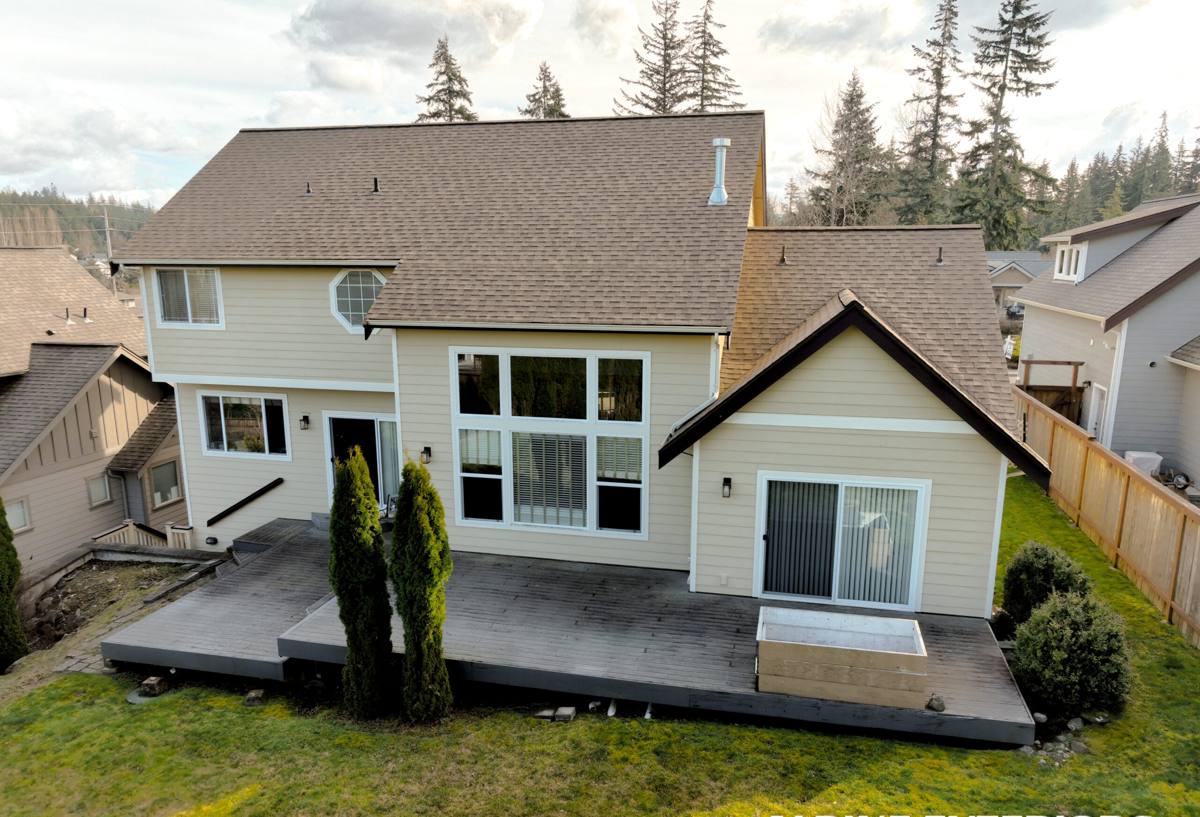
What Salt Air Actually Does to Exterior Siding
Salt air isn't just "extra moisture." Airborne salt is corrosive and hygroscopic — it pulls moisture out of the atmosphere and holds it against whatever surface it lands on. Over years, that has a few predictable effects on siding:
- Fasteners and metal trim corrode faster, especially if they aren't rated for coastal exposure
- Paint and factory finishes chalk, fade, or break down sooner than the manufacturer's inland lifespan estimates
- Wood-based products absorb the extra ambient moisture and become more prone to swelling, cupping, and rot
- Caulk and sealant joints dry out and crack faster, opening the door to water intrusion
This is why siding warranties often list coastal or "salt water proximity" exclusions in the fine print. It's also why a product's inland reputation doesn't tell you much about how it will hold up a few blocks from Birch Bay itself. The material and the finish both matter more here than they do in a typical Lynden subdivision.
Moss Season Isn't Just Cosmetic
Whatcom County's wet season runs long, and Birch Bay's humidity and shaded lots — combined with salt-laden air that keeps surfaces damp longer — give moss an ideal foothold. Moss on siding isn't just an appearance issue. It holds moisture directly against the wall assembly, and on materials that aren't moisture-stable, that constant dampness accelerates rot, delamination, and finish failure. A siding system that can shrug off months of damp shade without breaking down structurally is doing real work, not just looking clean.
Why We Install Only James Hardie Fiber Cement
We made the decision years ago to install one siding system across every job we take: James Hardie fiber cement. We don't install vinyl, LP SmartSide, Cemplank, Allura, primed spruce, or cedar, and in a place like Birch Bay the reasoning is straightforward.
It's Non-Combustible and Moisture-Stable
Fiber cement is made from cement, sand, and cellulose fibers — there's no wood fiber for salt-laden moisture to swell, no engineered wood core that can delaminate if a seam opens up. It doesn't rot, and it doesn't feed moss the way organic materials can.
ColorPlus Factory Finish Is Built for This
James Hardie's ColorPlus finish is baked on in a controlled factory environment through multiple coats, which gives it better adhesion and fade resistance than field-applied paint typically achieves — especially important where salt air accelerates finish breakdown on lesser coatings. It also comes with a longer finish warranty than most site-painted siding.
HZ Product Lines Are Climate-Engineered
Hardie manufactures different HZ formulations for different climate zones specifically because siding performs differently depending on regional moisture, temperature swings, and freeze-thaw patterns. Installing the correct HZ formulation for the Pacific Northwest matters more in an exposed coastal spot like Birch Bay than it does further inland.
The Warranty Is Real and Transferable
James Hardie backs its products with a strong, transferable limited warranty. For homeowners thinking about resale, a transferable warranty on a non-combustible, low-maintenance siding system is a genuine selling point — not just paperwork.
We're not saying every other product is worthless. Vinyl is inexpensive and low-maintenance in mild climates. Engineered wood products can look good and install quickly. Cedar has real aesthetic appeal. But each of those comes with trade-offs — heat distortion, seam vulnerability, ongoing maintenance, moisture sensitivity — that we're not willing to install and stand behind on a coastal Whatcom County home, where the climate gives those weaknesses every opportunity to show up early.
How Coastal Exposure Should Change Your Material Decision
| Factor | Why It Matters More in Birch Bay | How James Hardie Addresses It |
|---|---|---|
| Salt air corrosion | Faster finish and fastener breakdown near open water | Factory ColorPlus finish; installed with corrosion-resistant fasteners |
| Wind-driven rain | Less tree/terrain buffer than inland lots | Rigid board profile holds tight lines and seals under proper installation |
| Extended moss season | Humidity plus shade keeps surfaces damp longer | Non-organic material doesn't feed moss or absorb moisture the way wood-based products do |
| UV and salt fading | Reflected light and salt spray both stress finishes | Factory-cured finish resists fading better than field-applied paint |
What Correct Installation Involves
Even the right material fails early if it's installed wrong, and coastal exposure leaves less room for shortcuts. A correct James Hardie installation in Birch Bay includes:
- Removing old siding down to the sheathing and inspecting for existing rot or moisture damage before anything new goes up
- Installing a code-compliant weather-resistive barrier and correctly lapped, sealed flashing at every window, door, and penetration
- Maintaining proper rain-screen clearance so water that gets behind the siding can drain and the wall assembly can dry
- Following manufacturer-specified fastener spacing, type, and embedment — not generic nail patterns
- Correctly sizing expansion gaps at butt joints and trim, since fiber cement moves with temperature and moisture changes
- Sealing joints with the products and methods James Hardie specifies, not generic caulk applied on assumption
Every one of those steps affects how the wall behaves under wind-driven rain and prolonged dampness. Skip the rain screen or misjudge a flashing detail, and you can trap moisture behind siding that looks perfect from the curb — a problem that shows up as rot or mold years later, often after the workmanship warranty has expired.
What This Looks Like on a Real Birch Bay Job
Our process starts with a walk-around inspection of the existing siding, sheathing, and trim so we know what we're actually dealing with before we quote anything. From there we scope the tear-off, confirm the correct HZ product and ColorPlus color for the home, and plan flashing and drainage details around the specific exposure of that wall — a west-facing wall catching direct weather off the water gets treated differently than a sheltered, shaded side. We handle permitting through Whatcom County where required, and we stand behind our installation workmanship separately from the manufacturer's product warranty.
Signs Your Current Siding Is Losing the Fight
- Persistent moss or algae growth that returns within a season of cleaning
- Soft spots, bubbling, or visible swelling, especially near the base of walls or around windows
- Paint or finish that's chalking, peeling, or fading unevenly on salt-exposed sides
- Visible gaps, warping, or separated seams at panel joints
- A musty smell or interior staining on exterior-facing walls, which can indicate moisture already behind the siding
Any of these on a Birch Bay home is worth a professional look sooner rather than later — coastal moisture problems tend to progress faster than they would inland.
Why Local Installation Experience Matters
A crew that mostly works drier, more sheltered neighborhoods can install siding to code and still miss the details that matter most a block from the water — how tight to run expansion gaps given the temperature swings here, which walls need extra flashing attention, where moss is likely to establish and why drainage details there deserve extra care. Experience specific to Birch Bay's exposure isn't a marketing line; it shows up in flashing decisions, fastener choices, and drainage planning that generic installation instructions don't fully cover.
What to Ask Before You Hire
- Have you installed siding on homes in Birch Bay or similarly exposed coastal areas before?
- Which James Hardie HZ product and ColorPlus color do you recommend for this specific wall exposure, and why?
- What's your rain-screen and flashing detail at windows, doors, and wall penetrations?
- What does your workmanship warranty cover, and for how long, separate from the manufacturer's warranty?
- Will you provide a written scope that includes tear-off, sheathing inspection, and disposal?
Let's Look at Your Home
If your siding is showing salt staining, chronic moss, or finish failure, or if you're planning ahead before those problems start, we're happy to walk the exterior with you and give you a straight assessment. Fill out the form below for a free, no-pressure estimate on James Hardie siding installation for your Birch Bay home.