 Lynden Siding
 Bellingham's Climate Is Hard on Roofs
Bellingham sits on Bellingham Bay, and that location shapes almost every roofing problem we run into in the area. Salt air drifts inland off the water, driving rain rolls through hard during the fall and winter storm systems, and shaded, damp lots around Whatcom County keep roof surfaces wet longer than they'd stay in a drier climate. None of this means a roof is doomed — it means a proper repair here has to account for conditions that a generic patch job from a crew unfamiliar with the coast tends to ignore. We work roofs across Whatcom County, including Bellingham, and the repair approach below reflects what actually holds up in this specific climate rather than a one-size-fits-all method.
Salt Air and Metal Components
Roofs near the bay take on airborne salt that settles into flashing seams, fastener heads, vent boots, and any other exposed metal. Over years, that accelerates corrosion in ways homeowners further inland simply don't deal with. A repair that reuses corroded fasteners, or leaves pitted flashing in place because it "still looks fine," is a repair that fails again within a season or two. We treat any metal component near the coast as a wear item, not a permanent fixture.
A Long Moss Season
Whatcom County's mix of shade, moisture, and mild temperatures gives moss a long growing window — often close to nine months out of the year on north-facing slopes and roofs under tree cover. Moss doesn't just look bad. It holds water against the roofing material, lifts shingle edges as it grows, and works its way under flashing over time. Left alone, what starts as a cosmetic issue becomes a leak, and by the time it shows up as a ceiling stain the moss has usually been doing damage for a while already.
Driving Rain and Wind-Driven Water
Storms coming off the Pacific and through the Strait of Georgia bring rain that doesn't just fall straight down. Wind pushes it sideways, up under shingle tabs, and into any gap in flashing or trim that a calmer climate would never test. A roof that stays watertight in a light, steady rain can still leak in a driving Bellingham storm if the underlying detail work — not just the visible shingles — isn't built for wind-driven water.
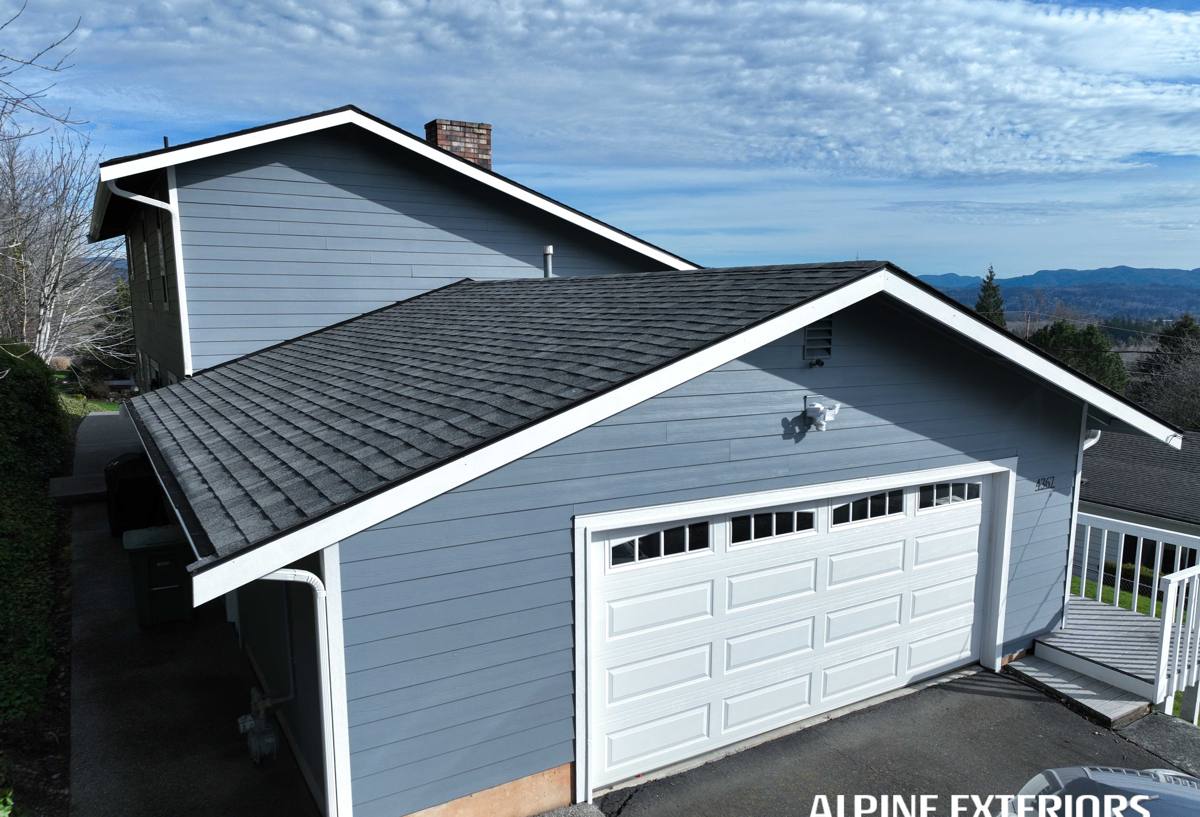
Signs Your Bellingham Roof Needs Repair
Most roof repairs start with a homeowner noticing one of these. Catching them early is almost always the difference between a modest repair and a full replacement, so it's worth walking your property after a hard storm and looking for the following.
- Water stains on ceilings or interior walls, especially after a windy rainstorm
- Moss buildup along shaded slopes, ridge lines, or valleys
- Shingles that are cracked, curling at the edges, or missing granules
- Rusted, lifted, or visibly corroded flashing around chimneys, vents, or skylights
- Sagging sections of roof deck or soft spots when walked
- Daylight visible through the attic roof boards
- Granules collecting in gutters or at downspout outlets
- Gaps, lifted tabs, or exposed nail heads at roof edges and hips
- A musty smell in the attic that wasn't there before
If you're seeing more than one or two of these, it's worth having someone look before the next storm cycle rather than after it's already found its way inside.
What a Correct Roof Repair Actually Involves
Finding the Real Leak Path
Water rarely enters where it shows up inside the house. It can travel several feet along a rafter or sheathing seam before dripping down in a spot that has nothing to do with the actual failure point. A repair that only patches the visible stain, without tracing the water back to where it's actually getting in, is a repair that gets revisited within a year. We check flashing, underlayment, and decking condition around the suspected area, not just the surface layer where the damage happens to be visible.
Matching Materials, Not Just Covering the Spot
A patch that doesn't match the existing shingle profile, color lot, or metal gauge stands out visually and can behave differently in weather than the surrounding roof. Where an exact match isn't available, which happens fairly often on older roofs where the original product has been discontinued, we explain that trade-off honestly rather than pretending a mismatched patch is invisible or that it doesn't matter.
Fastening and Sealing for Coastal Conditions
Given the salt air near the bay, we favor corrosion-resistant fasteners and flashing details built for a marine-influenced climate over whatever happens to be cheapest on a given day. This is a judgment call every roofer makes whether they say so or not, and it's worth asking about directly when you're comparing repair bids from different companies.
Repair or Replace? How We Help You Decide
Not every roof problem calls for a full replacement, and not every leak can be permanently solved with a patch. Cost is part of the decision, but so is how much useful life is left in the rest of the roof, and whether repeated repairs are actually cheaper than one larger project once you add them up over a few years. The table below covers the general factors we weigh. Every roof is different, so this is a starting point for the conversation, not a substitute for an actual inspection.
| Factor | Leans Toward Repair | Leans Toward Replacement |
|---|---|---|
| Roof age | Under roughly 15 years, or well-maintained | Near or past the material's expected service life |
| Extent of damage | Isolated to one section, flashing, or penetration | Spread across multiple slopes or repeat leak sites |
| Decking condition | Solid, dry sheathing under the damaged area | Soft, rotted, or delaminated decking |
| Moss and algae history | Surface growth with no shingle lift yet | Long-term moss damage with granule loss and lifted edges |
| Cost over time | Repair cost is a small fraction of replacement cost | Repeated repairs are adding up close to replacement cost |
Our Roof Repair Process for Bellingham Homes
- Inspection. We walk the roof where pitch and safety allow, and check attic ventilation and decking from inside wherever it's accessible, so we're not just guessing from the ground.
- Honest diagnosis. We tell you what's actually causing the problem, what a repair will and won't fix, and whether replacement makes more financial sense over the long term.
- Written estimate. Scope of work, materials, and cost range in writing before anything starts — no verbal-only agreements you have to remember later.
- Repair work. Removal of the damaged material, correction of the underlying cause rather than just the symptom, and replacement using matched or clearly-explained materials.
- Cleanup and walkthrough. Debris and old material hauled off the property, and we walk you through what was done and why before we consider the job finished.
Roof Types We Commonly Repair Around Bellingham
Composition and Architectural Shingle
The most common roofing material in the area, and generally the most straightforward to repair when the deck underneath is still sound. The main challenge is color and profile matching on older roofs, along with checking nearby shingles for granule loss from years of moss and rain exposure that isn't obvious from the ground.
Metal Roofing
Durable against wind and rain, but repairs require close attention to fastener corrosion and seam sealant condition, both of which the salt-influenced air near the bay affects faster than it would further inland. A metal roof repair that skips a corrosion check on surrounding fasteners is only solving part of the problem.
Cedar Shake
Common on older Whatcom County homes. Cedar needs individual shake replacement done carefully to keep the surrounding courses weathertight, and it's noticeably more sensitive to prolonged moss and moisture contact than composition shingle — worth knowing if your home has an older cedar roof that hasn't been maintained in a while.
Moss, Algae, and Keeping a Repair From Becoming a Recurring One
A repair fixes today's leak. Whether it stays fixed depends partly on what happens on the roof afterward. In a climate that grows moss most of the year, that usually means periodic moss and debris removal, keeping gutters clear so water isn't backing up under the roof edge, and addressing any tree cover that's keeping a section of roof shaded and damp longer than the rest of the house. We can talk through a maintenance approach that fits your roof and your budget as part of the same repair visit — it doesn't have to turn into a separate sales pitch.
Why Hire a Crew That Already Works Bellingham
A roofer who works Bellingham and the surrounding Whatcom County area regularly already knows how the bay's salt air behaves, how long moss season actually runs here, and which flashing and fastener choices hold up against driving coastal storms — versus a crew pulling from a generic playbook built for a drier or more inland climate. That local pattern recognition shows up in faster, more accurate diagnosis on the first visit, and in repair choices that are built for what this specific area throws at a roof year after year, not just what usually works somewhere else.
If you're dealing with a leak, storm damage, or a roof that just needs an honest look before the next rainy season sets in, we're glad to come out and take a look. The estimate is free, there's no pressure to move forward, and you'll get a straight answer about whether you actually need a repair or something more.