 Lynden Siding
 Why Deck Repair Looks Different in Bellingham
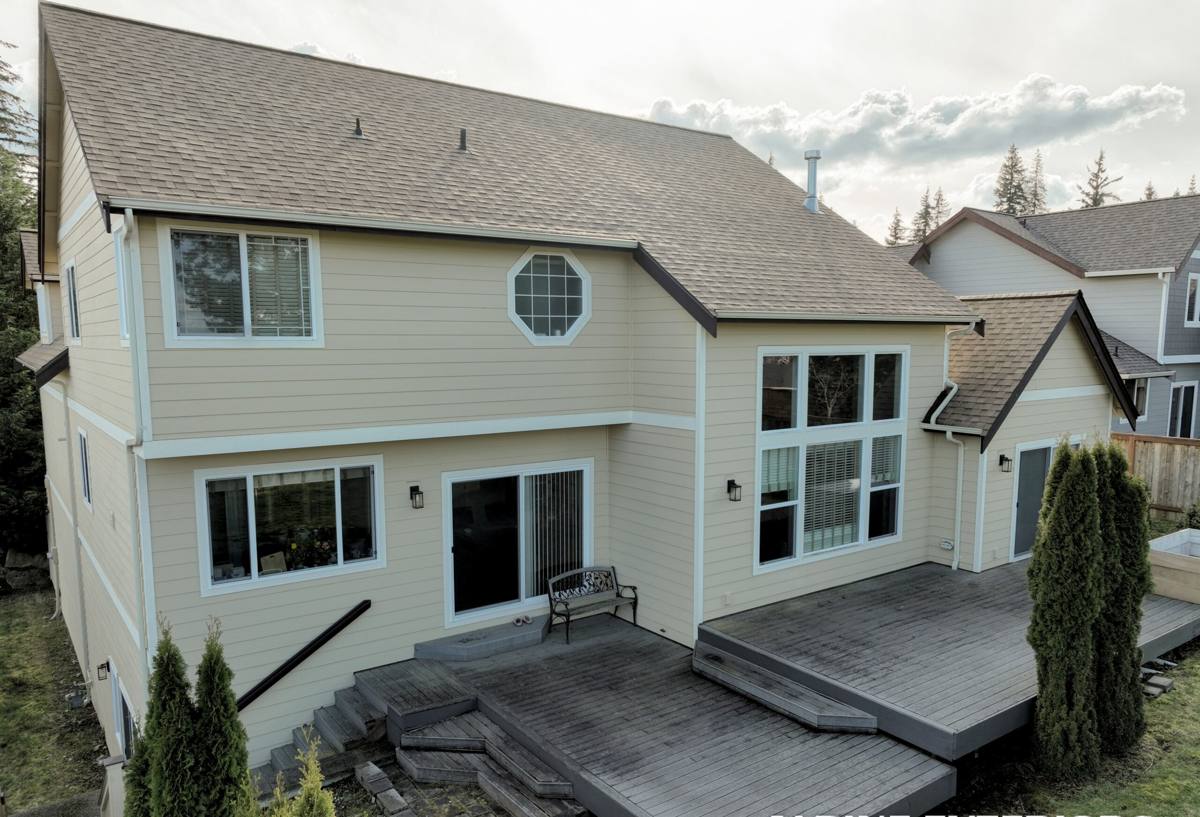
A deck in Bellingham takes a different kind of beating than one built further inland. Sitting near Bellingham Bay and the Salish Sea means salt-laden marine air moving through the area most days, not just during storms, and rain that regularly comes in sideways rather than dropping straight down. Add in a moss and mildew season that can run for most of the year on shaded or north-facing surfaces, and you have a structure sitting outside, unprotected by any wall or roofline, absorbing all three of those conditions at once, year after year.
Because of that, deck problems in Bellingham often don't show up where you'd expect, and a board that looks fine on top can be sitting over a joist or hanger that's already lost real strength underneath. Deck repair done correctly here starts with figuring out what's actually going on beneath the surface, not just patching whatever is visibly wrong. This page covers what typically damages decks in this part of Whatcom County, how a proper repair job is scoped, and why it matters to hire a crew that already works this area regularly.
What Actually Damages Decks in Bellingham
Salt Air and Corroding Hardware
Bay proximity means a steady, low-grade dose of salt in the air, and that salt settles on exposed metal continuously. Fasteners, joist hangers, post brackets, and railing hardware corrode faster here than they would inland, and that corrosion is rarely visible from the top of the deck until it's fairly advanced. A hanger that's lost holding strength doesn't announce itself with a loud failure — it shows up as a board that's started to lift slightly at one end, a joist that flexes more than it should underfoot, or a railing post with a bit more give than it had last year.
Wind-Driven Rain
Storms coming off the bay push rain sideways instead of letting it fall straight down, and a deck built without that in mind lets water in at spots that would stay dry in a calmer climate. Ledger connections where the deck ties into the house, gaps between boards, and the underside of railings all take on wind-driven moisture that a purely vertical rainfall model wouldn't account for. Over time, that repeated wetting is what drives rot at connection points long before the rest of the deck shows its age.
A Moss Season That Runs Most of the Year
Mild temperatures and near-constant dampness give moss a long growing season in Bellingham, and a horizontal deck surface is one of the first places it takes hold — it holds water longer than a wall does and stays damp between rain events. Shaded decks and boards under overhangs or tree cover usually show it first. Beyond looking bad, moss holds moisture directly against the decking material, which accelerates rot in wood and can stain or degrade lower-grade composite surfaces over time.
Cosmetic Wear vs. Structural Problems
Not everything that looks bad on a Bellingham deck is a structural issue, and not everything that looks minor is purely cosmetic. Telling those two apart correctly is the entire point of a proper repair assessment, because fixing a cosmetic issue as if it were structural wastes money, and treating a structural issue as cosmetic leaves a real safety problem in place.
- Usually cosmetic: Surface graying on wood, minor color fade on composite, light moss on a board surface that hasn't reached the substrate, small surface checking that hasn't opened into a crack
- Worth a closer look: A board that feels slightly springy underfoot, a railing with more play than it used to have, rust staining bleeding out from a fastener, gaps between boards that have closed up or widened unevenly
- Structural, address promptly: Soft or spongy framing when probed, a ledger connection with visible gapping or water staining behind it, a post that's shifted at its base, any hanger showing significant rust or separation from the wood
The tricky part in Bellingham's climate is that early-stage structural problems often look cosmetic from the top, since the moisture and corrosion doing the damage are happening underneath, at connection points, or inside the wood itself before the surface shows anything obvious.
How We Diagnose a Deck Before Recommending Repair
We don't quote deck repair off a quick look at the surface. A proper assessment includes probing suspect boards and framing members for soft spots, checking ledger flashing and the connection to the house for water intrusion, examining fasteners and hardware for corrosion, and checking post bases and footings for movement or rot where wood meets grade. We also look at drainage and airflow underneath the deck, since standing moisture in a crawlspace below a low deck is a common hidden contributor to framing problems that never show up from above.
That assessment tells us whether a problem is isolated or connected to a broader moisture issue affecting more of the structure, which is the difference between a repair that actually solves the problem and one that just replaces the board someone happened to notice.
Repair vs. Replace: How That Decision Actually Gets Made
Homeowners in Bellingham often assume that visible damage means a full rebuild, and just as often assume a deck that still looks okay doesn't need attention at all. Neither assumption holds up well in this climate. The real decision comes down to how much of the structure is affected and whether the underlying cause has been dealt with.
| Factor | Leans Toward Repair | Leans Toward Replacement |
|---|---|---|
| Extent of damage | Isolated to a few boards, a section of railing, or one connection point | Widespread rot, corrosion, or soft framing across multiple areas |
| Framing condition | Joists and beams still sound, only surface decking affected | Structural framing itself has deteriorated |
| Age of the deck | Mid-life deck with a clear, addressable cause of damage | Original deck at or past its expected service life |
| Cause of the damage | Identifiable and fixable, like a failed board or a corroded hanger | Systemic moisture intrusion that's been ongoing and untreated |
| Material match | Replacement boards or hardware can reasonably match what's there | Existing material is discontinued or too far gone to blend in |
Most of the calls we get in Bellingham fall somewhere in the middle rather than at either extreme, which is exactly why an honest, in-person assessment matters more than a phone estimate.
What a Correct Repair Involves
Matching Materials to What's Already There
Whenever it's reasonably possible, we match replacement decking to the existing material, whether that's wood, capped composite, or PVC, so the repair blends in rather than creating an obvious patchwork. When an exact match isn't available, we'll say so upfront and talk through the closest realistic option instead of quietly installing whatever's on hand.
Upgrading Hardware, Not Just Swapping What Failed
If we're pulling a corroded hanger or fastener, we replace it with corrosion-resistant hardware rated for coastal exposure, not a like-for-like standard-grade part that will just corrode again on the same timeline. It's a small cost difference at the time of repair and a meaningful one over the following several years.
Fixing the Cause, Not Just the Symptom
A rotted board at a ledger connection is usually a symptom of a flashing or drainage problem, not just a bad piece of wood. We address the moisture path causing the damage as part of the repair, because replacing the board without fixing what let water in there in the first place just buys a little time before the same spot fails again.
Structural Repairs Get Priority
If our assessment turns up a structural issue alongside cosmetic ones, we're direct about which one needs attention first. A loose railing post or soft framing member isn't something we'll leave for a future visit once we've found it.
Maintenance That Extends a Repair's Lifespan
A well-done repair still needs some ongoing attention in this climate to get its full value. A short list worth keeping in mind between now and your next inspection:
- Rinse the deck surface periodically to clear salt residue and organic buildup before it works into the material or finish
- Keep gaps between boards clear of leaves and debris so water can actually drain and the surface can dry between rain events
- Check railing posts and visible hardware once a year, ideally before the wet season starts, for early corrosion or loosening
- Trim back branches or plants that shade the deck or hold moisture against it longer than open sun and airflow would
- Have any soft spot, unusual flex, or hardware rust addressed right away rather than waiting to see if it gets worse — in this climate, it generally does
Why It Matters That We Already Work Bellingham
A crew that mostly works drier, more sheltered towns can still do a competent repair, but Bellingham's combination of bay-driven salt air, wind-driven rain, and an extended moss season creates failure patterns that don't show up the same way everywhere in Whatcom County. Working this area regularly means we're not guessing at what a hanger or ledger connection typically looks like after a few seasons of this specific exposure, or which repairs tend to hold and which ones are just cosmetic patches waiting to fail again. That familiarity shows up in the smaller judgment calls too — knowing where to probe first on an assessment, and being straightforward about what your deck actually needs versus what would just be an unnecessary upsell.
Get an Honest Look at Your Bellingham Deck
Whether you've noticed a specific problem area or just want an honest read on where your deck stands, we're happy to take a look and walk you through what we find in plain terms. Reach out below for a free, no-pressure estimate.